Acceptance and Commitment Therapy (ACT) for tinnitus reduces distress by teaching psychological flexibility, not by silencing the sound. Rather than targeting the noise itself, ACT targets the struggle against the noise: the checking, the catastrophising, the avoidance that builds up around it. A 2023 meta-analysis of three RCTs found that ACT produced a clinically meaningful 17.67-point reduction in Tinnitus Handicap Inventory (THI) scores compared to no treatment (Ungar et al. (2023)). If you have ever found yourself cancelling plans because of tinnitus, or lying awake feeding the thought that something must be seriously wrong, ACT was designed precisely for that kind of suffering.
The name can be misleading. “Acceptance” in ACT does not mean resigning yourself to misery or pretending the sound does not bother you. It means choosing to stop waging a war you cannot win against a sensation, so that your attention and energy can go toward the life you actually want.
How ACT Differs from CBT and TRT
All three major psychological approaches to tinnitus share the same core insight: the sound itself is rarely the whole problem. The distress is. Where they differ is in how they address that distress.
Cognitive Behavioural Therapy (CBT) works by identifying and restructuring unhelpful thoughts about tinnitus. If you believe “this sound means something is seriously wrong with me,” CBT helps you examine that belief, test it against evidence, and replace it with a more accurate thought.
Tinnitus Retraining Therapy (TRT) combines directive counselling with prolonged low-level sound enrichment. The goal is habituation: over time, your brain learns to reclassify tinnitus as a neutral, non-threatening signal and filter it out.
ACT takes a different route. Rather than restructuring thoughts or habituating to sound, it teaches you to observe thoughts without being controlled by them (a process called defusion) and to redirect your energy toward what genuinely matters to you. The target is psychological flexibility: the ability to be present with difficult experiences without letting them dictate your choices.
In a head-to-head trial, ACT outperformed TRT at every follow-up point over 18 months, with a Cohen’s d of 0.75 in favour of ACT (Westin et al. (2011)). TRT is not ineffective, but 10% of TRT patients in that trial showed clinically meaningful deterioration, compared to none in the ACT group.
Approach
Core mechanism
Goal
CBT
Restructure unhelpful thoughts
Change what you think about tinnitus
TRT
Habituation via sound enrichment
Reclassify tinnitus as neutral
ACT
Defusion and values-based action
Live fully alongside tinnitus
The Six ACT Processes Applied to Tinnitus
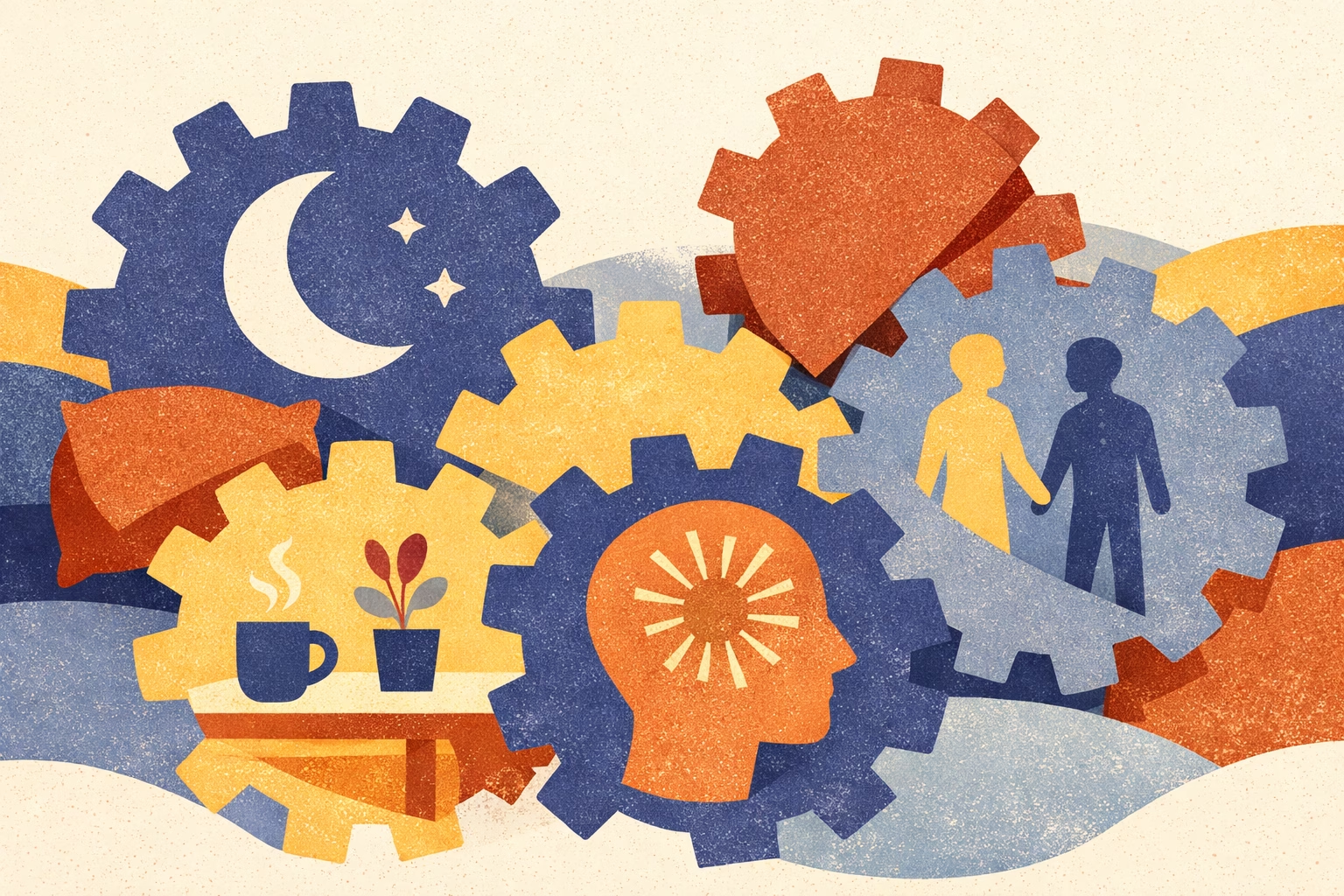
ACT is built around six interconnected psychological processes, sometimes called the hexaflex. In tinnitus treatment, each one addresses a specific way that tinnitus can take over a person’s life.
1. Acceptance
Definition: opening up to difficult sensations and emotions without trying to suppress or escape them.
Tinnitus example: Instead of bracing against the ringing every morning, you practise allowing it to be present — not welcoming it, but not fighting it either. The energy you would have spent on avoidance becomes available for other things.
2. Cognitive defusion
Definition: learning to observe your thoughts as thoughts, rather than treating them as facts.
Tinnitus example: The thought “this sound is destroying my life” can feel like a statement of fact at 3 a.m. Defusion means noticing that thought — “I’m having the thought that this is destroying my life” — without fully fusing with it. You can have the thought without being run by it.
3. Present-moment awareness
Definition: deliberately directing attention to what is happening right now, rather than being pulled into worry about the future or rumination about the past.
Tinnitus example: Tinnitus often becomes louder (subjectively) during periods of mental time travel — lying in bed imagining what life will be like in five years if this never goes away. Present-moment practice anchors attention to what is actually happening: the feel of the bedsheets, the rhythm of breathing, what you can see in the room.
4. Self-as-context
Definition: developing a sense of yourself as the observer of your experience, rather than being defined by it.
Tinnitus example: “I am a person who has tinnitus” rather than “I am a tinnitus sufferer.” When tinnitus is something you observe rather than something you are, it loses some of its power to organise your entire identity.
5. Values
Definition: identifying what genuinely matters to you, independent of your symptoms.
Tinnitus example: A patient who values being present for his children may have been withdrawing from family events because of tinnitus. Clarifying that value creates a reason to re-engage, even with the sound still there.
6. Committed action
Definition: taking concrete steps toward your values, even in the presence of difficult symptoms.
Tinnitus example: Returning to a music class you loved, or accepting a dinner invitation, while the ringing continues. The action is not contingent on the tinnitus being resolved first.
All six processes were confirmed as active components in a recent clinical programme designed for tinnitus patients (Takabatake et al. (2025)).
Steven Hayes, the psychologist who developed ACT, has tinnitus himself. He describes moving from severe distress about constant ringing to a state in which it is present but no longer bothers him. He still hears it. His experience is one person’s story, not clinical evidence — but many patients find it meaningful that the therapy’s founder has lived precisely this problem.
What Does the Evidence Say?
The evidence base for ACT in tinnitus is genuinely encouraging, and it is modest in size. Both things are true.
The most comprehensive quantitative picture comes from a meta-analysis pooling three RCTs of ACT for tinnitus. ACT produced a mean THI reduction of 17.67 points (95% CI: -23.50 to -11.84) compared to no-treatment controls (Ungar et al. (2023)). The THI’s accepted minimum clinically important difference is approximately 7 points, so this reduction is clinically meaningful. The caveat: three trials with around 100 participants total is a thin evidence base. The authors explicitly call for larger trials.
The most clinically informative single trial pitted ACT against TRT directly. In 64 normal-hearing adults, ACT produced a Cohen’s d of 0.75 advantage over TRT across all time points. At 6 months, 54.5% of ACT patients showed reliable clinical improvement, compared to 20% in the TRT group (Westin et al. (2011)). An important limitation: this trial enrolled participants without significant hearing loss, so how well these results generalise to the broader tinnitus population (many of whom have comorbid hearing loss) is uncertain.
Set against these findings, a rigorous independent systematic review of 15 studies examining third-wave psychological therapies for hearing-related distress concluded that the overall evidence is currently insufficient to make a firm recommendation (Wang et al. (2022)). Methodological weaknesses and small samples were the primary concerns.
ACT for tinnitus shows clinically meaningful effects in the trials that exist. The honest picture is that those trials are few and small. Guideline bodies have reached different conclusions: NICE (UK) includes ACT in its stepped-care pathway for tinnitus, while the US VA/DoD 2024 guidelines give it a neutral rating, acknowledging it as a legitimate option but stopping short of a formal recommendation.
The field is not at a point where anyone should promise you ACT will work. The field is at a point where the results are meaningful enough to take seriously.
Who Is ACT Best Suited For?
ACT is not the right first step for everyone with tinnitus, and it is worth thinking about whether it fits your situation.
The clearest candidate is someone who has already engaged with TRT or CBT without adequate relief. A small case series of five patients who had not responded to TRT found that three achieved clinically meaningful THI reductions after ACT. Patients without comorbid hearing loss showed greater improvements in cognitive fusion and anxiety scores (Takabatake et al. (2025)). The sample is too small to draw firm conclusions, but the pattern fits the broader clinical picture: ACT may be particularly useful when habituation-based approaches have stalled.
ACT may also resonate particularly with people who feel trapped in a cycle of monitoring: checking whether the sound is louder today, avoiding quiet rooms, planning life around tinnitus. Those behaviours are exactly what ACT targets. If your main struggle is not the sound itself but everything you do to manage the sound, ACT addresses that directly.
One honest note: ACT’s acceptance philosophy does not land the same way for everyone. For someone in the acute phase of new tinnitus, being asked to accept uncertainty may feel premature. For someone years into chronic tinnitus who has tried everything else, it may be exactly what they need.
ACT is a psychological intervention that requires a trained therapist or structured programme. It is not the same as informal “just accept it” advice. If you have significant hearing loss alongside tinnitus, a hearing assessment and audiologist consultation should be part of your care pathway regardless of which psychological approach you pursue.
What Does an ACT Programme for Tinnitus Look Like?
In the primary head-to-head trial, ACT was delivered as 10 weekly individual sessions of 60 minutes each (Westin et al. (2011)). Sessions worked through the hexaflex processes in sequence, with exercises and between-session practices tailored to tinnitus.
Internet-delivered formats are an active area of development. The SoundMind trial, currently underway, is testing a guided self-help ACT programme combined with sound therapy for adults with tinnitus and comorbid insomnia (Huang et al. (2024)). No results are available yet, but the trial reflects where the field is heading: accessible, scalable delivery without requiring weekly face-to-face appointments.
What this means practically: if you cannot access a specialist tinnitus therapist locally, internet-delivered ACT may become a realistic option. For now, the clearest route is through a clinical psychologist or CBT therapist with training in ACT and ideally experience with tinnitus or chronic health conditions.
Key Takeaways
ACT for tinnitus is a structured, evidence-supported psychological approach with a distinctive goal: not making the sound quieter, but making the sound matter less. Here is where the evidence stands:
A meta-analysis of three RCTs found ACT reduced THI scores by a mean of 17.67 points versus no treatment (Ungar et al. (2023)), exceeding the threshold for clinical significance.
A head-to-head trial against TRT found ACT superior at all follow-up points over 18 months, with 54.5% of ACT patients achieving reliable improvement versus 20% in TRT (Westin et al. (2011)).
An independent review of 15 studies rated the overall evidence as currently insufficient to make a firm recommendation (Wang et al. (2022)): the trial base remains small.
NICE (UK) includes ACT in its tinnitus stepped-care guidelines. The US VA/DoD guidelines give a neutral rating.
ACT may be particularly relevant if you have already tried TRT or CBT without adequate relief.
To find an ACT-trained therapist, the Association for Contextual Behavioral Science (ACBS) maintains a therapist directory. In the UK, your GP or audiologist can refer you through NHS psychological therapies pathways. Ask specifically for a therapist with experience in chronic health conditions or auditory distress.
The tinnitus is likely not going away. That is not the end of the story — it is the starting point. ACT is built around that reality, and the evidence suggests it is worth pursuing.
The emotional journey of tinnitus typically moves through recognisable stages: from crisis and grief at onset, through anxiety and depression, toward gradual acceptance. Research shows the process is cyclical rather than linear, and setbacks are a normal part of how the brain adapts to a persistent sound.
If you have recently developed tinnitus, the emotional shock can be as disorienting as the sound itself. Many people describe the first days and weeks as a kind of crisis: the frantic searching for answers, the inability to sleep, the terrifying thought that this ringing will never stop. That fear is not weakness, and it is not an overreaction.
What many tinnitus patients experience in those early weeks is, in clinical terms, a grief response. When the sound begins and refuses to leave, you lose something real: the quiet that you never thought to value until it was gone. Recognising that this is a genuine loss, studied and documented, does not make the sound easier to bear immediately. But it does mean you are not alone in what you feel, and it means there are pathways through it.
This article maps the tinnitus stages many people move through emotionally. The map is not a timetable. Most people cycle back and forth between stages, and knowing that in advance makes the setbacks less destabilising.
The Emotional Stages of Tinnitus: A Quick Overview
The tinnitus stages typically begin with acute crisis at onset, move through grief and anger at the loss of silence, then into a phase dominated by anxiety and hypervigilance toward the sound, and for many people a period of depression or despair before gradual acceptance becomes possible. Understanding your tinnitus emotional journey as cyclical rather than linear is one of the most useful reframes available. Most people revisit earlier stages during stressful periods, after a tinnitus spike, or following poor sleep. Acceptance, when it comes, is not permanent immunity from distress. It is a changed relationship with the sound, one that can be temporarily disrupted and then rebuilt. The foundational clinical model, Hallam’s habituation framework (Hallam et al., 1984), describes four stages of habituation, while recent bereavement science proposes that patients follow one of four broader trajectories: resilience, recovery, chronic grief, or delayed grief (De et al., 2025). Both models agree on one thing: objective loudness has very little to do with how much tinnitus affects your life. Psychological and emotional factors determine suffering far more than the decibel level of the sound.
Stage 1: Crisis — The First Weeks
The first weeks after tinnitus begins are, for most people, the hardest. The sound is unfamiliar and constant, and the brain responds to it the way it responds to any unknown threat: with a full stress alarm. This is not a character flaw; it is neurophysiology.
Jastreboff’s neurophysiological model, a well-established clinical framework in tinnitus literature, describes the mechanism: the auditory cortex detects a novel internal signal and passes it to the limbic system, the brain’s emotional processing hub, which flags it as potentially dangerous. The result is the full stress response: elevated cortisol, a state of physiological over-alertness (hyperarousal), difficulty sleeping, difficulty concentrating. The more attention you direct toward the sound, the more the brain reinforces its salience. Attention amplifies the signal, which provokes more attention in a self-reinforcing loop.
At this stage, catastrophic thinking is common and understandable. Many people in the acute crisis phase believe the sound will only get worse, that they will never sleep again, or that there is something seriously wrong with the underlying cause. The insomnia component is real: a 2025 meta-analysis found that people with tinnitus had more than three times the odds of experiencing insomnia compared with those without it (Jiang et al., 2025). Exhaustion compounds everything.
The important clinical context is this: most people are not still in full crisis at six months. A longitudinal study following 47 acute-tinnitus patients found that tinnitus-related distress was stable or reduced in the majority by six months (Wallhäusser-Franke et al., 2017). Crisis intensity, in most cases, does not last. The brain’s threat-detection system is capable of de-escalating once the sound is understood not to signal danger, a process called habituation.
The practical priority at this stage is not to seek silence. Silence makes the sound louder by contrast. Background sound, early audiological assessment, and, above all, accurate information about what tinnitus is and is not, can begin to lower the alarm.
Stage 2: Grief and Anger — Mourning the Loss of Silence
As the acute shock subsides, many people enter a period that is best understood not as anxiety but as grief. The loss is real. Silence, which most people take for granted, is gone. Ordinary quiet moments — reading, waking early, sitting in a garden — now carry an intruder.
A 2025 perspective paper applying bereavement science to tinnitus describes the condition as representing ‘the loss of controllable silence’ (De et al., 2025). This framing matters because it validates something patients often feel but rarely hear named: that grief responses to tinnitus are clinically appropriate, not melodramatic. The anger that often accompanies this stage is equally valid. If your tinnitus began after a workplace noise incident, a medication, or a surgical complication, anger at the cause is a proportionate response to a real harm.
A grounded theory qualitative study of 13 NHS tinnitus patients found that the cognitive process of ‘sense-making’ — developing a coherent understanding of what tinnitus is and where it fits in your life — was the central mechanism separating those who moved toward acceptance from those who remained stuck in distress. Patients who perceived some degree of control over their response to tinnitus were better positioned to move forward (Pryce & Chilvers, 2018). Grief, in this framework, is not an obstacle to recovery; it is a stage within it.
The risk at this stage is getting stuck. Research identifies specific risk factors for prolonged or chronic grief responses: pre-existing depression, strong negative beliefs about the meaning of the tinnitus, social isolation, and the absence of any coherent explanation from a clinician. If you are months into your tinnitus and still feeling intense grief and anger most of the time, that is not moral failure. It is a signal that some form of structured support would be useful.
Stage 3: Anxiety, Hypervigilance, and the Monitoring Trap
For many people, grief transitions into a sustained anxiety state characterised by constant monitoring of the sound. You check whether it is louder today than yesterday. You avoid environments that might spike it. You begin wearing earplugs more than necessary. You stop going to places you used to enjoy.
This monitoring feels logical: if you can catch an early warning sign, perhaps you can prevent things getting worse. The problem is that monitoring the tinnitus reinforces its neural salience. Every act of attention tells the brain this signal matters, which slows the habituation process. Avoidance behaviours compound this: the quieter the environment, the more salient the tinnitus becomes. Hyperacusis (increased sound sensitivity) can develop in parallel, narrowing the range of environments that feel tolerable.
The scale of anxiety in chronic tinnitus is well documented. A 2025 meta-analysis found that people with tinnitus were 63% more likely to experience anxiety than those without it (Jiang et al., 2025). This is not a report of mild worry; it represents the full spectrum of anxiety disorders.
What interrupts the monitoring trap is not willpower. It is filling attentional bandwidth. When the brain is genuinely engaged in absorbing tasks, the tinnitus does not disappear, but the attention-amplification loop is interrupted. Sound enrichment (low-level background sound such as nature sounds or broadband noise) reduces the contrast between tinnitus and silence, lowering salience. Cognitive Behavioural Therapy addresses the catastrophic thought patterns that sustain hypervigilance, and evidence for its effectiveness is strong: a network meta-analysis of 22 randomised controlled trials (RCTs) found CBT had the highest probability of being the most effective intervention for tinnitus distress (Lu et al., 2024).
Monitoring the tinnitus and seeking silence both increase its salience. Sound enrichment and absorbing activities help interrupt the attention loop.
Stage 4: Depression and Despair — When Acceptance Feels Impossible
After months of hypervigilance and disrupted sleep, many people hit a wall. The fighting has been exhausting, and nothing has changed. This is the stage where depression settles in, not as weakness, but as the predictable result of sustained psychological strain.
The association between tinnitus and depression is strong. A 2025 meta-analysis found that people with tinnitus were 92% more likely to experience depression than those without it, and the association with suicide risk was particularly significant (Jiang et al., 2025). These numbers are not intended to frighten, but to make clear that if you are at this stage, the weight you are carrying is real and recognised, and you deserve proper support.
Depression at this stage is both a consequence of tinnitus distress and a driver of it. Mood disorders affect the neurotransmitter systems involved in habituation, creating a cycle in which lowered mood makes the tinnitus harder to tolerate, which worsens mood. A longitudinal study found that patients with clinically relevant depression at the start of their tinnitus course were significantly more likely to have worsened tinnitus distress at six months compared with those without depression at baseline (Wallhäusser-Franke et al., 2017).
The distinction between reactive low mood (understandable sadness during a difficult period) and clinical depression (a persistent condition affecting daily function, sleep, appetite, and sense of self) matters for deciding what kind of support helps. Reactive low mood often responds to peer support, structured activity, and good information. Clinical depression generally requires professional involvement.
If low mood, hopelessness, or loss of interest in daily life persists beyond a few weeks, please speak to your GP or a mental health professional. Effective treatments exist. A 2024 network meta-analysis found ACT (Acceptance and Commitment Therapy) had the highest probability of being the most effective intervention for depression in chronic tinnitus (Lu et al., 2024).
Stage 5: Acceptance — What It Actually Looks Like (And What It Doesn’t)
Acceptance is probably the most misunderstood concept in tinnitus recovery. It does not mean you are happy about the tinnitus, or that you have given up trying to improve things. It is not cheerful resignation.
In clinical terms, acceptance is an active cognitive shift: choosing to stop directing energy toward fighting a sound you cannot silence, and redirecting that energy toward living. In the qualitative research with NHS tinnitus patients, the acceptance process was characterised by cognitive sense-making — the patient developing a framework that allowed the tinnitus to exist without representing catastrophe (Pryce & Chilvers, 2018). One commonly reported sentiment among patients who reached acceptance was something like: the sound is still there, it is not particularly pleasant, but it no longer controls what I do or how I feel.
Hallam’s habituation model describes the endpoint of Stage 4 as a state in which attention is rarely given to the tinnitus and it is perceived as ‘neither pleasant nor unpleasant’ (Hallam et al., 1984). This is a useful benchmark precisely because it is not triumphant. The goal is not to love the tinnitus; it is for the tinnitus to no longer carry emotional charge.
The ACT (Acceptance and Commitment Therapy) model approaches this directly: instead of trying to change the sound, ACT works on changing your relationship with it. The goal is psychological flexibility — the ability to have the tinnitus present without being ruled by it. A 2024 network meta-analysis ranked ACT as having the highest probability of being the most effective intervention for depression and insomnia outcomes in tinnitus patients (Lu et al., 2024). The evidence for ACT’s broader effects on tinnitus distress overall is still developing: a 2022 systematic review found that while short-term results were encouraging, the overall evidence base was not yet sufficient for a definitive recommendation (Wang et al., 2022).
Acceptance is also not permanent. This matters. Many patients who reach it are then destabilised by a tinnitus spike, a period of stress, or a bout of illness, and find themselves back in earlier stages. That is not failure; it is how the brain works.
One patient, described in a Tinnitus UK account, described a key turning point: recognising that the constant effort to fight, mask, and escape the sound was itself feeding the distress cycle. The shift was cognitive — from ‘I need to fix this’ to ‘I can learn to live with this.’ That transition is what acceptance actually looks like from the inside.
Why the Journey Is Cyclical — And Why That’s Normal
The clean four-step models you may have encountered elsewhere do not match most people’s experience, and this gap between model and reality can itself cause distress. If the tinnitus stages are supposed to go in order and you are back in crisis after six months of relative peace, it is natural to feel you have failed. You have not.
The conditioned limbic response — the brain’s learned association between the tinnitus sound and the threat/alarm system — can be reactivated by stress, noise exposure, fatigue, or illness. This is a neurological fact, not a psychological setback. The emotional journey of tinnitus is genuinely cyclical for most people.
A recent perspective paper applied bereavement science’s trajectory framework to tinnitus and proposed four distinct paths that patients may follow (De et al., 2025). The paper is exploratory, based on only four patients, and should be understood as a conceptual framework rather than established fact, but the trajectories map usefully onto what clinicians observe:
Resilience: Minimal distress from onset; the person never develops significant tinnitus disorder even though the sound is present.
Recovery: Significant early distress that reduces over time as habituation and acceptance develop.
Chronic grief: Persistent, elevated distress that does not resolve without intervention.
Delayed grief: Initial coping followed by deterioration months or years later, often triggered by a life stressor.
Knowing these trajectories exist has a practical use: if you are not recovering linearly, you are not anomalous. The recovery trajectory is the most common, but the others are real, and each points toward a different kind of support.
What Helps at Each Stage: A Practical Orientation
This section is not a treatment guide; it is an orientation map. Each stage calls for different kinds of support, and pointing yourself in the right direction early makes a practical difference.
Crisis phase: The priority is accurate information and early audiological assessment. Understanding that the brain’s alarm response is driving most of your distress — and that this response can de-escalate — is itself therapeutic. Avoid seeking silence. Background sound keeps the attentional system occupied and reduces the contrast that makes tinnitus so loud.
Grief and anger: Peer support from people who understand the experience is valuable here — tinnitus forums and patient groups provide this in a way that well-meaning friends often cannot. Counselling that validates the loss without reinforcing hopelessness can help move the grief process forward.
Anxiety and hypervigilance: CBT is the most evidence-supported intervention at this stage. A 2024 network meta-analysis of 22 RCTs found CBT had the highest probability of being the most effective treatment for tinnitus distress (Lu et al., 2024). Sound enrichment reduces the silence that sharpens tinnitus perception. Attention redirection strategies — structured engagement in absorbing activities — interrupt the monitoring loop.
Depression: If depressive symptoms are mild and reactive, structured activity, social connection, and CBT-based self-help resources are reasonable first steps. If symptoms persist beyond a few weeks, GP referral is appropriate. The NICE guidelines for tinnitus (NICE NG155, 2020) include depression screening as part of recommended assessment.
Acceptance phase: ACT and mindfulness-based approaches are particularly suited to this stage — they work on the relationship with the sound rather than the sound itself. TRT (Tinnitus Retraining Therapy) combines sound therapy with directive counselling to consolidate habituation. Sound therapy was ranked as the most effective intervention for reducing overall tinnitus handicap in a 2024 network meta-analysis (Lu et al., 2024).
Finding Your Way Through
The tinnitus stages are real, they are studied, and they are survivable. Most people do reach a liveable relationship with their tinnitus. Acceptance is not a myth, but it is rarely quick and rarely linear, and it almost always involves some form of support along the way.
If you are in the early stages, do not judge your prognosis by the hardest days. The intensity of the crisis phase is not a predictor of your long-term outcome. If you are months in and still struggling, that is not evidence that you are one of the people who cannot get through this — it may be evidence that you need better support than you have had so far.
A practical next step, wherever you are in the journey: if you have not yet seen an audiologist or an ENT specialist, that assessment is the foundation everything else is built on. If you have already had that assessment and are still in significant distress, asking your GP for a referral to a psychologist or tinnitus specialist clinic is a reasonable and appropriate step. CBT-based tinnitus programmes, whether delivered face-to-face or digitally, have a strong evidence base and are available through NHS pathways in the UK.
There is no verified cure for chronic tinnitus, but “how I cured my tinnitus” stories typically describe one of three real phenomena: spontaneous remission in acute cases (which resolves in roughly 70% of people within weeks), habituation where the brain learns to filter the signal so it stops causing distress, or genuine long-term remission that occurs gradually in about one-third of chronic sufferers. None of these require the remedies or techniques people credit online.
Those three scenarios are clinically distinct and matter enormously for how you interpret what you read. When someone developed tinnitus after a concert and it disappeared two weeks later, that is a different biological event from someone who had ringing for three years and gradually stopped noticing it. And both are different from the person who woke up one morning and found the sound was simply gone. Each story can truthfully say “it’s cured” and mean something completely different.
The reader leaving this section should hold onto one distinction: “it went away on its own,” “I stopped suffering,” and “this supplement fixed me” are not interchangeable. Understanding which of the three actually applies changes everything about what you should do next.
What’s Really Behind Viral ‘Cure’ Stories
The people sharing these stories are not lying. Their suffering was real, their improvement is real, and they genuinely want to help others. What is misleading is the causal credit given to the remedy rather than to a natural biological process.
Three story archetypes account for almost all viral cure narratives.
The acute remission story. Someone hears ringing after a loud concert, a bout of illness, or a stressful period. They try a supplement, a dietary change, or a YouTube exercise. The ringing disappears. The problem with this story is timing, not experience. Acute tinnitus resolves naturally in approximately 70% of cases. In a well-documented retrospective cohort of 113 patients with post-hearing-loss tinnitus, about two-thirds had completely resolved tinnitus at three months without any specific intervention being responsible for that resolution (Mühlmeier et al. (2016)). Whatever someone tried during that window is likely coincidence, not cause.
The habituation story. Someone has chronic tinnitus for months or years. They adopt a consistent practice: meditation, sound therapy, structured CBT exercises, or simply accepting the sound over time. They say the tinnitus is gone. In many of these cases, the acoustic signal is still measurably present. What changed is the brain’s response to it. A 2025 longitudinal community study tracked 51 people with acute tinnitus through to six months post-onset (Umashankar et al. (2025)). Tinnitus distress scores (measured by both the Tinnitus Handicap Inventory and Tinnitus Functional Index) were highest at onset and declined significantly over the following months. Critically, measures of peripheral hearing sensitivity did not change. The ear was the same. The brain had adapted. This process is called central habituation, and it is real, documented, and achievable. But the sound did not disappear. The suffering did.
The genuine long-term remission story. This one is the most important to acknowledge honestly, because it does happen. A systematic case collection of 80 subjects with subacute or chronic tinnitus who achieved complete perceptual remission found that the majority (76 to 78%) experienced gradual disappearance of the sound over time, and 92.1% remained symptom-free at 18-month follow-up (Sanchez et al. (2020)). The researchers explicitly excluded people who had simply habituated: this was true perceptual remission. No specific treatment was systematically associated with these outcomes.
The pattern across all three stories is consistent. The improvement is genuine. The credit assigned to the technique, product, or protocol is not.
What the Evidence Says About Real Recovery
The honest prognosis picture is more encouraging than “there is no cure” suggests. It just requires knowing which track you are on.
Acute tinnitus (under three months). The natural resolution rate is substantial. In mild-to-moderate post-hearing-loss cases, approximately two-thirds of patients achieved complete tinnitus resolution within three months (Mühlmeier et al. (2016)). For broader acute tinnitus populations, the general figure from observational data is approximately 70%. Umashankar et al. (2025) found that significant distress reduction occurred in community participants without specialist treatment, which suggests that not catastrophising the sound and allowing time for central adaptation may themselves be therapeutic. Early reassurance is not passive — it actively reduces the anxiety that can entrench tinnitus perception.
Chronic tinnitus and habituation. For people whose tinnitus crosses the three-month threshold, the goal shifts. The evidence is clear that tinnitus loudness correlates poorly with how much it disrupts life. Two people with acoustically identical tinnitus can have wildly different experiences depending on how their nervous system has learned to respond to it. The Umashankar et al. (2025) data shows that spontaneous central adaptation continues beyond the acute phase, and most people with chronic tinnitus can reach a state where it is present but not disruptive. This is not a consolation prize. For the majority of people with chronic tinnitus, it is the realistic and achievable outcome.
Genuine long-term remission. The Sanchez et al. (2020) case collection confirms that total perceptual remission does occur in chronic sufferers. The approximate figure cited in observational literature is that around one-third of chronic sufferers experience late remission over years, though this is a broad estimate from observational data rather than a precise statistic from a single controlled study. Remissions are mostly gradual, unpredictable, and not tied to any specific intervention. If this is going to happen, it is unlikely to be because of a supplement someone recommended in a YouTube comment.
Why the ‘Cure’ Framing Can Actually Cause Harm
This section is the one most tinnitus content skips. Understanding it may be the most useful thing you read today.
The American Tinnitus Association has stated directly that false information in online tinnitus forums can contribute to “increased tinnitus distress, anxiety, purchases of useless products, and delay in seeking appropriate research-based treatment for its management” (American & Hazel (2018)). The people running those forums know this. The problem is structural, not malicious.
Three mechanisms explain the harm.
False attribution. When acute tinnitus resolves on its own (as it does in the majority of cases), whatever someone tried last gets the credit. This generates a steady supply of compelling but causally meaningless testimonials for supplements, devices, and techniques. The person sharing the story is not inventing anything. The story is just missing its real ending: “it probably would have resolved anyway.”
Anxiety as an amplifier. The neurophysiological model of tinnitus (Fuller et al. (2016)) describes a vicious cycle in which emotional reactivity to the tinnitus signal is what sustains distress, not the signal itself. Framing tinnitus as something that “should” be cured by the right technique, and then failing to find that technique, intensifies exactly the anxiety and hypervigilance that make tinnitus worse. Every failed remedy is not just a wasted purchase; it is another data point telling your nervous system that the sound is dangerous and worth attending to.
Opportunity cost. Months spent chasing viral remedies are months not spent on what the evidence actually supports. The European clinical guideline (Cima et al. (2019)) recommends CBT as the only strongly supported treatment for tinnitus-related distress. A network meta-analysis of 22 randomised controlled trials found CBT ranked highest for reducing tinnitus questionnaire distress scores (Lu et al. (2024)). Every month that passes without accessing that support is a month in which central habituation could be actively supported rather than delayed.
None of this is an accusation toward people who share their stories. It is an honest account of how the incentives and psychology of online communities create a specific and documented problem for people who are vulnerable and searching.
What Actually Helps: Evidence-Based Paths to Improvement
This is not a complete treatment guide, but here are the interventions with real evidence behind them, and what they actually do.
Cognitive behavioural therapy (CBT). The strongest evidence base for reducing how much tinnitus disrupts life. A network meta-analysis of 22 RCTs found CBT ranked highest (89.5% probability) for reducing tinnitus distress (Lu et al. (2024)). CBT does not aim to make the sound quieter. It changes the emotional and attentional response to the sound. This is exactly the mechanism that separates suffering from tolerance.
Internet-delivered and app-based CBT. For people who cannot access face-to-face therapy, digital options have real evidence. A meta-analysis of nine RCTs found internet-delivered CBT produced significant improvements in the Tinnitus Functional Index, tinnitus questionnaire scores, insomnia, and anxiety compared to control groups (Xian et al. (2025)). Accessible, evidence-backed, and available without a waiting list.
Sound enrichment and sound therapy. Reducing the perceptual contrast between the tinnitus signal and the acoustic environment makes habituation easier. A broad umbrella review found sound therapy consistently improved tinnitus-related outcomes, including THI reductions (Chen et al. (2025)). This is not masking the sound; it is giving the auditory system less reason to prioritise it.
Tinnitus Retraining Therapy (TRT). Combines structured counselling with sound therapy. The therapeutic model draws directly on the neurophysiological understanding of habituation. When a viral cure story describes someone “training themselves” out of tinnitus awareness through meditation and sound work, what they are often describing is an informal version of what TRT achieves systematically.
Reassurance-based counselling in the acute phase. For someone with tinnitus of under three months, reducing catastrophising may itself change the trajectory. Early, accurate information about the high natural resolution rate directly counters the anxiety cycle that can convert acute tinnitus into a chronic problem.
If someone’s story sounds like a cure, it may be habituation, and habituation is genuinely achievable. The difference is that reliable paths to habituation are known and evidence-backed, rather than dependent on whichever remedy happened to be tried during a natural remission window.
Conclusion
Real improvement is genuinely possible, including full perceptual remission in some cases and meaningful habituation in most, but it does not hinge on the supplement, tapping technique, or dietary protocol in the viral video. The hope that those stories generate is not wrong; it just needs to be pointed at the right evidence. A good first step is speaking to your GP about a referral for CBT or a hearing assessment, or exploring a clinically validated tinnitus management app as an accessible starting point.
No supplement, diet change, or viral home remedy has been shown in controlled trials to treat tinnitus — and the AAO-HNS clinical guideline explicitly advises against recommending ginkgo biloba, melatonin, zinc, and other dietary supplements for persistent bothersome tinnitus (Tunkel et al. 2014). A 53-country survey of 1,788 patients found that 70.7% of those who tried supplements reported no effect (Coelho et al. 2016). If you have spent money on ginkgo capsules, followed advice to cut your morning coffee, or watched a TikTok video claiming that tapping the back of your skull would silence the ringing, you are not foolish. You are someone living with a condition that medicine cannot yet fully fix, in an information environment full of people willing to sell you certainty.
Why tinnitus myths are so persistent: and so costly
About 15% of adults experience tinnitus, and roughly 2.4% live with distress significant enough to affect their daily functioning (Kleinjung et al. 2024). That is tens of millions of people worldwide, many of whom have sat in a doctor’s office and been told that nothing can be done. When medicine offers little, the gap fills quickly: supplement companies, social media influencers, and tinnitus natural remedies blogs all rush in with the reassurance that a cure exists — you just haven’t found the right one yet.
The costs of this are real. A 2024 fact-check by Science Feedback documented Facebook ads selling a nasal inhaler called EchoEase for over $50, using deepfake videos of Kevin Costner to claim the product cured tinnitus in 28 days (Science Feedback 2024). A systematic review of social media content found that 44% of public Facebook groups related to tinnitus, 30% of YouTube results, and 34% of Twitter accounts contained misinformation (Ulep et al. 2022). The financial and emotional toll of chasing ineffective treatments is not a minor inconvenience. It consumes money, raises and dashes hopes, and delays access to the interventions that do have genuine evidence behind them.
This guide walks through the most common tinnitus myths in order. It tells you honestly what the research shows — including where the evidence is weak, where it is genuinely absent, and where real options do exist. The AAO-HNS clinical guideline explicitly names interventions to avoid (Tunkel et al. 2014). So does the UK’s NICE NG155 (National 2020) and the updated German AWMF S3 guideline (Hesse et al. 2024). Their collective position gives us a clear framework to work from.
Myth 1: Tinnitus is all in your head (and the opposite myth: it must mean serious brain disease)
These two myths sit at opposite ends of the same false spectrum. The dismissive version — that tinnitus is imagined, psychosomatic, or simply a matter of not paying enough attention — has caused genuine harm to patients. Tinnitus is a real neurological phenomenon: the phantom sound arises from changes in the central auditory system, often following damage to hair cells in the cochlea (the spiral-shaped structure in the inner ear) from noise exposure or age-related hearing loss. When the auditory periphery sends fewer signals, the brain compensates by increasing its own internal gain, generating the perception of sound that has no external source. This is not a delusion. It is a measurable change in neural activity.
The opposite myth is equally unfounded. AI-generated Facebook ads, including those documented promoting EchoEase, have claimed that tinnitus means “your brain is dying” or that the ringing signals an imminent neurological catastrophe (Science Feedback 2024). This framing is designed to create panic that converts to purchases. The epidemiological reality is considerably less alarming: tinnitus affects approximately 15% of the population, with the vast majority of cases attributable to noise exposure, age-related hearing changes, or both (Kleinjung et al. 2024). These are benign, if frustrating, causes.
There is a minority of tinnitus presentations that do warrant prompt medical attention. Sudden onset of tinnitus in one ear only, pulsatile tinnitus (a rhythmic sound that beats with the heart), or tinnitus accompanied by rapid hearing loss or neurological symptoms can indicate conditions requiring investigation (including vascular abnormalities or acoustic neuroma, a benign tumour on the hearing nerve). These presentations are uncommon, and the presence of tinnitus alone is not a reason to assume the worst. If your tinnitus came on suddenly, is one-sided, or pulses in time with your heartbeat, see an ENT clinician or your doctor promptly. For most people with tinnitus, the cause is auditory rather than neurological, and the appropriate first response is assessment rather than alarm.
If your tinnitus is in one ear only, pulses in time with your heartbeat, or started suddenly alongside hearing loss, see an ENT clinician promptly. These presentations can have causes that need investigation, distinct from the common noise- or age-related tinnitus this guide addresses.
Myth 2: You just have to live with tinnitus (there are no treatments)
This myth is understandable. It originates, at least in part, from well-meaning clinicians who were trying to steer patients away from ineffective treatments and fraudulent products. The accurate version of the message is considerably more useful: there is no treatment that eliminates the phantom sound itself, but there are well-evidenced interventions that reduce the distress tinnitus causes and meaningfully improve quality of life.
The distinction matters. The 2024 AWMF S3 guideline is direct: the goal of treatment is habituation, learning to perceive the sound as less intrusive and less distressing, rather than elimination (Hesse et al. 2024). That is a different kind of hope from a cure, but it is real, and for many patients it is life-changing.
The strongest evidence is for cognitive behavioural therapy (CBT). AAO-HNS (Tunkel et al. 2014), NICE NG155 (National 2020), and AWMF S3 (Hesse et al. 2024) all endorse CBT as the primary evidence-based approach for tinnitus distress. CBT does not reduce the loudness of the sound. What it does is change the emotional and cognitive response to it, reducing the anxiety, hypervigilance (a heightened state of alertness to the sound), and catastrophising that turn an annoying sound into an unbearable one. For patients with co-occurring hearing loss, hearing aids have strong guideline support: addressing the underlying hearing impairment often reduces tinnitus intrusiveness as a secondary benefit. Sound therapy (the use of background noise to reduce the contrast between the tinnitus and ambient sound) is widely recommended as a practical adjunct, and Tinnitus Retraining Therapy (TRT) combines sound therapy with directive counselling.
None of these options are magic. They require consistent engagement, often over weeks or months. But calling tinnitus untreatable is factually wrong, and it sends patients directly into the arms of supplement companies and social media scammers.
The accurate position is not ‘nothing can help.’ Cognitive behavioural therapy, hearing aids for those with hearing loss, and sound therapy are all guideline-endorsed approaches. What none of them do is cure the sound itself, but reducing distress and improving quality of life is a meaningful and achievable goal.
Myth 3: Supplements will fix tinnitus — ginkgo, zinc, melatonin, and tinnitus natural remedies
This is the most commercially exploited myth in tinnitus care. A 53-country survey of 1,788 tinnitus patients found that 23.1% reported taking dietary supplements for their tinnitus (Coelho et al. 2016). Of those, 70.7% reported no effect. The supplements they tried were not obscure: ginkgo biloba, lipoflavonoid, vitamin B12, zinc, magnesium, and melatonin collectively account for the majority of tinnitus supplement purchases worldwide. Here is what the tinnitus supplements evidence actually shows for each one.
The AAO-HNS clinical guideline is unambiguous: “Clinicians should NOT recommend ginkgo biloba, melatonin, zinc, or other dietary supplements for treating patients with persistent, bothersome tinnitus” (Tunkel et al. 2014). NICE NG155 makes no recommendation for any pharmacological or supplement-based treatment (National 2020). The updated AWMF S3 guideline similarly finds no vitamin or herbal preparation that outperforms placebo (Hesse et al. 2024).
Below is the evidence for each supplement individually.
Ginkgo biloba
The claim is that ginkgo improves blood flow to the inner ear and reduces tinnitus.
A 2022 Cochrane review of 12 RCTs (1,915 participants total) found that ginkgo biloba has little to no effect on tinnitus. The pooled analysis of THI scores, drawn from 2 of those trials (85 participants), showed a mean difference of -1.35 points on the Tinnitus Handicap Inventory (scale 0-100), with a 95% confidence interval of -8.26 to 5.55: a clinically meaningless and statistically non-significant result. There was no significant difference in tinnitus loudness or health-related quality of life. The GRADE certainty rating (a standardised system for assessing the strength of evidence) is very low (Sereda et al. 2022).
Ginkgo biloba is not recommended by major clinical guidelines. The AAO-HNS specifically names it in its list of supplements to avoid recommending, and the AWMF S3 guideline finds no herbal preparation that outperforms placebo (Tunkel et al. 2014; Hesse et al. 2024).
Safety note: Ginkgo biloba has a documented interaction with anticoagulant medications and can increase bleeding risk. If you take warfarin, aspirin, or any blood-thinning medication, discuss this with your doctor or pharmacist before taking ginkgo.
Zinc
The claim is that zinc deficiency contributes to tinnitus, so supplementation should help.
There is biological plausibility here: low zinc levels in the blood have been associated with tinnitus in some observational studies, and zinc plays a role in cochlear function. Association is not causation, though, and supplementation has not been shown to produce meaningful benefit across the general tinnitus population. The ATA’s review of the evidence suggests zinc supplementation may have value in patients with a documented zinc deficiency specifically, but this represents a narrow subset, and it does not translate to a general recommendation (American Tinnitus Association).
Insufficient evidence exists to recommend zinc for general tinnitus. If you have concerns about zinc deficiency, that is a question for your doctor with a blood test, not a supplement aisle decision.
Melatonin
The claim is that melatonin improves tinnitus and helps patients sleep.
The 53-country survey found that among people who tried melatonin, those who did report benefit saw a meaningful effect on tinnitus-related sleep disruption (effect size d=1.228) and a moderate effect on emotional reactions (d=0.6138) (Coelho et al. 2016). A network meta-analysis of 36 RCTs found some statistical signal for melatonin combinations, but no pharmacological intervention studied, including melatonin, was associated with different changes in quality of life compared to placebo (Chen et al. 2021). The distinction matters: melatonin may ease the sleep disruption that tinnitus causes, but it does not appear to reduce tinnitus loudness or improve overall quality of life.
Melatonin is not recommended as a tinnitus treatment by AAO-HNS (Tunkel et al. 2014). Melatonin can interact with sedative medications including sleep aids and benzodiazepines, potentially increasing sedation. It should be used with caution during pregnancy. Long-term safety of melatonin supplementation is not well established. If you are struggling to sleep because of tinnitus, discuss melatonin with your doctor or pharmacist before starting it, especially if you take any prescription medications or are pregnant.
Vitamin B12
The claim is that B12 deficiency is linked to tinnitus, so supplementation treats it.
The evidence is preliminary and insufficient. There are observational associations between B12 deficiency and tinnitus in small studies, but there are no high-quality clinical trials demonstrating that B12 supplementation reduces tinnitus in the general population. The ATA rates the evidence as limited (American Tinnitus Association).
B12 deficiency is a real condition worth testing for if clinically indicated, but this is distinct from taking B12 as a tinnitus treatment.
Lipoflavonoid
Lipoflavonoid is often sold with the label “#1 ENT doctor recommended” and claims to improve circulation in the inner ear and reduce tinnitus. It is understandable why patients trust a product with that marketing behind it.
The only published randomised controlled trial on Lipoflavonoid for tinnitus randomised 40 participants to Lipoflavonoid plus manganese or Lipoflavonoid alone for six months. The authors concluded: “We were not able to conclude that either manganese or Lipoflavonoid Plus is an effective treatment for tinnitus” (Rojas-Roncancio et al. 2016). The trial had significant methodological limitations, including a small sample size and no placebo-only control arm, which means even this single trial cannot be considered strong evidence. It is, however, the entire trial evidence base for the product.
No evidence of effectiveness exists. The “#1 ENT doctor recommendation” marketing claim was investigated by the National Advertising Division and found to be misrepresentative of the underlying research (American Tinnitus Association).
Magnesium
The claim is that magnesium is essential to the auditory pathway and supplementing it reduces tinnitus.
There is a degree of biological plausibility here: decreased magnesium levels in the blood have been observed in some tinnitus patients, and magnesium does play a role in the auditory pathway and in protecting cochlear hair cells (Coelho 2018). This plausibility has not translated into demonstrated clinical benefit at supplementation doses. No high-quality RCT has shown that magnesium supplementation reduces tinnitus in the general population.
Magnesium is biologically plausible but clinically unproven. The ATA position is that no supplement should be recommended for persistent tinnitus until stronger evidence exists (Coelho 2018).
Safety note:Magnesium supplementation carries a dosage ceiling risk. High doses can cause adverse effects including diarrhoea and, in serious cases, toxicity. People with kidney disease should not take magnesium supplements without medical supervision, as the kidneys regulate magnesium excretion. Consult your doctor or pharmacist before starting magnesium.
The 6% adverse effect rate in the supplement survey (Coelho et al. 2016) included bleeding, diarrhoea, and headache. Supplements are not automatically safe because they are natural or sold without prescription. If you are considering any supplement, discuss it with your pharmacist or doctor first, especially if you take any prescription medications.
Myth 4: Cutting caffeine, alcohol, or salt will cure tinnitus
Tinnitus and diet myths are among the most widespread pieces of advice given to tinnitus patients, including by some clinicians. Cut your coffee. Reduce alcohol. Lower your salt intake. The advice feels reasonable and comes with genuine intentions. The evidence does not support it as a general recommendation.
A large-scale online survey examining the influence of 10 dietary factors on tinnitus severity found that while caffeine, alcohol, and salt were the items most likely to affect tinnitus perception, they did so only for a relatively small proportion of participants. The overwhelming majority reported no effect of any dietary item on their tinnitus (Marcrum et al. 2022). High-quality controlled trials looking specifically at caffeine, including a placebo-controlled crossover trial and a 30-day RCT, found no acute or sustained effect of caffeine on tinnitus severity. A Cochrane review found no RCT evidence supporting salt, caffeine, or alcohol restriction even in Ménière’s disease. The authors’ conclusion was clear: “general, non-individualized recommendations should be avoided” (Marcrum et al. 2022).
A clinician-facing narrative review reached the same conclusion: caffeine restriction and salt restriction lack empirical scientific support for primary tinnitus, and no high-quality analytical study has demonstrated meaningful dietary benefit (Hofmeister 2019).
There is one important exception. Salt restriction does have clinical support in Ménière’s disease specifically, because tinnitus in Ménière’s arises from elevated endolymphatic pressure (a build-up of fluid pressure in the inner ear), which is sodium-sensitive. This is a distinct clinical condition from the common cochlear-origin tinnitus most patients have. If your tinnitus is part of Ménière’s syndrome, typically accompanied by episodes of vertigo and fluctuating hearing loss, your specialist may well recommend sodium restriction. That recommendation does not extend to people with primary tinnitus unrelated to Ménière’s.
On individual variation: some patients genuinely notice their tinnitus worsens after caffeine or alcohol. This is not invalidated by the population-level null finding. The population data simply means you cannot predict in advance whether reducing caffeine will help you personally, and that recommending it as a universal treatment is not evidence-based. If you notice a clear personal pattern, it is reasonable to explore it, but expect no guarantee.
Cutting caffeine, alcohol, or salt has no proven benefit for primary tinnitus at the population level. If you notice your tinnitus responds to a specific food or drink, that is worth tracking personally. But it is not a treatment, and chasing dietary cures can become its own source of distress.
Myth 5: Acupuncture and complementary therapies provide a real cure
Acupuncture occupies a genuinely uncertain position in tinnitus research, and the honest answer here requires holding two things at once: there are studies showing measurable improvements, and those studies have significant methodological problems that prevent drawing firm conclusions.
A 2023 meta-analysis of 34 randomised controlled trials involving 3,086 patients comparing acupuncture and moxibustion (a traditional Chinese medicine technique that burns dried plant material near acupuncture points) against various controls found significantly lower Tinnitus Handicap Inventory scores in the acupuncture groups (Wu et al. 2023). A result like that might seem to settle the question, until you examine the study designs. The majority of these trials compared acupuncture against active treatments such as drug therapy or oxygen therapy, not against a credible sham-acupuncture control. Without a proper placebo comparator, it is impossible to determine whether the improvement reflects a specific acupuncture effect, a non-specific therapeutic effect (the attention, the context, the expectation), or simply that active acupuncture is better than an active drug at something that neither should actually be treating. The GRADE evidence certainty for most outcomes is rated low. The authors themselves called for more high-quality studies with sham controls (Wu et al. 2023).
The AAO-HNS guideline’s position reflects this honestly: “No recommendation can be made regarding the effect of acupuncture in patients with persistent bothersome tinnitus” (Tunkel et al. 2014). NICE NG155 does not recommend acupuncture due to insufficient evidence (National 2020). These are not condemnations. They are honest statements about what the current evidence can and cannot support.
Acupuncture is unlikely to be harmful for most people. The issue is not safety but the use of the word “cure,” and the financial and time cost of pursuing an intervention without credible evidence of effect on tinnitus loudness or quality of life.
Homeopathy has only one published double-blind, placebo-controlled RCT specifically testing a homeopathic preparation for tinnitus (Simpson et al. 1998). The result: no significant improvement on visual analogue scale scores or audiological measures compared to placebo. Notably, 14 of 28 participants subjectively preferred the homeopathic preparation even though the objective measures showed no difference, a vivid illustration of expectation effects (EBSCO Research Starters). Homeopathic preparations are not recommended by any major tinnitus clinical guideline.
Essential oils and topical remedies, including the periodically circulating claim that Vicks VapoRub applied around the ear reduces tinnitus, have no proposed biological mechanism capable of affecting the central auditory system, and no clinical studies of any kind. They belong entirely in the anecdotal category.
Myth 6: Viral social media hacks can silence tinnitus
The fastest-growing category of tinnitus misinformation is no longer the supplement aisle. It is social media. Tinnitus social media misinformation has been documented across all platforms: a systematic review found that a 2019 study of tinnitus social media content identified that 44% of public Facebook groups, 30% of YouTube video results, and 34% of Twitter accounts related to tinnitus contained misinformation (Ulep et al. 2022). Those figures were collected before TikTok’s current scale, and before the emergence of AI-generated video scams. The current picture is almost certainly worse.
Skull-tapping (suboccipital tapping)
If you have spent any time in tinnitus forums or on YouTube, you have probably seen this technique: pressing the fingers against the back of the skull and tapping rapidly, usually accompanied by a testimonial about instant tinnitus relief. Dan Polley, director of the Lauer Tinnitus Research Center at Harvard, offered a measured analysis: “I don’t think it’s total BS. There’s some logic to it: it falls into a class of therapy called maskers” (VICE). The bone vibration from tapping likely provides a temporary masking effect through cochlear stimulation, the same general mechanism behind bone-conduction hearing devices (which transmit sound vibrations through the skull bone directly to the inner ear). Richard Tyler, professor of otolaryngology at the University of Iowa, put it clearly: “It’s unlikely to have a negative consequence and if somebody’s happy doing this 10 times a day to get 10 minutes of relief then so be it. But to think it’s going to have some major long lasting effect is a misconception” (VICE).
So: probably harmless, possibly a brief masker, definitely not a cure.
In May 2024, Science Feedback documented Facebook advertisements promoting a product called EchoEase, a nasal inhaler claiming to cure tinnitus in 28 days based on a supposed “Harvard Research Institute” discovery. The ads featured an AI-modified video of actor Kevin Costner appearing to endorse the product, a deepfake created from a June 2020 television interview, identifiable by mismatched mouth movements. The product domain was registered in Hanoi, Vietnam, and the Facebook pages used to run the ads appeared to have been compromised accounts. Science Feedback’s verdict: “There’s no evidence showing that EchoEase can cure tinnitus. There’s currently no known cure for tinnitus” (Science Feedback 2024). The product cost over $50.
This is not an isolated incident. It represents a specific, scalable, and financially harmful pattern: AI-generated content creating false authority and urgency to sell unproven products to people in genuine distress.
TikTok dietary and lifestyle claims
Among the viral claims circulating on TikTok and similar platforms are the ideas that cutting out dairy, following an anti-inflammatory diet, or avoiding tap water will reduce tinnitus. These claims have no clinical basis and no peer-reviewed evidence of any kind. They sit entirely outside the range of what has been studied, let alone supported.
How to spot misinformation
Any tinnitus claim, whether online, in a health food store, or from a well-meaning friend, warrants scepticism if it:
Cites testimonials but no controlled trials
Uses the word “cure”
Features celebrity or doctor endorsement without verifiable source
Is sold as a supplement, device, or inhaler without FDA clearance for tinnitus specifically
If you see a product claiming to cure tinnitus with celebrity endorsement videos, check whether the celebrity has verified the endorsement on their own confirmed channels. AI-generated deepfake videos have been used to sell fraudulent tinnitus products, and the financial harm can be significant (Science Feedback 2024).
The tinnitus placebo effect: why these ‘cures’ feel like they work
People who try supplements or viral techniques for their tinnitus are not making things up when they report improvement. The testimonials are often honest. The problem is that honest testimonials and controlled evidence are not the same thing, and tinnitus is a condition where several forces conspire to make ineffective treatments appear effective.
Natural fluctuation. Tinnitus symptoms vary day to day and week to week in most patients. People typically try a new treatment when their symptoms are at their worst. If the symptoms improve after starting a supplement, as they often will because they were at a temporary peak, the improvement is attributed to the supplement rather than to the natural course of the condition.
Regression to the mean. Statistically, extreme symptoms tend to be followed by less extreme symptoms regardless of any intervention. This is not a psychological phenomenon. It is a mathematical one. It affects every uncontrolled study and every individual testimonial.
Expectation effects. Believing a treatment will work reduces anxiety, and reduced anxiety directly reduces the perceived severity of tinnitus. This is measurable and real. In the homeopathy RCT, 14 of 28 participants subjectively preferred the homeopathic preparation over placebo despite null objective findings (EBSCO Research Starters). Their preference was genuine, but it reflected expectation, not pharmacology.
The role of uncontrolled studies. Before the era of randomised controlled trials with sham comparators, many tinnitus treatments appeared effective in open-label studies. The absence of a proper control group meant that natural fluctuation, regression to the mean, and expectation effects were all counted as treatment effects. This is why the same ginkgo preparation that appears to help in an uncontrolled observational study shows no benefit in a properly controlled Cochrane review of 12 trials and 1,915 participants, where the pooled THI analysis itself rested on 2 studies with 85 participants (Sereda et al. 2022).
Understanding these mechanisms does not make tinnitus easier to live with, but it does provide a framework for evaluating the next testimonial you encounter. When someone says “I tried X and my tinnitus improved,” the honest response is: that may be true, and X may still not be the reason.
What the clinical guidelines actually recommend
Three major international guidelines now provide a consistent framework for tinnitus management: the AAO-HNS Clinical Practice Guideline (Tunkel et al. 2014), NICE NG155 (National 2020), and the updated AWMF S3 guideline (Hesse et al. 2024). Their combined recommendations can be summarised clearly.
What the evidence supports
Intervention
Guideline position
What it does (honestly)
Cognitive behavioural therapy (CBT)
Strongly recommended (AAO-HNS, NICE, AWMF)
Reduces tinnitus distress; improves psychological quality of life; does not reduce loudness
Hearing aids (for co-occurring hearing loss)
Recommended where hearing loss present (AAO-HNS, AWMF)
Addresses hearing impairment; often reduces tinnitus intrusiveness as secondary benefit
Sound therapy / masking
Reasonable adjunct (AAO-HNS)
Reduces perceived contrast of tinnitus against ambient sound; does not eliminate it
Tinnitus Retraining Therapy (TRT)
Considered where available (AAO-HNS)
Combines sound therapy with directive counselling to promote habituation
What the guidelines advise against
Intervention
Guideline position
Reason
Ginkgo biloba
Recommend AGAINST (AAO-HNS)
Cochrane review: little to no effect; very low certainty evidence
Melatonin
Recommend AGAINST as tinnitus treatment (AAO-HNS)
No quality of life benefit; long-term safety unknown
Zinc
Recommend AGAINST (AAO-HNS)
No benefit beyond documented deficiency states
Other dietary supplements
Recommend AGAINST (AAO-HNS, AWMF)
No supplement outperforms placebo in controlled trials
Antidepressants (for tinnitus)
Recommend AGAINST (AAO-HNS)
No clinically meaningful benefit; side effect profile
Anticonvulsants (anti-seizure medications sometimes tested off-label for tinnitus)
Recommend AGAINST (AAO-HNS)
Statistical signals in some network meta-analyses do not translate to quality of life gains (Chen et al. 2021)
Transcranial magnetic stimulation
Recommend AGAINST (AAO-HNS)
Evidence does not support clinical use
Betahistine
Advise against (NICE)
No evidence base for tinnitus
Acupuncture
No recommendation possible (AAO-HNS); not recommended (NICE)
Two things are worth being clear about. First, even the positively recommended interventions have limits: CBT reduces distress, not the sound. Hearing aids help those with hearing loss, not everyone. Sound therapy provides temporary relief. None of these are cures, and describing them as such would be as misleading as the supplement marketing this guide is debunking.
Second, the network meta-analysis by Chen et al. (2021), which examined 36 randomised trials of pharmacological treatments, found that while some drugs showed statistical improvements in symptom scores, none was associated with different changes in quality of life compared to placebo. This is why the guidelines do not recommend antidepressants or anticonvulsants for tinnitus despite some trial data suggesting signal. Statistical significance and meaningful clinical benefit are not the same thing, and in tinnitus research, this distinction matters enormously.
Conclusion: the honest guide to hope
This has been a guide full of ‘this doesn’t work.’ That is genuinely hard to read if you are lying awake at 3 a.m. with ringing in your ears, and if the previous doctor you saw offered nothing more than a shrug.
Knowing which paths are dead ends has real value. Every month spent on ginkgo capsules that won’t help is a month not spent on CBT, which might. Every $50 sent to a company selling AI-endorsed nasal inhalers is money that could go toward an audiological assessment. Every hour spent following TikTok dietary advice is time that could go toward learning about sound therapy or connecting with a tinnitus support organisation.
The honest summary: no supplement, viral hack, or complementary therapy has cleared the bar of rigorous clinical evidence. The best-evidenced options are cognitive behavioural therapy for distress, hearing aids for those with co-occurring hearing loss, and sound therapy as a daily management tool. These are not cures. They are real, evidence-based ways to make tinnitus less disruptive.
Research into tinnitus mechanisms is advancing. The field’s understanding of what drives the phantom sound at a neural level has deepened considerably over the past decade. If you want to follow that thread, the research and future outlook section of this site covers where the science is heading.
For now, the most useful step you can take is to see an audiologist or ENT clinician, not a TikTok algorithm. A proper assessment can clarify the type and likely cause of your tinnitus, identify whether hearing loss is a factor, and connect you with evidence-based support. You deserve actual help, not a supplement that 70.7% of the people who tried it said didn’t work.
This week’s digest covers five items spanning basic science, clinical trials, and a review of vascular therapies. None deliver a ready treatment. Three are registered trials without published results, one is an animal study, and one is a narrative review. The value this week is in understanding where research stands, what questions are being asked, and what realistic timelines look like for any of these lines of inquiry to reach clinical practice.
This week’s digest covers four areas relevant to tinnitus patients and clinicians: a cross-sectional study on mental health burden in tinnitus clinic attendees, a small pilot trial of an integrated management framework, a case report on pulsatile tinnitus linked to an acne medication, and an educational case report on Ménière’s disease. No single item represents a treatment advance, but together they reflect the importance of addressing tinnitus as a condition with psychological, audiological, and medical dimensions.
This week’s digest covers five items spanning sound therapy trials, an immunological approach to blast-induced tinnitus, acupuncture response predictors, and digital cognitive behavioral therapy. Most items are early-stage or draw on limited available information, so the honest takeaway across the board is cautious: some areas are worth watching, others are too preliminary to change what patients do today.
What Does a Tinnitus Treatment Plan Actually Look Like?
A tinnitus treatment plan typically follows a stepped-care sequence: rule out underlying causes first, then start with sound enrichment and sleep support, add CBT (the only treatment with moderate-to-high quality evidence) within weeks, and escalate to TRT or multidisciplinary care only if distress persists after 3–6 months. The goal is not silence. It is burden reduction and habituation: reaching a point where tinnitus no longer controls your attention, sleep, or mood.
Why Most Tinnitus Advice Feels Overwhelming
With dozens of tinnitus treatments available, knowing which ones have evidence behind them helps you make informed choices and advocate for yourself in clinical settings.
If you have left a GP or ENT appointment holding a list that includes hearing aids, CBT, TRT, supplements, and sound therapy — with no explanation of what to try first or how long to give each one — you are not alone. Most consumer-facing tinnitus resources cover the same territory: they describe every option but give no sequence, no evidence grades, and no realistic timelines. That leaves you to guess.
This article is the roadmap you probably did not get in the consulting room. It maps tinnitus interventions onto a clinically validated stepped-care model, tells you which treatments have genuine evidence behind them, and names the ones guidelines recommend skipping entirely. The framework draws on three major guidelines (AAO-HNS, VA/DoD, NICE) and the most comprehensive evidence synthesis available (Xian et al., 2025).
Step 1: Rule Out Causes and Red Flags (Weeks 1–4)
A good tinnitus treatment plan does not start with treatment. It starts with making sure nothing serious is being missed.
Some tinnitus has a treatable underlying cause: earwax blockage, otosclerosis, medication side effects, hypertension, or, rarely, a vestibular schwannoma. Before any management begins, a clinician should screen for what specialists call red flags — features that suggest the tinnitus is secondary to something that needs urgent attention rather than primary (idiopathic) tinnitus.
Red flags that warrant prompt ENT referral include:
Pulsatile tinnitus (a rhythmic sound that pulses with your heartbeat)
Tinnitus in one ear only, especially with asymmetric hearing loss
Sudden onset accompanied by significant hearing loss or dizziness
Any neurological symptoms alongside the tinnitus
NICE guidelines specify tiered referral timelines: some presentations require same-day or next-day assessment; others allow a two-week referral pathway. The VA/DoD Clinical Practice Guideline (2024) lists seven red flags that trigger immediate care. If any of these apply to you, push for a referral rather than waiting.
For most people, triage involves a standard audiological assessment: pure-tone audiometry to map your hearing threshold, and a clinical history covering onset, duration, and associated symptoms. Audiometry matters because hearing loss and tinnitus frequently co-occur, and identifying hearing loss shapes which interventions are appropriate.
If your tinnitus is mild and non-bothersome, the AAO-HNS guideline is explicit: education and reassurance alone may be all that is needed. Not everyone requires active treatment.
Triage is not a formality. It rules out the small percentage of cases where tinnitus signals something treatable, and for everyone else, it gives you a baseline to track progress against.
While you are awaiting audiological assessment or specialist review, two low-risk strategies can begin straight away: sound enrichment and sleep support.
Sound enrichment works by reducing the contrast between tinnitus and silence. In a quiet room, tinnitus sounds louder because there is nothing competing with it. Adding background sound — a fan, a white noise machine, a nature-sound app, or low-level music — reduces that contrast and lowers tinnitus salience. It does not treat the underlying condition, but it makes the days (and nights) more manageable while other interventions take hold.
For people with confirmed hearing loss alongside tinnitus, hearing aids are often the first practical tool. Amplifying environmental sound achieves the same contrast-reduction effect while simultaneously addressing the hearing impairment. Clinically, many patients report that hearing aids reduce tinnitus intrusiveness within weeks of fitting. The evidence base for this specific effect is still developing — no large randomised trial has established a precise timeline, and the most relevant feasibility trial was not powered to detect superiority — but the clinical observation is consistent enough that the combination of hearing aids and tinnitus management is widely recommended.
Sleep is where tinnitus does its worst damage for many people. Lying in a quiet room with no distraction is the condition under which tinnitus sounds loudest. Specific strategies that help include keeping a consistent sleep schedule, using a bedside sound device set slightly below tinnitus level (not louder), and avoiding screens in the hour before bed. If you wake in the night and tinnitus is the reason you cannot get back to sleep, having a pre-planned sound source to switch on removes one decision from an already stressed mind.
A network meta-analysis of 22 RCTs found that sound therapy ranked highest for reducing tinnitus impact on daily functioning, with an 86.9% probability of being the most effective intervention on that outcome (Lu et al., 2024). Be aware, though: sound therapy alone, without any counselling component, has only low-quality evidence overall (Cochrane review, 2018, 8 RCTs). It is a foundation, not a complete plan.
You do not need expensive equipment to start sound enrichment. A free app, a quiet radio, or an electric fan is enough to test whether background sound reduces your tinnitus awareness before investing in specialist devices.
Step 3: The Evidence Leader — CBT for Tinnitus (Weeks 4–16)
If there is a single treatment the evidence most clearly supports for tinnitus, it is cognitive behavioural therapy.
CBT is the only tinnitus intervention rated as having moderate-to-high quality evidence in the AAFP primary care guideline (Not, 2021). A 2020 Cochrane meta-analysis covering 28 randomised controlled trials and 2,733 participants found that CBT reduced tinnitus distress with a standardised mean difference of -0.56 compared to a waitlist control — equivalent to an approximately 11-point reduction on the Tinnitus Handicap Inventory, which exceeds the 7-point threshold for a clinically meaningful change (Fuller et al., 2020). When compared directly with audiological care alone, CBT produced moderate-certainty improvements.
What does tinnitus-focused CBT actually involve? A typical course runs 6 to 12 weekly sessions. The work targets three things: the catastrophising thoughts that make tinnitus feel threatening, the attention patterns that keep pulling focus toward the sound, and the sleep and avoidance behaviours that sustain distress. It does not make the tinnitus quieter. What it changes is the degree to which the sound bothers you, and that distress reduction is the clinically meaningful outcome.
This distinction matters. Many people arrive at CBT hoping for silence and feel disappointed when the sound is still there at week 12. The measure of success is not volume; it is how much of your life the tinnitus is still running.
Access to face-to-face CBT can be difficult. Waiting lists are long, and not all therapists are trained in tinnitus-specific protocols. Internet-delivered CBT is a genuine alternative: a 2024 meta-analysis of 14 RCTs (n=1,574) found that digital CBT produced a THI reduction of nearly 18 points with a large effect size (Cohen’s d=0.85) (McKenna et al., 2020). Several validated programmes are available via app or web platform without a specialist referral.
The network meta-analysis by Lu et al. (2024) found that combining sound therapy with CBT is likely more effective than either alone. CBT ranked highest for reducing tinnitus-specific distress (89.5% probability of being best on that outcome). If you are already using sound enrichment from Step 2, adding CBT is the logical next move.
CBT does not reduce tinnitus loudness. It reduces how much the tinnitus disrupts your life, and the evidence shows it does this better than any other available treatment.
Step 4: When to Escalate — TRT and Multidisciplinary Care (Months 3–18+)
Most people who engage consistently with CBT and sound enrichment will see meaningful improvement within 3 to 6 months. For those who do not, or for whom CBT is genuinely inaccessible, there are escalation options.
Tinnitus Retraining Therapy (TRT) is the most widely known second-line approach. It combines directive counselling (explaining the neurophysiological model of tinnitus to reduce its threat value) with prolonged exposure to low-level broadband sound generators. TRT is designed to run for 12 to 18 months, which makes it a substantially longer commitment than a CBT course.
Be clear-eyed about the evidence. TRT is rated as very low quality evidence by the AAFP primary-care guideline (Not, 2021). A well-designed RCT published in JAMA found that TRT, partial TRT, and standard care all produced similar rates of clinically meaningful improvement at 18 months (around 50% of participants in each group). A 2025 systematic review of 15 RCTs found TRT was not superior to simpler interventions overall. The German S3 guideline (AWMF 2022) recommends TRT only for cases lasting at least 12 months and notes, with 100% expert consensus, that the counselling component appears to be the active ingredient — the sound generator alone adds little.
This does not mean TRT is useless. Some patients respond to it when CBT alone has not been sufficient, and the directive counselling component overlaps substantially with what CBT does. It is worth considering when simpler approaches have not worked, not as a first call.
For people with severe, refractory tinnitus — where distress is significantly impairing function despite CBT and sound therapy — intensive rehabilitation or interdisciplinary care is the appropriate next step. The VA’s Progressive Tinnitus Management (PTM) framework, validated in two RCTs with improvements sustained at 12 months, describes this as Level 4: a coordinated evaluation by audiology and mental health working together (Henry, 2018). Level 5, individualised support, is reserved for the most complex presentations and may include specialist CBT, intensive group programmes, or hearing device optimisation.
Escalation to TRT or intensive programmes should happen in consultation with a specialist audiologist or ENT, not as a self-directed decision. Some high-cost private TRT programmes are marketed directly to patients. The evidence does not support paying a premium for TRT over simpler, shorter, evidence-based approaches.
What to Skip: Treatments the Evidence Recommends Against
When you are desperate for relief, it is natural to try anything that might help. Here is what the guidelines actually say.
The AAFP primary-care guideline (Not, 2021) explicitly recommends against the following for tinnitus:
Benzodiazepines (e.g. diazepam, clonazepam): inconsistent effects on tinnitus, high adverse-effect profile, and significant abuse potential
Anticonvulsants (gabapentin, carbamazepine, lamotrigine, acamprosate): shown to be ineffective, with an 18% adverse effect rate in trials
If a doctor has prescribed gabapentin or benzodiazepines for your tinnitus specifically (rather than for anxiety or another condition), it is worth asking which guideline supports that prescription. The honest answer, per the current evidence, is: none of the major ones do.
Your Roadmap at a Glance
Most people with bothersome tinnitus who engage consistently with CBT and sound therapy see meaningful distress reduction within 3 to 6 months. That is not a guarantee, and it is not silence. It is habituation: the point where tinnitus loses its grip on your attention and daily life.
Here is the sequence:
Step
What to do
When
Evidence level
1
Triage: rule out red flags, get audiometry
Weeks 1–4
Clinical standard
2
Sound enrichment + sleep strategies
Weeks 1–8
Low quality (sufficient to start)
3
CBT (face-to-face or digital)
Weeks 4–16
Moderate-to-high
4
TRT or interdisciplinary care if needed
Months 3–18+
Very low (option if CBT fails)
Your concrete first action: ask your GP for an audiology referral. Bring this article if it helps you frame the conversation. Tinnitus management is not about finding the one thing that works. It is about working through a sequence — with realistic expectations at each stage — until the sound stops running your life.
CBT for tinnitus is a structured psychological treatment, typically running 6–10 weekly sessions, that works by changing how your brain responds to the sound rather than silencing it. A 2020 Cochrane review of 28 randomised controlled trials involving 2,733 participants found that CBT produces an average 10.91-point improvement on the Tinnitus Handicap Inventory — clearing the 7-point threshold that defines a clinically meaningful difference (Fuller et al. (2020)). Online CBT is as effective as face-to-face therapy. Three major clinical guidelines — the US VA/DoD, the European AWMF S3, and NICE — all recommend CBT as the primary evidence-based treatment for tinnitus distress.
Why Therapy for a Sound Makes Sense
If you’ve spent months trying to fix or silence the ringing, and someone is now suggesting you see a therapist, that probably feels off. You have a sound in your ears — why would talking change that?
The answer comes from how tinnitus actually causes suffering. The sound itself originates in the auditory system, but the distress it creates is generated elsewhere: in the limbic system and autonomic nervous system, the parts of your brain that process threat and emotional meaning. Research suggests the amygdala tags tinnitus as a danger signal, which triggers hypervigilance, anxiety, and a feedback loop that makes the sound harder to ignore (McKenna et al. (2020)). That is why changing how your brain appraises the signal can reduce suffering significantly, even when the sound remains at exactly the same volume.
CBT does not claim to fix your ears. It targets the threat response your brain has built around the sound, and that is where the relief comes from.
How CBT for Tinnitus Actually Works: The Mechanism
Most people with distressing tinnitus are caught in a loop. The brain detects the sound, classifies it as a threat, and responds with heightened attention and emotional arousal. That heightened attention makes the sound more prominent, which reinforces the threat classification, which keeps the loop running.
This is the threat-appraisal cycle. Thoughts like “this will never get better” or “I cannot function with this noise” are not just reactions to tinnitus — they actively maintain the distress. The autonomic nervous system reads those appraisals and keeps the body in a low-level state of alarm. Sleep deteriorates. Concentration suffers. Places that feel quiet become something to avoid.
CBT interrupts this cycle at several points. Cognitive restructuring targets the catastrophic thoughts directly, testing whether they are accurate. Behavioural techniques address the avoidance that has built up around the sound. Relaxation methods reduce the background level of autonomic arousal.
The longer-term goal is habituation: through repeated, non-threatening exposure to the sound, the brain gradually reassigns it a lower threat priority. The auditory cortex does not stop detecting tinnitus, but the emotional system stops amplifying it. A useful analogy is the hum of a refrigerator. Most people who live with one stop noticing it entirely, not because the hum gets quieter, but because the brain classifies it as irrelevant. CBT, particularly through the AWMF S3 guideline’s framing, describes this desensitisation as the core neurophysiological goal of treatment (AWMF / HNO (2022)).
None of this means your tinnitus is “in your head” in the dismissive sense. The sound is real. The distress is real. CBT just works on the part of the system that is producing the suffering.
What Happens in a CBT Programme: Session by Session
This is the part most articles skip. Knowing what you are walking into makes the therapy easier to engage with. A typical tinnitus CBT programme covers five core components, usually across 6–10 weekly sessions of 45–60 minutes each.
1. Psychoeducation
The programme typically starts before any technique is introduced. In early sessions, you learn the neuroscience of tinnitus in plain terms: what is actually happening in the auditory system, why distress (not loudness) is the target, and how the threat-appraisal cycle works. Understanding the mechanism matters because it shifts the goal from “get rid of the sound” to “change my relationship with the sound” — which is a goal CBT can actually achieve.
2. Thought monitoring and cognitive restructuring
You learn to notice automatic negative thoughts about tinnitus as they arise, typically using a thought diary. Common examples include “I will never sleep normally again” or “This means something is seriously wrong.” Once captured, you examine these thoughts systematically: What is the evidence for and against them? Are there alternative explanations? What would you say to a friend who had this thought? The process is not about forcing positive thinking — it is about accuracy. Catastrophic thoughts are usually both painful and imprecise.
3. Relaxation training
Tinnitus keeps many people in a state of chronic physiological tension. Relaxation techniques — typically progressive muscle relaxation or controlled breathing exercises — are taught as tools to reduce autonomic arousal. The goal is not distraction from tinnitus; it is lowering the baseline stress level that amplifies the threat response.
4. Behavioural experiments
Avoidance is one of the ways tinnitus extends its reach into daily life. People stop going to social events, avoid quiet rooms, or structure their entire day around managing the sound. Behavioural experiments involve gradually returning to avoided situations, with a specific prediction to test: “If I sit in this quiet room for ten minutes, my distress will reach an 8 out of 10.” What usually happens is that the prediction is wrong — distress peaks and then subsides, or never reaches the feared level. Each successful experiment weakens the avoidance pattern.
5. Sleep management and attention training
Sleep disruption is one of the most common and most damaging effects of tinnitus. Many CBT programmes incorporate CBT-I (CBT for Insomnia) components: sleep restriction, stimulus control, and techniques for managing the moment of lying awake with the sound present. A meta-analysis of five RCTs found that CBT produces a statistically significant reduction in insomnia severity in tinnitus patients, with an average improvement of 3.28 points on the Insomnia Severity Index (Curtis et al. (2021)). Attention training techniques aim to help you shift focus away from tinnitus during daily activities — not to pretend it is not there, but to practise directing attention elsewhere.
A typical tinnitus CBT programme covers five areas: understanding the neuroscience, catching and testing negative thoughts, practising relaxation, re-entering avoided situations, and managing sleep. You do not need to do all of this at once — the programme builds gradually over 6–10 sessions.
What the Evidence Actually Shows: The Cochrane Data in Plain English
The best single source on CBT for tinnitus is a 2020 Cochrane systematic review that pooled data from 28 randomised controlled trials and 2,733 participants (Fuller et al. (2020)). Here is what it found, without the jargon.
What CBT does improve: Quality of life and tinnitus-related distress. The average improvement on the Tinnitus Handicap Inventory was 10.91 points. The threshold for a change that is meaningful to patients on this scale is 7 points, so this result clears that bar.
What CBT does not do: It does not reduce how loud tinnitus sounds. If you go through a full CBT programme, the sound will likely be as loud at the end as at the beginning. The change is in how distressing and intrusive the sound feels, not its volume.
Depression: CBT produced a small but statistically significant improvement in depression scores. The effect was modest.
Anxiety: The evidence on anxiety was too uncertain to draw a firm conclusion.
Side effects: Adverse effects from CBT are probably rare, based on moderate-certainty evidence.
Honest limitations: The certainty of evidence overall is rated as low to moderate. This means the effect estimates are the best available, but they could change as more research accumulates. There is also no RCT data on what happens beyond the end of treatment — so whether benefits last beyond 6 or 12 months is currently unknown.
When CBT is compared to active audiological care (rather than a waitlist), the effect size is smaller — an average of 5.65 points on the THI, which does not clear the 7-point meaningful difference threshold (Fuller et al. (2020)). This matters if you are already receiving sound therapy or other audiology support.
Online CBT vs. In-Person: Does It Matter How You Access It?
For many people, the biggest barrier to CBT is practical: waiting lists, distance from a specialist, or the simple difficulty of committing to weekly appointments. The good news is that the evidence does not favour one delivery format over the other.
The 2020 Cochrane review found no statistically significant difference in outcomes between online and face-to-face CBT delivery (Fuller et al. (2020)). An RCT by Jasper et al. (2014), which randomised 128 adults to internet-delivered CBT, group face-to-face CBT, or a web discussion forum, found that both active CBT formats produced equivalent outcomes, with effect sizes between 0.56 and 0.93, and effects that remained stable at six-month follow-up. A separate UK-based RCT found that 8 weeks of audiologist-guided online CBT produced a clinically significant improvement in 51% of participants, compared with 5% in the control group, with benefits extending to insomnia, depression, and quality of life (Beukes et al. (2018)).
A 2025 meta-analysis of internet and mobile-delivered CBT confirmed meaningful improvements across tinnitus distress, sleep, anxiety, and depression outcomes, though results on the THI specifically were mixed across studies (Xian et al. (2025)).
How to access CBT for tinnitus:
Ask your GP or audiologist for a referral to a clinical psychologist or specialist audiological rehabilitation service.
In the UK, the NHS Improving Access to Psychological Therapies (IAPT) pathway can provide CBT, though tinnitus-specific expertise varies by region.
The AWMF S3 guideline recommends starting with digital tinnitus-specific CBT as the first step, moving to group and then individual therapy if needed (AWMF / HNO (2022)).
NICE notes that people may be more likely to complete digital CBT than face-to-face therapy. If weekly clinic appointments feel unmanageable right now, an online or app-based programme is not a compromise — it is a clinically validated option.
CBT vs. Other Psychological Approaches: ACT and Mindfulness
CBT is the most extensively studied psychological treatment for tinnitus, but it is not the only one. Two others come up regularly.
Acceptance and Commitment Therapy (ACT) takes a different approach to negative thoughts. Where CBT works on changing the content of those thoughts, ACT encourages you to accept them without engaging with them — a process called defusion. Rather than testing whether “this will never get better” is accurate, ACT teaches you to notice the thought, name it as a thought, and choose your actions independently of it. The VA/DoD clinical practice guidelines list ACT alongside CBT as a behavioural option for tinnitus (VA/DoD Clinical Practice Guidelines (2024)). There is not currently enough RCT evidence to say one is clearly better than the other — some people respond better to restructuring, others to acceptance-based approaches.
Mindfulness is frequently incorporated within CBT programmes rather than offered as a standalone alternative. As a technique, it helps shift attention away from tinnitus in the moment and can reduce the reactivity that drives the threat-appraisal cycle. NICE endorses mindfulness-based CBT and ACT as stepped-care options within a tinnitus management pathway.
If CBT does not feel like the right fit after a few sessions, it is worth discussing ACT with your therapist or referring clinician rather than abandoning psychological treatment altogether.
Conclusion: What CBT Can (and Can’t) Do for You
CBT will not silence your tinnitus. If that was what you were hoping for, that is worth knowing before you start rather than after. What the evidence does show is that CBT is the most extensively tested approach to reducing how much tinnitus controls your daily life, with a clinically meaningful effect seen in the largest systematic review conducted to date (Fuller et al. (2020)).
It typically takes 6–10 sessions, covers predictable and learnable skills, and is available in online formats that work just as well as face-to-face therapy. A conversation with your GP or audiologist is the most direct starting point for a referral.
Going into CBT knowing what it targets and what it does not makes you a more effective participant. You are not there to fix the sound. You are there to change your brain’s response to it — and the evidence says that is genuinely possible.
Tinnitus sound therapy uses external sound to reduce how much your tinnitus bothers you. There are two distinct goals: masking (temporary relief while the sound is playing) and habituation-based enrichment (training your brain, over months, to reclassify tinnitus as a non-threatening background signal). For long-term benefit, sound should be set just below your tinnitus level, not loud enough to cover it completely, because full masking prevents the habituation process. Research consistently shows that sound therapy works best as part of a combined programme that includes counselling, not as a standalone treatment.
Why People Turn to Sound Therapy for Tinnitus
If you are reading this, the ringing, buzzing, or hissing in your ears is probably getting in the way of your day. Maybe it disrupts your sleep, makes concentration harder, or just sits in the background making everything slightly more exhausting. You’ve heard that sound therapy might help, and you want to know whether it actually does — and how to use it properly.
This is an independent guide. We are not affiliated with any app, device maker, or clinic. What follows covers the two mechanisms behind sound therapy, the evidence on noise types (including an honest answer to whether white noise is better than brown noise), and a practical protocol you can start using today. We also tell you clearly what sound therapy cannot do — because knowing its limits is just as useful as knowing its strengths.
How Sound Therapy Works: Masking vs. Habituation
Understanding why sound therapy helps, and when it does not, depends on one distinction that most articles skip over.
Masking is straightforward. You play a sound that competes with or covers the tinnitus signal, and while that sound is playing, the tinnitus becomes less noticeable. The relief is real, but it is entirely temporary. Turn the sound off, and the tinnitus returns at its usual level. Think of it as covering a stain rather than removing it. Masking is useful for managing difficult moments, such as falling asleep or concentrating at work, but it does not change how your brain processes tinnitus over time.
Habituation-based sound enrichment works differently and is the basis for Tinnitus Retraining Therapy (TRT). The goal is not to cover the tinnitus but to coexist with it. When your brain is regularly exposed to low-level background sound, it gradually classifies the tinnitus signal as low-priority, the same way you stop noticing the hum of a refrigerator. Over months, this reduces the emotional and attentional response to tinnitus, even if its objective loudness stays the same.
The key to making this work is what clinicians call the mixing point. Sound level should be set just below your tinnitus loudness, so you can still hear both the background sound and the tinnitus simultaneously. Full masking, where the external sound completely covers the tinnitus, removes the signal from conscious perception entirely. That sounds appealing, but it actually prevents habituation: if your brain never hears the tinnitus alongside neutral, non-threatening context, it cannot learn to deprioritise it. This is a protocol specification from the TRT clinical model; no RCT has directly tested sub-mixing-point delivery against full masking head-to-head, but it is the accepted theoretical basis for habituation-based treatment.
There is a third consideration worth understanding: silence makes things worse. In a very quiet environment, your auditory system compensates for reduced input by increasing its own sensitivity, a process called auditory gain upregulation. This is why tinnitus often seems loudest late at night. Consistent background sound throughout the day keeps auditory gain stable, which is one reason sound enrichment is recommended even during hours when the tinnitus is not actively distressing you.
For temporary relief: mask. For long-term change: set the sound just below your tinnitus level and keep it there consistently. The goal is coexistence, not coverage.
The Noise Colour Question: White, Pink, and Brown Noise Compared
White noise contains equal energy at all audible frequencies, which gives it that familiar hissy, static quality. Pink noise is weighted toward lower frequencies, producing a softer, more even texture. Brown noise is weighted even further toward the bass end, creating a deeper rumble, closer to a waterfall or heavy rain. Nature sounds (rain, ocean, forest) vary across the spectrum depending on the recording.
Many people spend time trying to choose the “right” noise colour, assuming one will be more effective. The evidence does not support that assumption. A 2025 feasibility RCT comparing enriched acoustic environment against white noise in 125 participants over four months found no clinically significant difference between the two conditions: 80.4% of participants reported measurable benefit regardless of which sound type they were assigned (Fernández-Ledesma et al., 2025). Comparative data from the American Tinnitus Association similarly finds no clinically meaningful advantage for one spectral type over another.
The practical implication is straightforward: the right noise colour for you is the one you can comfortably listen to for hours each day. If white noise sounds too harsh or abrasive, switch to brown noise or nature sounds. A sound you find pleasant enough to keep running in the background will always outperform a “clinically optimal” sound you turn off after twenty minutes.
Many people find white noise too sharp, especially for sleep. Brown noise and rain recordings are the most commonly preferred alternatives in patient communities, and the research confirms they work just as well.
Beyond Noise: TRT, Notched Music, and Other Sound Approaches
Simple background noise is the most accessible form of sound therapy, but it is not the only one. Three structured approaches have clinical evidence behind them.
Tinnitus Retraining Therapy (TRT) is a structured programme combining broadband noise delivered at the mixing point with directive counselling. The counselling component explains the neurophysiological model of tinnitus to the patient, reducing fear and catastrophising, and forms the basis for a longer habituation process. An 18-month RCT by Bauer et al. (2017) found TRT produced a larger treatment effect than standard audiological care on both the Tinnitus Handicap Inventory (THI) and Tinnitus Functional Index (TFI). Both groups received hearing aids, which means the advantage likely came from TRT’s structured counselling rather than from the sound component alone. TRT is typically delivered by a trained audiologist and takes 12 to 18 months; it is not a self-directed programme.
Notched Music Therapy (TMNMT) works differently from broadband noise. Music is filtered to remove a narrow band around your specific tinnitus frequency. The theory is that this drives lateral inhibition in the auditory cortex, reducing activity at the tinnitus frequency. The evidence is mixed. A 2023 RCT comparing TMNMT to TRT (n=120) found both reduced tinnitus severity after three months, with TMNMT showing a statistically significant advantage on one secondary VAS measure, though the primary THI difference did not consistently reach clinical significance (Tong et al., 2023). The approach is theoretically coherent but not yet proven superior to standard sound enrichment. Several apps offer notched music features at modest cost.
Combination therapy (sound plus counselling or CBT) has the strongest evidence base. A network meta-analysis of 22 RCTs involving 2,354 patients found that CBT ranked highest for tinnitus distress outcomes (89.5% probability of being the most effective intervention), while sound therapy ranked highest for symptom severity measures. The conclusion: combining sound enrichment with CBT or structured counselling outperforms either approach alone (Lu et al., 2024).
If you are working with an audiologist or tinnitus specialist, ask whether a combined programme (sound enrichment plus CBT or directive counselling) is available. The evidence consistently favours multimodal treatment over sound alone.
How to Use Sound Therapy Day-to-Day: Practical Protocol
Once you understand the mechanism, the practical guidance follows logically.
Volume calibration is the single most important variable. Set background sound at a level where you can hear both the sound and the tinnitus simultaneously. If the sound covers your tinnitus completely, turn it down. If you cannot hear it over your tinnitus, turn it up slightly. This mixing-point level is what supports habituation; consistent full masking does not.
Duration matters more than intensity. Aim for background sound during your entire waking day, not just during acute difficult moments. Running sound only when tinnitus is bothersome reinforces the association between tinnitus and distress. Consistent enrichment throughout the day keeps auditory gain stable and gradually shifts how your brain categorises the tinnitus signal. Nighttime use is equally valid: evidence from TRT clinical practice confirms that sleep-time sound enrichment contributes to the overall programme.
Delivery options are flexible. Smartphone apps (many are free), white noise machines, fans, open windows, and environmental audio all work. If you have hearing loss alongside tinnitus, combination hearing aids with built-in sound generators are an option worth discussing with an audiologist, but they are not necessary for sound therapy to be effective. No device category has been shown superior to another, so cost is not a reliable guide to quality.
Timeline expectations: Based on the TRT literature, many patients notice initial change within one to two months of consistent use. More substantial improvement typically takes six months. A full course of structured therapy runs to twelve months or longer. These timelines apply to combined programmes; sound alone will likely produce slower and less complete results.
Keep volume at a comfortable, conversation-level background. Tinnitus is often associated with noise-induced hearing damage, and high-volume sound therapy, particularly through earbuds, can worsen the underlying hearing loss.
What Sound Therapy Cannot Do — and When to Seek More Help
Sound therapy does not cure tinnitus. It does not reduce the objective loudness of tinnitus in the clinical sense. When you turn the sound off, the tinnitus is still there.
Two Cochrane reviews provide the clearest evidence on this. The Hobson 2012 review found that masking provides short-term symptomatic relief but no durable improvement in tinnitus loudness or severity once the sound is switched off. The 2018 Cochrane review (8 RCTs, 590 participants) found no evidence that sound therapy is superior to waiting-list control, placebo, or education-only conditions (Sereda et al., 2018). The GRADE quality rating for this evidence was LOW, meaning uncertainty remains, but the direction of evidence is consistent across multiple trials.
Guideline positions reflect this. NICE and the German S3 guideline both recommend against using sound generators in isolation. The American Academy of Otolaryngology classifies sound therapy as an option, not a first-line standalone treatment.
There are situations where self-managed sound therapy is not the right first step. Seek clinical evaluation if:
Your tinnitus started suddenly, or followed sudden hearing loss
The tinnitus is in one ear only (unilateral)
The tinnitus pulses in time with your heartbeat (pulsatile tinnitus)
You are experiencing significant anxiety, depression, or distress related to your tinnitus
For tinnitus-related distress, Cognitive Behavioural Therapy (CBT) has the strongest evidence of any psychological intervention and is recommended in multiple national guidelines. If the ringing is affecting your mental health, a referral to a psychologist or tinnitus specialist is more appropriate than a noise machine.
Conclusion: Using Sound Therapy Effectively
Sound therapy is a legitimate and well-supported component of tinnitus management, but two things determine whether it actually helps you.
First, it works best as part of a combined programme. Sound alone, without any counselling or structured psychological support, consistently underperforms compared to multimodal treatment in the clinical evidence. If you can access CBT alongside sound enrichment, that combination gives you the strongest evidence base.
Second, volume calibration matters. Set sound just below your tinnitus level. Full masking may feel more relieving in the short term, but it prevents the habituation your brain needs to deprioritise the tinnitus signal over time.
On noise colour: choose whatever you can comfortably listen to for hours each day. The research does not favour white noise over brown noise, or nature sounds over broadband noise. Your personal preference is the right guide.
Sound therapy is not a quick fix, and it is not a cure. Used consistently and correctly, as part of a broader management plan, it is one of the better-supported tools available to people living with tinnitus.
Repetitive TMS (rTMS) consistently reduces tinnitus-related distress more than sham treatment in the short term, but its effect on tinnitus loudness is weak, benefits beyond six months are not well established, and no major clinical guideline currently recommends it for routine use. Two large meta-analyses (He et al. (2025); Liang 2020) confirm small-to-moderate short-term effect sizes on distress scores. A third meta-analysis found no benefit at any time point. The German S3 guideline formally recommends against routine rTMS for tinnitus, though a dissenting expert group considers it an option when other treatments have failed.
Why Patients Are Searching TMS as a Tinnitus Treatment
If you are researching TMS for tinnitus, you have probably already tried, or seriously considered, sound therapy, cognitive behavioural therapy (CBT), or tinnitus retraining therapy (TRT). Those approaches help many people. But if you are still searching, you may be looking for something that targets the neurological source of the sound rather than just helping you manage it. TMS, or transcranial magnetic stimulation, is often described as a “brain stimulation” treatment, and commercial clinic websites sometimes cite response rates of 35–50%. That framing is understandable, but it leaves out a lot.
This article is an independent evidence review. We are not selling TMS, and we are not dismissing it either. The goal is to give you what the clinic websites and the academic reviews typically don’t: an honest picture of what the research actually shows, what remains uncertain, and what practical steps make sense if you are weighing this option.
What TMS Is and How It’s Supposed to Work for Tinnitus
Transcranial magnetic stimulation uses a coil placed near the scalp to deliver focused magnetic pulses. Those pulses briefly alter the activity of neurons in the targeted area of the brain. The “repetitive” in rTMS refers to delivering pulses in sequences rather than single shots, which produces more lasting changes in how readily neurons in the targeted region fire.
For tinnitus, researchers have focused on two brain targets, each addressing a different part of the problem.
The first is the left auditory or temporoparietal cortex. The leading theory of tinnitus is that when hearing is damaged, the brain compensates by increasing its own internal signal gain, generating a phantom sound. Low-frequency stimulation (typically 1 Hz) is thought to suppress this hyperactivity by reducing the firing readiness of those auditory neurons.
A typical treatment course involves 10 to 20 sessions, each lasting approximately 30 minutes, delivered over two to four weeks. Patients sit in a chair while the coil is held against their head. The sensation is often described as a tapping or clicking on the scalp. Side effects reported across trials are mild: headache and scalp discomfort are the most common, and both are transient.
The two-target rationale has an intuitive appeal. Tinnitus causes both a perception (the sound) and a response (the distress). TMS, in theory, addresses both. Whether that theory holds up in clinical trials is a separate question.
What the Evidence Actually Shows: A Plain-Language Review
What most meta-analyses agree on
Looking at the best available evidence in aggregate, rTMS does outperform sham treatment on measures of tinnitus-related distress in the short term. The two most comprehensive recent meta-analyses both support this.
He et al. (2025), which pooled data from 16 RCTs involving 1,105 chronic tinnitus patients, found that rTMS produced a mean reduction in Tinnitus Handicap Inventory (THI) scores of 11.54 points immediately after treatment, and 10.98 points at one month, compared to sham. The THI minimum clinically important difference is around 7 points, so these are real-world meaningful improvements in distress, at least in the short term.
An earlier and larger pooling by Liang et al. (2020), covering 29 RCTs with 1,228 patients, found standardised mean differences (SMDs) of 0.36 to 0.38 on distress scores at one week and one month. Effect sizes in that range are described as small-to-moderate in statistical terms, meaning the benefit is real but not large.
There is also a consistent finding across studies that rTMS does not significantly reduce tinnitus loudness. He et al. (2025) explicitly found no significant effect on Loudness Match scores (a standardised audiological test that measures how loud a patient perceives their tinnitus to be) at any time point. If you are hoping TMS will make the sound quieter, the evidence does not support that expectation. What the evidence does support, more modestly, is that the distress and interference caused by the sound may decrease for a period.
The contradictory signals
Not all meta-analyses reach the same conclusion. Dong et al. (2020), which pooled 10 RCTs involving 567 patients, found no significant improvement over sham at any time point, with a short-term SMD of just -0.04, which is essentially zero. The German S3 guideline cites this meta-analysis as one of its primary justifications for recommending against routine use (AWMF S3-Leitlinie Chronischer Tinnitus, 2022).
The largest single RCT is also a null result. Landgrebe et al. (2017), a multicentre, sham-controlled trial with 163 patients enrolled (153 completing the trial), tested 10 sessions of 1 Hz rTMS to the left temporal cortex. The adjusted mean difference in Tinnitus Questionnaire scores between real and sham stimulation was -1.0 (95% CI: -3.2 to 1.2; p=0.36), which is not statistically significant. The authors concluded that real 1-Hz rTMS over the left temporal cortex was not superior to sham, and that these findings “put efficacy of this rTMS protocol into question” (Landgrebe et al., 2017).
What comparing rTMS to other brain stimulation approaches adds
A 2024 meta-analysis by Heiland et al. (2024) compared rTMS against other neuromodulation approaches including transcutaneous electrical nerve stimulation (TENS, which uses low-level electrical current applied via skin electrodes) and transcranial direct current stimulation (tDCS, which passes a weak electrical current through the scalp) across 19 RCTs involving 1,186 patients. The finding is one of the more informative in this area: TENS and tDCS produced larger short-term reductions in THI scores (TENS: -16.2; tDCS: -19), but rTMS was the only modality to show a significant benefit in the long term, with a mean THI reduction of -8.6 (95% CI: -11.5 to -5.7) at longer follow-up.
This temporal split is worth understanding. If short-term relief is the goal, TENS or tDCS may outperform rTMS. If any sustained effect matters, rTMS has the better evidence of the approaches compared, even if that sustained effect is moderate and does not extend reliably beyond six months.
The guideline position
The German S3 clinical guideline (AWMF S3-Leitlinie Chronischer Tinnitus, 2022) reviewed all available evidence and concluded, at 92% expert consensus, that rTMS should not be used for chronic tinnitus as a routine treatment. The guideline cites both the Landgrebe null-result RCT and the Dong et al. meta-analysis showing no benefit.
A dissenting vote was filed by the German Society for Psychiatry and Psychotherapy (DGPPN), which stated that TMS “can be considered for the treatment of chronic tinnitus” in cases where other options have been exhausted, with a recommendation grade of 0 (open consideration, not a positive endorsement).
In the UK, NICE’s tinnitus guideline (NG155) does not mention TMS at all (NICE, 2020). It recommends audiological assessment, hearing aids, CBT, and sound therapy. The absence of TMS from NG155 reflects the state of UK-recognised evidence at the time it was written.
The Protocol Problem: Why There Is No Standard TMS Treatment
One reason TMS results look so inconsistent across studies is that there is no agreed treatment protocol. Published trials use stimulation frequencies ranging from 1 Hz to 20 Hz. They target the left auditory cortex, the right auditory cortex, the DLPFC, or some combination. Treatment courses range from 10 to 30 or more sessions. Some use neuronavigation (MRI-guided coil placement); most do not.
This variation means that comparing a “TMS session” at one clinic to a “TMS session” at another is not straightforward. When you read a commercial clinic’s response-rate figure, you don’t know what protocol produced it, whether it included a sham control, or whether the outcome measure had any clinical validity.
Research has not resolved this by adding complexity. A review published in 2025 found that adding DLPFC stimulation to temporal cortex stimulation has not shown superiority over temporal-only protocols, and that neuronavigation has not consistently outperformed standard coil positioning (Frontiers in Audiology and Otology, 2025). An RCT by Lehner et al. comparing single-site and triple-site stimulation found no significant difference between the two approaches.
Several trials currently recruiting are testing frequency-specific and MRI-guided neuronavigation protocols. Their results may narrow the protocol question, but that data is not yet available. Until it is, the honest answer to “which TMS protocol is best” is that nobody knows.
Who Responds Best — and Who May Not
It would be useful to predict in advance who will benefit from rTMS. The evidence here is less clear than patients or clinicians might hope.
Shorter tinnitus duration is generally associated with better outcomes, with acute tinnitus cases showing higher response rates than chronic cases. This finding is biologically plausible: the neural changes that maintain chronic tinnitus are likely more entrenched and harder to shift.
A study by Poeppl et al. (2018) examined structural brain connectivity in rTMS responders versus non-responders and found that connectivity patterns in a brain network connecting the prefrontal cortex (involved in attention and emotion), the insula, and the temporal cortex (involved in sound processing) distinguished the two groups. The clinically relevant point is that standard variables including hearing loss, tinnitus duration, and tinnitus severity did not reliably predict response. The predictor that did show some signal (brain connectivity on MRI) is not something that can be measured in a routine clinical appointment.
Comorbid hearing loss and depression are associated with poorer responses to rTMS. Patients whose tinnitus changes with jaw or neck movement (somatosensory tinnitus) may be better candidates for TENS-based approaches than for rTMS, based on mechanistic reasoning and the comparative data from Heiland et al. (2024), though a direct head-to-head trial in this specific group has not been published.
The Bottom Line: Is TMS Worth Pursuing for Tinnitus?
Here is where the evidence actually leaves you.
rTMS has a biologically plausible mechanism and a solid safety record. In most meta-analyses it reduces tinnitus-related distress more than sham treatment in the weeks after treatment ends. The short-term distress benefit appears in enough independent meta-analyses to be credible.
The limitations are real too. The effect on tinnitus loudness is not significant. Long-term benefit beyond six months is not reliably demonstrated. One major meta-analysis found no benefit at any time point. The largest single RCT found no benefit. No major clinical guideline endorses routine use: the German S3 guideline recommends against it at 92% consensus, and NICE’s tinnitus guideline does not mention it at all.
Cost is a practical barrier. TMS for tinnitus is not FDA-approved and is not typically covered by health insurance. Out-of-pocket costs range from approximately $6,000 to $15,000 for a full course.
If you have not yet fully worked through evidence-based options including CBT, sound therapy, and TRT, those are the stronger starting points: they are better supported by guidelines, more accessible, and substantially less expensive.
If you have tried those options and TMS is still on the table, the most responsible route is through a clinical trial. Trials offer protocol-controlled treatment, proper sham comparison, and often lower cost than commercial providers. Searching ClinicalTrials.gov for “rTMS tinnitus” will show currently recruiting studies.
The research is active. The protocol questions currently being studied may sharpen the picture considerably. That is not a reason to wait indefinitely, but it is a reason not to base a major financial decision on data that has yet to settle.
Can a Tinnitus Therapy Combination Outperform a Single Treatment?
Combining tinnitus therapies generally produces better outcomes than any single treatment alone, but the benefit is compensatory rather than synergistic. A 2025 international RCT of 461 patients found that tinnitus therapy combination reduced Tinnitus Handicap Inventory (THI, a validated questionnaire measuring how much tinnitus affects daily life) scores by 14.9 points versus 11.7 points for single treatment (Schoisswohl et al. (2025)). CBT has a large standalone effect that sound therapy cannot meaningfully boost. If you are already doing CBT, adding sound therapy produces no statistically significant extra gain; but adding CBT to sound therapy alone produces a large improvement.
Why ‘Try Everything’ Is Bad Advice
With dozens of tinnitus treatments available, it is common to hear advice along the lines of: “try a white noise machine, consider CBT, look into hearing aids, maybe TRT (Tinnitus Retraining Therapy, a structured habituation programme combining sound therapy with directive counselling).” That list is not wrong, exactly. But being handed a menu of options with no guidance on how they interact, which pairings actually have evidence behind them, or which single treatment to prioritise first leaves most people no better off than when they started.
If you have been told to “combine treatments” without any explanation of why, you are not alone. The question of which tinnitus therapy combination actually produces meaningful gains, and which amounts to doing more without getting more, deserves a clear answer. This article is that answer. It draws on the best available evidence, including a 2025 multicentre RCT and two Cochrane systematic reviews, to give you a practical map of how these therapies interact, so you can have a more informed conversation with your audiologist or therapist.
What Each Therapy Actually Does (And What It Doesn’t)
Understanding why combinations do or do not work starts with understanding what each therapy is actually targeting.
This top-down mechanism is why CBT has the strongest evidence base of any tinnitus treatment. A Cochrane meta-analysis of 28 randomised controlled trials (2,733 participants) found that CBT reduces tinnitus-related distress by an average of 10.91 THI points compared to waitlists, and by 5.65 points compared to audiological care alone (Fuller et al. (2020)). The AAO-HNS (American Academy of Otolaryngology, Head and Neck Surgery) clinical practice guideline gives CBT a strong recommendation for patients with persistent, bothersome tinnitus (Tunkel et al. (2014)).
Sound therapy: Reducing auditory contrast
Sound therapy (including white noise generators, notched music, and app-based soundscapes) works bottom-up. By enriching your acoustic environment, it reduces the contrast between tinnitus and the surrounding soundscape, making the tinnitus signal less salient. It does not cure anything; it makes the sound less “loud” relative to everything else.
The catch is that sound therapy alone does not reliably outperform controls. A Cochrane review of eight RCTs (590 participants) found no evidence that sound therapy is superior to waiting list or placebo for any device type (Sereda et al. (2018)). The AAO-HNS guideline lists it only as an “option” rather than a strong recommendation, reflecting this weaker standalone evidence.
Hearing aids: Restoring what is missing
For people with hearing loss, which includes a large proportion of those with tinnitus, hearing aids address the root problem: auditory input deprivation. When the ear stops receiving normal sound input, the brain compensates by turning up its own internal sensitivity, which can worsen tinnitus perception. Hearing aids restore that input all day, passively enriching the auditory environment without requiring any active effort.
The AAO-HNS guideline strongly recommends hearing aid evaluation for patients with hearing loss and persistent, bothersome tinnitus (Tunkel et al. (2014)). These mechanisms are complementary but they operate on separate parts of the tinnitus problem: CBT targets distress, sound therapy targets auditory salience, hearing aids target input deprivation. That is why combinations can help, but it is also why combining two treatments that target the same pathway adds little.
What the Evidence Says About Combining Tinnitus Treatments
The most direct evidence on tinnitus therapy combination comes from a 2025 multicentre RCT published in Nature Communications, which compared single-treatment and combination-treatment arms across 461 patients over 12 weeks. Combination therapy outperformed single treatment overall, reducing THI scores by 14.9 points versus 11.7 points for single treatment (Schoisswohl et al. (2025)).
The finding that matters most for your decision, though, is what happens inside that combination result. When researchers looked at specific pairings, CBT and sound therapy for tinnitus, when combined, was not significantly better than CBT alone. Sound therapy combined with CBT, however, was significantly better than sound therapy alone. The conclusion from the authors: the effect of combining is compensatory, not synergistic. The stronger treatment (CBT) carries the weaker one, not the other way around. Adding something to CBT does not amplify CBT. But adding CBT to a weaker starting point produces a large improvement.
This finding is consistent with the broader evidence. The Cochrane CBT review confirms that CBT outperforms audiological care (which typically includes sound-based approaches) by a meaningful margin (Fuller et al. (2020)). The Cochrane sound therapy review confirms that sound therapy alone does not outperform controls (Sereda et al. (2018)).
For combining acoustic and psychological approaches more broadly, a 2020 RCT at the University Hospital of Antwerp compared two bimodal treatments (each using both a sound-based and a psychological component): TRT combined with CBT versus TRT combined with EMDR (Eye Movement Desensitization and Reprocessing, a psychological therapy originally developed for trauma). Both arms produced improvement that was clinically significant (gains large enough to matter in daily life, not just statistically detectable), with more than 80% of patients in each arm showing meaningful gains and TFI (Tinnitus Functional Index, a validated outcome measure for tinnitus severity) scores falling by an average of 15.1 points in the TRT and CBT arm (Luyten et al. (2020)). The specific psychological modality mattered less than the fact of pairing acoustic and psychological work.
For hearing aids specifically, evidence from a small RCT (N=55) shows that all hearing aid types produce meaningful TFI improvements, with average reductions of 21, 31, and 33 points across the three device types tested, but there was no statistically significant difference between standard hearing aids and hearing aids fitted with a sound generator (Henry et al. (2017)). Adding the sound generator to the hearing aid confers no extra benefit.
CBT is the load-bearing modality in any combination. If you are already using CBT, adding sound therapy is unlikely to produce a significant additional gain. If you are using sound therapy alone and not seeing results, adding CBT is the evidence-backed upgrade.
Which Combination Is Right for You?
The evidence points to a practical decision framework based on your situation. It is not a rigid protocol, but a starting point for the conversation you should have with your audiologist or ENT.
If you have hearing loss: Start with hearing aids. They address the underlying auditory input deficit that is likely feeding the tinnitus loop, and they work passively throughout the day without any active effort from you. All major clinical guidelines place this as a strong recommendation. From there, if tinnitus distress persists, adding CBT gives you the most evidence-backed upgrade.
If tinnitus is causing significant distress, anxiety, or sleep disruption: CBT is your priority treatment, whether or not you also use sound therapy. The evidence is clear that CBT targets these dimensions most effectively. Sound therapy alongside CBT is not harmful and may help you relax in quiet environments, but do not expect it to boost CBT’s impact significantly.
If you have tried sound therapy or masking alone and seen limited results: This is the combination where the evidence shows the largest marginal gain. Adding CBT to a sound therapy programme is the most evidence-supported upgrade available to you.
If you are not sure which single treatment will help: A combination approach is a reasonable starting point. The 2025 RCT shows that combining tinnitus treatments reduces the risk of getting no benefit from a single modality that happens not to be the right fit for you (Schoisswohl et al. (2025)).
Access to face-to-face CBT remains a real barrier for many patients. Anecdotal reports and service audits suggest that sound generators are more widely available through tinnitus clinics than CBT referrals, though access is improving. If face-to-face CBT is not accessible, app-based alternatives are a reasonable option: a 2025 RCT of 92 patients found that eight weeks of smartphone-delivered CBT and sound therapy for tinnitus produced significant improvements in tinnitus severity, anxiety, depression, stress, and sleep quality compared to a waitlist group (Goshtasbi et al. (2025)).
If your tinnitus clinic has offered you a white noise generator but not CBT, you are in the majority. Ask your audiologist or GP specifically about CBT referral or about app-based CBT programmes. The evidence strongly supports prioritising psychological treatment alongside any acoustic approach.
No tinnitus treatment, whether single or combined, has been shown to eliminate tinnitus entirely. The goal of combination therapy is meaningful distress reduction and improved quality of life, not a cure. If any product or clinic promises otherwise, treat that claim with caution.
The Bottom Line on Combining Tinnitus Therapies
You came here because someone told you to “try multiple therapies” without explaining which ones to try, in what order, or why. Here is the clearest answer the current evidence supports.
Combinations generally outperform single treatments, but they work through compensation rather than amplification. The stronger treatment does the heavy lifting. CBT is that stronger treatment: it has the largest and most consistent evidence base of any tinnitus intervention, and it is the modality most worth prioritising if you have significant tinnitus distress. Hearing aids are the logical starting point if you have any degree of hearing loss. Sound therapy, used alongside either of those, provides a complementary bottom-up effect on auditory salience and can make quiet environments more manageable, but it should not be your only treatment.
Most patients who engage consistently with a CBT-anchored approach see meaningful distress reduction within the 12-week timeframe studied in the 2025 RCT. The next step is straightforward: ask your audiologist or ENT to discuss a tinnitus therapy combination tailored to your hearing profile and the specific ways tinnitus is affecting your daily life.
Progressive Tinnitus Management (PTM) is the VA’s five-level stepped-care protocol for tinnitus: most patients’ needs are met at Level 3, which involves five structured sessions combining sound therapy guidance from an audiologist and brief CBT from a mental health provider, with Levels 4 and 5 reserved for the minority whose tinnitus remains bothersome after that. Developed by VA’s National Center for Rehabilitative Auditory Research (NCRAR), PTM is the VA’s flagship tinnitus care program serving roughly 2 million veterans with service-connected tinnitus. The model’s defining feature is matching intervention intensity to patient need rather than applying the same high-intensity treatment to everyone from the start.
Why a Stepped Protocol — and Who It’s For
If a provider has referred you to Progressive Tinnitus Management, your first reaction might be something like: “A five-level program? For ringing in my ears?” That reaction is completely understandable. A structured, multi-step protocol can sound over-medicalised for something that, from the outside, looks like a single symptom.
The case for PTM’s structure is actually about efficiency, not complexity. The protocol is built on a simple idea: most people with tinnitus don’t need intensive individualised treatment. They need good information, a practical sound strategy, and a small set of coping skills. PTM delivers exactly that at Level 3 and then stops. The more intensive levels exist only for the minority who genuinely need them.
This article covers all five levels in plain language, from the patient’s point of view. It also closes with a section for non-veterans and civilians who encounter this protocol in research or through a provider referral and want to know whether it applies to them.
The Five Levels of PTM: A Patient-Facing Walkthrough
PTM’s five levels are not five rungs of severity that everyone climbs. Think of them instead as five decision points. You move to the next level only if your tinnitus is still meaningfully bothering you after completing the current one. For most people, the journey ends at Level 3.
Level 1: The Initial Referral
Level 1 is not a treatment session. It is the point at which any clinician — a GP, a VA primary care provider, a nurse — recognises that a patient has bothersome tinnitus and refers them for audiological evaluation. The clinical task here is triage: is this person’s tinnitus causing enough distress to warrant a structured assessment? If yes, they move to Level 2.
What completing this level looks like: a referral to audiology is placed. Nothing more is required from you yet.
Level 2: Audiological Evaluation
At Level 2, you meet with an audiologist for a hearing evaluation and a brief tinnitus assessment. The audiologist checks whether there is an underlying hearing loss, which is present in the majority of people with chronic tinnitus, and collects information about how your tinnitus is affecting daily life. This is also where validated outcome tools such as the Tinnitus Functional Index (TFI) or Tinnitus Handicap Inventory (THI) may be used for the first time to establish a baseline.
If the assessment shows that your tinnitus is causing moderate or significant distress, you are offered Level 3. If your needs are straightforward and a brief audiological consultation answers your key questions, you may not need to go further.
What completing this level looks like: you have a clear picture of your hearing, a baseline tinnitus severity score, and either a management plan or a referral to Level 3.
Level 3: Skills Education Workshops (Where Most People’s Needs Are Met)
Level 3 is the clinical core of PTM. It consists of five structured sessions delivered by two providers: two sessions with an audiologist and three with a mental health provider (typically a psychologist). Together, these sessions give you a practical sound management strategy and a set of CBT-derived coping tools.
Although group delivery is the standard format, individual sessions are available where group delivery is not practical. The Tele-PTM format delivers all five sessions by telephone or video, removing geographic barriers entirely.
At the end of Level 3, your TFI or THI score is reviewed again. If your tinnitus distress has fallen into the mild range (TFI below 32 is generally used as the threshold indicating a minimal-to-mild problem), your care is complete. The majority of patients who engage with PTM do not need to go further.
What completing this level looks like: you have a personal sound plan, a set of practised coping skills, and a re-scored outcome measure showing whether your distress has meaningfully reduced.
Level 4: Interdisciplinary Evaluation
A minority of patients finish Level 3 and still find their tinnitus significantly bothersome. Level 4 is the point at which a more thorough, interdisciplinary evaluation takes place, involving both audiology and mental health. The goal is to understand specifically what is maintaining the distress: Is it an unaddressed hearing loss? Anxiety or depression interacting with tinnitus perception? Sleep disruption? The evaluation shapes a tailored plan for Level 5.
Reaching Level 4 does not mean Level 3 failed. It means the protocol is working exactly as designed: identifying the people who need more, and providing it.
Level 5: Individualised Treatment
Level 5 is one-on-one, personalised support building directly on the foundation of Level 3 skills. Sessions are tailored to what the interdisciplinary evaluation identified. This may include more intensive cognitive restructuring, hearing aid fitting or optimisation, or, where sleep disruption is a major factor, additional support for insomnia. The dossier notes that CBT specific to insomnia has been discussed at this level, though the evidence for that specific application within PTM is less well established than the general CBT evidence base.
What completing this level looks like: an individualised care plan that continues as long as clinically warranted.
What Happens in Level 3: The Core Skills Education Sessions
Level 3 is where the practical work of PTM happens, so it is worth describing in detail.
The two audiologist-led sessions focus on therapeutic sound use. The audiologist explains why sound enrichment helps tinnitus: background sound reduces the contrast between the tinnitus signal and a silent environment, making the tinnitus less attention-grabbing. You work together to build a personal sound plan, which identifies specific types and sources of sound that work for you in the situations where tinnitus is most intrusive — at night, during focused work, in quiet meetings. The plan is written down and practical, not theoretical.
The three mental health sessions are led by a psychologist and draw directly on CBT principles. Session content includes attention management (techniques for deliberately redirecting attention away from the tinnitus signal), cognitive restructuring (identifying and challenging catastrophising thoughts such as “this will ruin my life” or “I will never sleep properly again”), and relaxation strategies to reduce the physiological arousal that amplifies tinnitus perception. Session structure across the three appointments is progressive: the first session establishes the CBT framework, the second and third sessions build and practise skills.
The CBT component of Level 3 reflects a strong, independent evidence base. A Cochrane review of 28 randomised controlled trials involving 2,733 participants found that CBT reduces tinnitus impact on quality of life by a margin exceeding the minimum clinically important difference on the THI (Fuller et al., 2020).
At the end of Level 3, the TFI is re-administered. A score above 32 (the threshold for a moderate problem by established TFI severity categories) is the clinical signal that the patient may benefit from progression to Level 4. A score below that threshold generally indicates that care at this level has been sufficient.
A large RCT across VA clinics in Memphis and West Haven randomised 300 veterans to PTM Level 3 workshops or a six-month waitlist control. Both sites showed statistically significant TFI improvements, with a combined effect size of 0.36 (Henry et al., 2017). Telephone delivery produced comparable results: a separate RCT of 205 participants found that Tele-PTM produced a high effect size on the TFI compared to waitlist control (Henry et al., 2019).
Real-world uptake data from virtual PTM cohorts in 2022 to 2024 found that 93% of veterans who completed the programme would recommend it to others, and 60 to 68% reported meaningful improvements in tinnitus botheringness, coping ability, and sense of control.
Evidence Base: What the Research Shows
Two published RCTs form the core of PTM’s evidence base.
The first, conducted at VA medical centres in Memphis and West Haven, randomised 300 veterans to the five-session PTM Level 3 workshops or a six-month waitlist. The PTM group showed statistically significant reductions in TFI scores at both sites, with a combined effect size of 0.36 (Henry et al., 2017). Effect sizes in this range are considered clinically meaningful in tinnitus research, where the symptom is subjective and self-reported.
The second RCT evaluated telephone-delivered PTM in 205 participants, including people with traumatic brain injury (TBI), recruited from across the US. Tele-PTM produced a high effect size on the TFI compared to the waitlist control, with improvements also observed on anxiety and depression scales (Henry et al., 2019). Results were consistent across TBI severity categories, broadening the population for whom the approach appears suitable.
PTM’s CBT component is independently supported by the highest-quality evidence in tinnitus research. A Cochrane systematic review of 28 RCTs (N=2,733) found that CBT significantly reduced tinnitus impact on quality of life, with THI reductions exceeding the minimum clinically important difference (Fuller et al., 2020).
Three honest caveats are worth noting. First, both PTM RCTs were conducted in predominantly male veteran populations with noise-induced tinnitus; how well results generalise to more heterogeneous civilian groups is a reasonable question, though the Tele-PTM trial did accept non-VA participants from across the US. Second, the TFI threshold used as a clinical decision trigger for progression (a score above 32) is a clinical convention based on established severity categories, not a formally validated decision rule from a separate study. Third, implementation evidence shows that full PTM, with all five Level 3 sessions delivered by both an audiologist and a mental health provider, is rarely delivered in practice at most VA facilities. A national survey of 153 clinicians across 144 VA facilities found that few offered complete PTM, with audiology-mental health collaboration the primary structural barrier (Zaugg et al., 2020).
For patients, this means that ‘receiving PTM’ may mean different things at different facilities. Asking your provider specifically which sessions are offered and by which disciplines is a reasonable and useful question.
Not a Veteran? How to Apply the PTM Logic to Your Own Care
PTM as a formal protocol requires VA or DoD access. The workbook, however, is freely available on the NCRAR website (‘How to Manage Your Tinnitus: A Step-by-Step Workbook’) and can be used by anyone as a self-directed companion to clinical care.
More broadly, the logic underlying PTM maps directly onto civilian care pathways. You do not need a VA card to benefit from the same stepped approach.
Here is how the levels translate for civilian readers:
Your GP or primary care provider is a natural Level 1. A conversation about tinnitus botheringness and a referral to audiology is all this step requires. Most GPs can do this; the barrier is usually knowing to ask.
Audiological assessment is available privately and through NHS or public health systems. This is the civilian equivalent of Level 2: establishing a hearing baseline and a tinnitus severity score.
For Level 3 skills, online CBT programmes are a validated alternative. A 2024 meta-analysis of 14 RCTs covering 1,574 patients found that internet-based therapies (the majority of which were CBT-based) reduced TFI scores by an average of 24.56 points (Cohen’s d=0.80, a large effect) compared to minimal change in control groups (Sia et al., 2024). That is a clinically substantial reduction, and it is achievable without specialist access.
If you are still significantly bothered after completing a CBT-based programme, ask your audiologist or GP for a referral to a tinnitus specialist or hearing therapist. That is the civilian equivalent of Levels 4 and 5: escalating to individualised support for those who need it.
The underlying principle is the same whether you are in a VA clinic or a private audiology practice: start with education and structured skills, and escalate only if you genuinely need more.
The Bottom Line
Progressive Tinnitus Management is not a demanding five-level marathon. For most people, it is a five-session skills programme that provides practical tools for managing tinnitus in daily life, and then it ends. The structure exists to make sure that the minority who need more intensive support can access it without everyone else having to go through it.
Whether you are a veteran with VA access or a civilian working through the public or private healthcare system, the first concrete step is the same: an audiological assessment to understand your hearing, establish a baseline severity score, and map out the most appropriate next step. From there, the path becomes considerably clearer.
For a broader overview of the treatments that PTM draws on, including sound therapy, CBT, and hearing aids, see our guide to evidence-based tinnitus treatments. If sleep is your primary concern, the article on CBT for tinnitus-related sleep problems covers that specific application in more detail.
What Tinnitus Treatment Actually Means: What This Guide Covers
There is no cure for tinnitus, but cognitive behavioural therapy (CBT) has the strongest evidence base of any treatment available. A Cochrane review of 28 randomised controlled trials found it reduces tinnitus-related quality-of-life impact by a clinically meaningful margin, and it is recommended as first-line treatment for persistent, bothersome tinnitus by both US and German clinical guidelines (Fuller et al., 2020).
If you found this page, you are probably hoping to make the ringing stop. That hope is completely understandable, and you deserve a straight answer: no treatment currently reliably eliminates the sound itself in most people. What treatment can do is change how much the sound disrupts your life, and for many people, that difference is enormous.
“Learn to live with it” is advice that healthcare providers still give far too often, and without follow-up treatment options, it can leave patients feeling abandoned at exactly the moment they most need support (Kleinjung et al., 2024). This guide is not going to do that.
Instead, you will find a tiered, evidence-graded roadmap of tinnitus treatment options. Some treatments have Cochrane-level evidence from dozens of randomised trials. Others are widely used but supported by more limited data. A few are still investigational. You will also find a clear list of what the evidence says does not work, because time and money spent on ineffective options delays access to what does.
“Treatment” for tinnitus covers two distinct goals: reducing the distress tinnitus causes (fear, anxiety, sleep disruption, concentration problems) and managing the comorbidities that tinnitus worsens. Different interventions target each. Understanding that distinction is the foundation for everything that follows.
Before Any Tinnitus Treatment: Getting the Right Diagnosis
Choosing the right treatment depends on knowing what you are treating. Tinnitus is not a single condition; it is a symptom with multiple possible causes and contributing factors. Before any treatment pathway is considered, an audiological assessment is the essential first step.
The 2014 AAO-HNS (American Academy of Otolaryngology–Head and Neck Surgery) Clinical Practice Guideline (Tunkel et al.) recommends audiological testing for anyone with tinnitus accompanied by hearing difficulty, unilateral tinnitus (sound in only one ear), or tinnitus that persists. The 2024 VA/DoD Clinical Practice Guideline reinforces this, noting that tinnitus affects quality of life in a meaningful way for approximately 20% of those who experience it, and that accurate characterisation of the tinnitus guides treatment selection.
The bothersome/non-bothersome distinction matters. The AAO-HNS guideline identifies “bothersome tinnitus” as the key threshold for active treatment. Non-bothersome tinnitus (perceived but not causing distress, sleep problems, or concentration difficulties) typically warrants reassurance and monitoring rather than intensive intervention. If tinnitus is affecting your sleep, mood, concentration, or relationships, that is the clinical signal that active treatment is warranted.
Duration also shapes the clinical response. Acute tinnitus (onset within weeks) requires prompt attention to rule out treatable medical causes: sudden sensorineural hearing loss, ear infection, medication side effects, or vascular causes. Pulsatile tinnitus (a rhythmic sound that beats in time with your pulse) and unilateral tinnitus both warrant prompt referral to an ENT specialist, as both can signal underlying conditions that need investigation.
Chronic tinnitus, typically defined as lasting more than three to six months, shifts the clinical focus. At that point, the auditory system has had time to establish its response patterns, and the primary treatment target becomes distress management and quality-of-life improvement rather than eliminating the underlying cause.
An audiological assessment will typically measure your hearing thresholds across frequencies, characterise the tinnitus (pitch, loudness, masking level), and identify whether hearing loss is present. That last finding shapes everything: the American Tinnitus Association estimates that roughly 90% of people with chronic tinnitus have some degree of hearing loss, a figure consistent with clinical experience though drawn from clinician survey data rather than a controlled epidemiological study (American Tinnitus Association, 2024), and treatment pathways diverge significantly based on whether amplification is indicated.
If your tinnitus started suddenly, is only in one ear, is pulsatile, or is accompanied by sudden hearing loss or dizziness, see your doctor promptly. These patterns can indicate conditions that need urgent assessment.
The Evidence Hierarchy: How to Read Tinnitus Treatment Claims
Tinnitus treatment research uses a tiered evidence system, and understanding it helps you evaluate claims you will encounter from clinics, websites, and supplement companies.
This guide uses a three-tier framework aligned with the grading systems used by the AAO-HNS, VA/DoD, and NICE (National Institute for Health and Care Excellence) guidelines:
Tier
Evidence level
What it means
Tier 1
Strong: Cochrane reviews, multiple RCTs
Recommended as standard care
Tier 2
Moderate: some controlled trials, guideline-recommended
Useful with appropriate expectations
Tier 3
Emerging/investigational: limited or early trial data
May become standard; not yet there
One honest caveat about tinnitus research: blinding is genuinely difficult. You cannot easily create a placebo hearing aid or a fake CBT session that is convincing enough to deceive participants. This means effect sizes in tinnitus trials may include some placebo contribution, and it is one reason why even the best-evidenced treatments carry GRADE (Grading of Recommendations, Assessment, Development and Evaluation) ratings of “moderate” rather than “high.” This does not mean the treatments do not work. It means the evidence has been earned in genuinely challenging conditions, and the treatments that have cleared that bar deserve attention.
The umbrella review by Chen et al. (2025), which synthesised 44 systematic reviews covering all major treatment categories through April 2025, confirms that CBT, hearing aids, TRT, and sound therapy all consistently improve tinnitus-related outcomes across the available evidence base. The tiers below reflect the strength of that evidence, not arbitrary rankings.
Tier 1: Cognitive Behavioural Therapy (CBT) for Tinnitus: The Strongest Evidence
CBT has more high-quality evidence behind it than any other tinnitus treatment. If you take one thing from this guide, let it be this: CBT is not a last resort when nothing else has worked. It is where the evidence says treatment should start.
What CBT for tinnitus involves
CBT for tinnitus is a structured psychological treatment, typically delivered over 6 to 12 weeks, that addresses the thoughts, behaviours, and emotional responses that turn a sound into a crisis. It usually includes psychoeducation about how tinnitus works (and why the brain amplifies it), cognitive restructuring to challenge unhelpful beliefs about the sound, relaxation training, and attention-shifting techniques that reduce the brain’s focus on the signal.
It is not about pretending tinnitus does not exist or simply thinking positively. The underlying mechanism is habituation: as the brain learns that the signal does not predict danger or harm, it gradually reduces the priority it assigns to it. CBT provides the structured framework for that learning process.
What the Cochrane evidence shows
The Fuller et al. (2020) Cochrane review analysed 28 randomised controlled trials involving 2,733 participants. Comparing CBT against a waitlist control (14 studies), the pooled effect was a 10.91-point improvement on the Tinnitus Handicap Inventory (THI). The MCID (minimum clinically important difference) for the THI is 7 points. CBT exceeds that threshold, meaning the improvement is not just statistically detectable but genuinely meaningful in patients’ daily lives.
Compared with audiological care alone (3 studies, 444 participants), CBT produced a 5.65-point additional improvement on the THI. When CBT was compared against other active treatments across 16 studies, the pooled effect was 5.84 THI points, below the 7-point MCID, suggesting the advantage over other active interventions is more modest than the advantage over doing nothing. No serious adverse effects were reported across any of the trials.
The expectation that matters most
CBT does not reduce tinnitus loudness. The sound, measured in decibels, does not get quieter. This finding from the Fuller et al. (2020) Cochrane review surprises many patients, and it is worth being explicit about it before starting treatment. CBT changes your response to the sound, not the sound itself. For most people in the trials, that was enough to substantially reduce distress, improve sleep, and allow them to function normally despite still hearing the tinnitus.
If you are looking specifically for a treatment that silences tinnitus, CBT will not deliver that. If you are looking for a treatment that meaningfully reduces how much tinnitus disrupts your life, the evidence is clear.
Online and app-based CBT: a real option
The Xian et al. (2025) meta-analysis of 9 randomised controlled trials confirmed that internet-based and mobile CBT significantly improves tinnitus distress (Tinnitus Functional Index improvement: MD -12.48 points), insomnia, anxiety, and depression compared with control conditions. One nuance: in this analysis, improvement on the THI specifically did not reach statistical significance (MD -2.98, p=NS), while improvements on the TFI (Tinnitus Functional Index) and symptom measures were large and significant. Face-to-face CBT clears the THI MCID threshold in the Cochrane review; internet CBT may not on that specific scale, but it clearly improves the wider burden of tinnitus.
The NICE NG155 guideline (2020) positions digital CBT as the recommended Step 1 (first-line) treatment for tinnitus-related distress, before group or individual face-to-face therapy. This matters practically: waitlists for in-person psychological therapy can be long, and validated online programmes are accessible immediately. If you have been told CBT is not available in your area, asking specifically about digital CBT pathways is worth doing.
CBT has the strongest evidence base of any tinnitus treatment, with a Cochrane review of 28 RCTs showing clinically meaningful reduction in tinnitus distress. It does not reduce loudness. Both face-to-face and online delivery are effective, and NICE recommends digital CBT as first-line treatment.
Tier 1: Hearing Aids for Tinnitus: First Line When Hearing Loss Is Present
For anyone with tinnitus and measurable hearing loss, hearing aids are a front-line intervention. This is not a consolation prize. Amplification addresses one of the main drivers of tinnitus perception, and the guidelines are clear.
Why hearing loss and tinnitus are linked
The large majority of people with chronic tinnitus also have some degree of hearing loss: the American Tinnitus Association estimates this figure at approximately 90%, based on clinician survey data (American Tinnitus Association, 2024). The connection is not coincidental. When the auditory system receives reduced input from the cochlea (the fluid-filled inner ear structure responsible for converting sound into nerve signals), the brain compensates by turning up its internal gain. That amplified internal signal is, in many cases, what becomes tinnitus.
Hearing aids work for tinnitus through several overlapping mechanisms: they amplify external environmental sound, which provides partial masking of the tinnitus; they re-stimulate auditory pathways that have been deprived of input; and they reduce the frustration and cognitive effort of strained listening, which itself contributes to tinnitus-related distress.
What outcomes to expect
The evidence base for pure hearing aid amplification in tinnitus is primarily guideline-level rather than Cochrane-level (the Sereda et al. (2018) Cochrane review covers sound generators and combination devices, not amplification alone). Clinician survey data from the ATA (American Tinnitus Association, 2024) indicates that roughly 60% of tinnitus patients get at least some relief from hearing aids, and approximately 22% experience significant relief. Outcomes vary, and a hearing aid does not predictably silence tinnitus. What it reliably does, in many patients, is reduce the contrast between the tinnitus and the ambient sound environment, which reduces the signal’s salience.
Combination devices (a hearing aid with a built-in sound generator) are also available and may suit patients who want both amplification and a continuous low-level noise background. The Sereda et al. (2018) Cochrane review found no significant additional benefit of combination devices over standard hearing aids alone in the limited trials available, but both showed clinically meaningful within-group improvements.
Guideline support
The AAO-HNS Clinical Practice Guideline gives a strong recommendation for a hearing aid evaluation in patients with bothersome tinnitus and documented hearing loss. The VA/DoD 2024 guideline and NICE NG155 both support hearing amplification for tinnitus with hearing loss affecting communication.
“I’d been told my hearing loss was ‘mild’ and didn’t need addressing. It wasn’t until a tinnitus audiologist fitted hearing aids that I realised how much cognitive effort I was spending straining to hear, and how much that was feeding the tinnitus. Within a few months of wearing them consistently, the intrusive quality faded significantly.”
This patient account reflects a common clinical pattern; individual outcomes vary.
If hearing aids have been recommended to you and you have been putting off getting them, this is the clinical case for acting. Hearing aids combined with counselling consistently produce better outcomes than hearing aids alone (Chen et al., 2025).
Tier 2: Sound Therapy for Tinnitus: Helpful, but Best Combined With Counselling
Sound therapy covers a wide range of tools: tabletop white noise machines, smartphone apps, wearable noise generators, and specialised approaches like notched music. These tools are widely used, low-risk, and genuinely useful for many people. They are also widely misunderstood.
How sound therapy works
Sound therapy works by reducing the perceptual contrast between tinnitus and background sound. When the acoustic environment is very quiet (a bedroom at 2 a.m., for example), tinnitus tends to be most intrusive because the brain has almost nothing else to process. A steady, unobtrusive sound source reduces that contrast and can make it easier to shift attention away from the tinnitus signal.
The proposed mechanisms include partial masking (covering the tinnitus), habituation facilitation (providing a neutral sound that the brain learns to filter out, which may support filtering of tinnitus by association), and reduced auditory contrast that may, over time, reduce central gain (the brain’s tendency to amplify internal signals when external input is reduced).
What the Cochrane evidence says
The Sereda et al. (2018) Cochrane review (8 RCTs, n=590) found no evidence that sound therapy devices are superior to placebo or waiting list as standalone treatments. Head-to-head comparisons of combination devices versus hearing aids alone showed no significant difference (standardised mean difference: -0.15). Both device types were associated with clinically meaningful within-group THI reductions, but these within-group improvements cannot be cleanly separated from natural tinnitus fluctuation or placebo effects in the absence of a properly controlled comparator.
This is an important distinction. Sound therapy does not have the same evidence base as CBT. That does not mean it does not help people: it means the controlled evidence for it standing alone is limited. The Cochrane authors concluded the evidence was insufficient to determine whether sound therapy is beneficial or harmful compared with waiting list or placebo.
The critical multiplier: counselling
The picture changes significantly when sound therapy is combined with structured counselling or education. A network meta-analysis by Liu et al. (2021) found that combination sound therapy plus educational consultation yielded significantly better outcomes than sound therapy alone. The counselling component appears to be what activates the benefits of sound therapy by providing a cognitive framework for habituation.
This finding has direct practical implications. Using a white noise app on its own, without any structured support or psychoeducation, is substantially less likely to help than the same sound therapy delivered as part of a supported programme.
TRT is one of the best-known tinnitus treatments, and it occupies an interesting position in the evidence hierarchy: it clearly works in the sense that most people who complete a TRT programme improve, but the evidence for it working better than other active approaches is limited.
The model behind TRT
TRT was developed by Pawel Jastreboff based on a neurophysiological model: tinnitus distress arises not from the sound itself but from conditioned responses in the limbic system (the brain’s emotional processing network) and autonomic nervous system. The tinnitus signal, in this model, has been tagged by the brain as important and threatening, which is why it is hard to ignore. TRT aims to reclassify the signal as neutral through a combination of directive counselling (explaining the model and reframing how patients understand their tinnitus) and broadband sound enrichment (reducing the contrast between the tinnitus and the acoustic environment). The programme typically runs 12 to 18 months.
What the evidence shows
The Bauer et al. (2017) 18-month controlled trial compared TRT (directive counselling plus combination hearing aids/sound generators) against standard audiological care in patients with chronic bothersome tinnitus and hearing loss. Both groups improved significantly on the THI and TFI; TRT showed a larger treatment effect. This is a meaningful finding, but the trial used an active versus active comparator with no placebo arm, which limits the conclusions that can be drawn.
The most current systematic review, Alashram (2025), covering 15 RCTs and 2,069 patients, found that TRT did not provide superior outcomes compared with tinnitus masking, educational counselling, partial TRT, tailor-made notched music training, or usual care. TRT is effective, but it does not stand clearly above other well-delivered active treatments.
The AAO-HNS guideline rates TRT’s evidence quality as very low. NICE NG155 could not make a recommendation for TRT, citing variability in delivery and insufficient evidence. The German AWMF S3 guideline (the highest evidence-level tier in the German medical guideline system) takes a specific position: the directive counselling component of TRT appears to be the active ingredient, while the sound enrichment component adds no demonstrable benefit over counselling alone.
When TRT might suit you better than CBT
TRT uses an educational and auditory framing rather than a psychological one. For patients who find the psychological language of CBT off-putting, or who respond better to understanding tinnitus through an auditory/neurophysiological model, TRT may be a more acceptable starting point. Both approaches share a core mechanism (habituation) and both involve structured counselling. If you have tried CBT and found it insufficient after a full programme, TRT or a multimodal programme combining elements of both is a reasonable next step.
Tier 3: Emerging Treatments: Not Yet Ready for Routine Use
Several approaches are generating genuine interest in tinnitus research, with early trial data that is encouraging enough to follow closely. None are recommended for routine clinical use by current guidelines. This section explains what they are, what the evidence shows, and what “watch this space” means in practice.
Bimodal neuromodulation (Lenire)
Bimodal neuromodulation combines auditory input (sound delivered through headphones) with simultaneous mild electrical stimulation to the tongue. The theory is that activating two sensory pathways at once can drive neuroplastic (brain-rewiring) changes in auditory cortex (the brain region that processes sound) processing of the tinnitus signal.
Conlon et al. (2020) conducted a large, randomised, double-blinded exploratory study enrolling 326 adults with chronic subjective tinnitus. Both primary endpoints (THI and TFI) showed statistically significant reductions, with outcomes sustained over a 12-month post-treatment follow-up phase. Conlon et al. (2022) confirmed the findings in a second large RCT, with effect sizes ranging from moderate to large (Cohen’s d, a measure of effect size where values above 0.5 are considered large: -0.7 to -1.4), and 70.3% of participants reporting benefit. The 2022 study confirmed that sound alone without the tongue stimulation component was insufficient: the touch-based (somatosensory) element is the active component.
The Lenire device holds CE mark approval in Europe and has received FDA Breakthrough Device designation, an expedited review pathway, but has not received full FDA approval as a standard tinnitus treatment. NICE found insufficient evidence to make a recommendation, and it is not currently recommended as standard care by any major guideline. For now, it sits firmly in the investigational category: the trial data is noteworthy, but larger and longer comparative trials are needed before it can be positioned alongside CBT or hearing aids.
Notched music therapy
Notched music therapy (NMT) works on the principle of cortical reorganisation: music with the frequency band around the tinnitus pitch removed (notched) is delivered, with the hypothesis that this selectively reduces neural activity at that frequency. A 2025 meta-analysis by Wen et al. (14 RCTs, n=793) found that NMT outperformed conventional music therapy on the THI (MD -8.62 points) and on a visual analogue scale for loudness at three months. That THI improvement clears the 7-point MCID.
One important limitation: the comparator in all these trials was conventional music therapy, not placebo or waitlist control. There is no large placebo-controlled Cochrane-level trial of NMT yet, and the VA/DoD 2024 guideline found insufficient evidence to recommend for or against it. The improvement over an active comparator is meaningful, but how much of the benefit is specific to the notching versus the general effect of structured music listening is not yet established.
Brain stimulation (TMS, tDCS)
Repetitive transcranial magnetic stimulation (rTMS) and transcranial direct current stimulation (tDCS) aim to modulate activity in the auditory cortex or related brain areas associated with tinnitus perception. The AAO-HNS Clinical Practice Guideline explicitly recommends against rTMS for tinnitus outside of a clinical trial context. Active research is ongoing in this area, and it is possible that more targeted protocols may show efficacy in specific patient subgroups. At this stage, these are research tools, not clinical ones.
Digital therapeutics and app-based platforms
The 2025 Xian et al. meta-analysis (9 RCTs) confirms that internet-based and mobile CBT meaningfully improves tinnitus distress, insomnia, anxiety, and depression. Digital tinnitus therapy platforms that deliver validated CBT protocols represent an access pathway that can reach patients who cannot access in-person care, not a lesser version of treatment. NICE NG155 positions digital CBT as the first step in the recommended care pathway.
The distinction to maintain here: validated digital CBT platforms with structured protocols and evidence behind them are not the same as wellness apps or sound therapy applications. The digital delivery of a clinically validated programme is one thing; a sleep sounds app is another.
Emerging treatments like bimodal neuromodulation and notched music therapy have early evidence worth watching. Brain stimulation approaches are not currently recommended outside research settings. Digital CBT is already validated and guideline-recommended as a first-line access route.
What Does Not Work: Treatments to Avoid
The search for tinnitus relief has created a large market for products and approaches that do not have meaningful evidence behind them. Some of these are actively discouraged by clinical guidelines. Understanding why can save you significant time, money, and frustration.
Supplements: ginkgo biloba, zinc, melatonin
Ginkgo biloba is one of the most commonly tried supplements for tinnitus. The evidence against it is, by now, comprehensive. Sereda et al. (2022) conducted a Cochrane review of 12 RCTs involving 1,915 participants. Pooled analysis found no significant difference between ginkgo biloba and placebo on the THI (MD -1.35, 95% CI -8.26 to 5.55). There was no significant difference in tinnitus loudness, and no meaningful difference in quality of life. The evidence certainty was very low throughout. The AAO-HNS Clinical Practice Guideline carries a strong recommendation against treating tinnitus with ginkgo biloba, along with strong recommendations against zinc and other supplements.
Zinc supplements carry a risk of toxicity with long-term high-dose use and should not be used by people with kidney disease without medical supervision. Talk to your doctor before taking zinc supplements.
Melatonin is a separate case worth noting. Melatonin may genuinely help with the sleep disturbance that tinnitus causes, but it does not treat tinnitus itself. If sleep is your primary problem, melatonin may be worth discussing with your doctor for that specific indication. It will not reduce tinnitus loudness or distress. Note that melatonin can interact with sedative medications and should be used with caution during pregnancy; talk to your doctor before trying it, especially if you take any sedatives or sleep medications.
If you have tried ginkgo or zinc and felt they helped: placebo responses are real, they produce measurable changes in subjective experience, and that experience is not invalid. The Cochrane evidence tells us that at the population level, these supplements do not outperform inert pills. That is the information you need to make an informed decision about whether to continue spending money on them.
The AAO-HNS Clinical Practice Guideline carries strong recommendations against ginkgo biloba, zinc, melatonin (for tinnitus itself), anticonvulsants, benzodiazepines, and antidepressants as treatments for tinnitus. None of these should be taken without discussing the risks and rationale with your doctor. Ginkgo biloba in particular has a documented interaction with anticoagulants (blood thinners) that increases bleeding risk. Zinc supplements carry a risk of toxicity with long-term high-dose use and should not be used by people with kidney disease without medical supervision. Melatonin can interact with sedative medications and should be used with caution during pregnancy.
Anticonvulsants and sedatives
Gabapentin, carbamazepine, and benzodiazepines have all been evaluated for tinnitus. The AAO-HNS guideline recommends against anticonvulsants for tinnitus. Benzodiazepines are also not recommended: while they may temporarily reduce anxiety (which can be a tinnitus driver), they carry significant risks of dependence and do not address tinnitus directly. The VA/DoD 2024 guideline is explicit that no medication currently approved in the US is a proven treatment for tinnitus.
Intratympanic steroids for chronic tinnitus
Intratympanic steroids (injections into the middle ear) are used for certain inner ear conditions, including sudden sensorineural hearing loss. For chronic tinnitus specifically, the evidence does not support their use. The AAO-HNS guideline recommends against intratympanic medications for chronic tinnitus.
Acupuncture
The evidence on acupuncture for tinnitus is insufficient to draw conclusions in either direction. The AAO-HNS makes no recommendation (for or against), citing insufficient evidence. This is a different situation from ginkgo biloba, where Cochrane-level null results exist. With acupuncture, the absence of a recommendation reflects a lack of adequately powered trials, not established ineffectiveness. It remains an open question.
Building Your Tinnitus Management Plan: A Patient Decision Map
The evidence presented above points toward a practical sequence. If you have recently been diagnosed with tinnitus, or if you have been living with it without structured support, this is where to start.
Step 1: Get an audiological assessment.
This is the non-negotiable first step. You need to know whether hearing loss is present, how the tinnitus is characterised, and whether any features (unilateral, pulsatile, sudden onset) warrant urgent referral. Without this, treatment selection is guesswork.
Step 2: If hearing loss is present, a hearing aid evaluation is the first clinical priority.
Ask your audiologist or ENT for a formal evaluation. If the loss is mild and you have been told it does not need addressing, ask specifically about the tinnitus connection. The AAO-HNS guideline gives a strong recommendation here. Hearing aids combined with counselling produce better outcomes than either alone (Chen et al., 2025).
Step 3: If tinnitus is bothersome (affecting sleep, concentration, or mood), ask specifically about CBT referral.
This is the treatment with the strongest evidence. If in-person CBT is not easily accessible, ask about validated digital CBT programmes. NICE NG155 recommends digital CBT as first-line specifically because it removes access barriers. Face-to-face CBT has slightly stronger trial evidence on the THI, but the Xian et al. (2025) meta-analysis confirms internet/mobile CBT significantly improves the broader burden of tinnitus.
Step 4: Use sound enrichment as a complementary tool.
A sound generator, white noise app, or radio playing softly at night reduces the acoustic contrast that makes tinnitus more intrusive. Used alongside counselling or CBT, it is more effective than either alone (Liu et al., 2021). Used in isolation, the evidence for benefit over placebo is limited.
Step 5: If there is no meaningful improvement after three to six months, ask for specialist referral.
A multidisciplinary tinnitus programme (audiologist and psychologist working together) or a structured TRT programme are the next steps. The evidence for specialist multidisciplinary care is strong: Chen et al. (2025) confirms this model consistently improves outcomes across systematic reviews. Asking for a structured tinnitus management programme at this stage is the right call.
Step 6: Be cautious about supplements, unproven devices, and expensive programmes without evidence.
The AAO-HNS guidelines provide strong recommendations against ginkgo biloba, zinc, and various medications. The tinnitus supplement market is large and largely unregulated. Apply the evidence tier framework: ask what evidence exists, what comparator was used, and whether a guideline body has reviewed it.
The clearest starting point: audiological assessment, then hearing aid evaluation if hearing loss is present, then CBT (online or in-person) if tinnitus is bothersome. Sound therapy supports but does not replace structured treatment. TRT is a valid option, particularly for those who prefer an auditory model over a psychological one.
A note on multidisciplinary care: tinnitus that affects multiple life domains (sleep, mood, concentration, relationships) benefits from evidence-based tinnitus care that addresses all of them. An audiologist manages the hearing and sound aspects. A psychologist or CBT therapist addresses the distress response. When both work together, the evidence consistently shows better outcomes than either working alone (Chen et al., 2025; Kleinjung et al., 2024).
Conclusion: Tinnitus Is Treatable, Even When It Is Not Curable
No treatment currently available reliably eliminates tinnitus in most people. That is the honest answer, and it matters that you have it clearly.
What is also true is that the distress, the sleep disruption, the loss of concentration, the anxiety around every quiet room: all of that is genuinely treatable. CBT has a Cochrane review of 28 randomised trials behind it, with effect sizes that clear the threshold for clinical meaningfulness. Hearing aids make a measurable difference for the large majority of tinnitus patients who also have hearing loss. Sound therapy, delivered within a supported programme rather than in isolation, supports habituation over time. Emerging approaches are being tested in real trials, with real results (Conlon et al., 2020; Conlon et al., 2022).
Doing nothing is a choice. So is acting.
The first concrete step is an audiological assessment. At that appointment, ask about CBT referral (including digital options), and ask specifically about a hearing aid evaluation if you have any degree of hearing difficulty. Those two questions, asked of the right clinician, can open the door to treatments that have the evidence to genuinely help.
What Is Tinnitus Retraining Therapy and Does It Work?
Tinnitus retraining therapy (TRT) combines directive counselling and low-level sound enrichment to train the brain to classify tinnitus as a neutral, ignorable signal. Clinical studies consistently show it reduces distress, and all major trials report significant within-group improvement. The honest picture is more complex than the headline 80% success figures suggest: rigorous phase 3 RCT evidence shows that full TRT does not outperform structured counselling alone or standard care, which means the benefits appear to come from the generic components rather than the specific Jastreboff protocol (Scherer & Formby (2019)).
Why TRT Searches Come Loaded With Hope and Scepticism
With dozens of tinnitus treatments available, knowing which ones have real evidence behind them helps you make informed choices. If you are searching for tinnitus retraining therapy, you have probably already been told it is the gold-standard approach. You may also have looked at the cost (up to $7,000 in the US), the time commitment (12 to 24 months of daily sound therapy and multiple specialist appointments), and wondered whether that investment is genuinely justified.
The confusion is understandable. TRT has a strong clinical reputation and a large body of supporting literature. At the same time, some of the most rigorous recent studies paint a different picture from the one found on most clinic websites. Patients deserve a straight answer, not just reassurance.
This article walks through what TRT actually involves, what the evidence shows when examined carefully, and what that means for your decision. The goal is not to dismiss TRT. It is to give you the full picture so you can choose wisely.
How Tinnitus Retraining Therapy Works: The Neurophysiological Model Explained
TRT was developed by neuroscientist Pawel Jastreboff, whose neurophysiological model offers a useful way to understand why tinnitus becomes distressing for some people and not others.
The model identifies three systems involved in tinnitus distress. First, there is the subconscious auditory filter: the brain’s automatic mechanism for deciding which sounds matter and which to ignore. Normally, this filter screens out background noise. In tinnitus, the filter has been trained to flag the internal sound as significant, so the brain keeps bringing it to conscious attention.
Second is the limbic system, which processes emotional responses. When the auditory filter flags tinnitus as significant, the limbic system generates a fear or annoyance reaction. This emotional label is what makes the sound feel threatening rather than neutral.
Third is the autonomic nervous system (ANS), which governs the body’s physical stress response. Emotional activation from the limbic system triggers the ANS, producing tension, alertness, and hypervigilance. These physical sensations then reinforce the brain’s belief that the sound is dangerous, completing a self-reinforcing loop: the alarm response draws attention to the sound, the increased attention makes it seem louder, and the perceived loudness intensifies the alarm.
An important implication of this model is that silence is counterproductive. When the auditory environment is quiet, the brain compensates by turning up its own internal sensitivity, a process called auditory gain amplification. This makes the tinnitus signal more prominent, not less. It is one reason why many people find their tinnitus worse at night in a silent bedroom.
The model explains why addressing only the sound, rather than the conditioned reactions to it, is unlikely to be enough.
The Two Pillars of TRT: Counselling and Sound Enrichment
TRT is built on two practical components, and understanding each one separately matters more than it might initially seem.
Directive counselling involves structured sessions with a trained audiologist or ENT specialist. The clinician explains the neurophysiological model, helps you understand that tinnitus is not a sign of danger or neurological damage, and begins to dismantle the conditioned threat response. This is not generic reassurance. It is a specific educational process aimed at changing how the subconscious auditory filter evaluates the sound. Most TRT programmes involve several hours of counselling spread over weeks or months.
Sound enrichment involves wearing a device that generates low-level broadband noise throughout the day, typically for six to eight hours. The key concept here is the mixing point: the sound is set at a level where it is audible but does not mask the tinnitus completely. At this level, the brain begins to process the tinnitus and the background sound together, gradually reducing the salience of the tinnitus signal.
One practical point worth knowing: the device itself is not what produces the therapeutic effect. A smartphone app playing broadband noise or a nature soundscape achieves the same acoustic function as a purpose-built sound generator that can cost £3,000 or more. The type of sound matters; the brand of device does not.
The standard recommended duration is 12 months of daily use, sometimes extending to 18 or 24 months for people with more severe or persistent tinnitus.
The sound enrichment component of TRT does not require expensive specialist hardware. A free app delivering broadband noise at the right level can serve the same purpose as a clinical sound generator.
What the Evidence Actually Shows
Start with what is well-established: virtually every study of TRT, including its critics, finds significant improvement in how distressing tinnitus feels over time. Participants across trials report lower scores on standardised measures like the Tinnitus Handicap Inventory (THI) and Tinnitus Questionnaire (TQ). This improvement is real.
The question the evidence has become less clear on is whether the specific TRT protocol is responsible for that improvement, or whether the same results come from less structured interventions.
The most direct evidence comes from a 2019 phase 3 randomised controlled trial published in JAMA Otolaryngology (Scherer & Formby (2019)). The trial enrolled 151 participants across six US military hospitals and assigned them to one of three groups: full TRT (counselling plus active sound generators), partial TRT (counselling plus placebo sound generators that produced no therapeutic sound), or standard of care. After 18 months, there was no statistically significant difference between the three groups on the primary outcome or any secondary measure. All three groups showed large within-group improvements: TRT produced an effect size of -1.32, partial TRT -1.16, and standard care -1.01. The therapy worked. The specific protocol did not appear to be the reason why.
A 2025 systematic review of 15 randomised controlled trials involving 2,069 patients reached the same conclusion: TRT was not superior to any active comparator, including tinnitus masking, educational counselling, partial TRT, or standard care (Alashram (2025)). The review found TRT to be a valid treatment option, but its effects were not unique to the protocol.
A multisite RCT comparing TRT, tinnitus masking, and educational counselling alone found all three significantly better than a wait-list control, but not significantly different from each other over 18 months (Henry et al. (2016)). This points to structured engagement with the problem, rather than the specific components of TRT, as the likely active ingredient.
The picture is not entirely one-sided. A meta-analysis of 13 RCTs found that TRT combined with medication outperformed medication alone (Han et al. (2021)), which suggests TRT adds genuine value over no intervention or pharmacotherapy alone. One RCT found that adults with chronic tinnitus and hearing loss showed a larger treatment effect with TRT than with standard audiological care (Bauer et al. (2017)), suggesting the hearing loss subgroup may benefit more specifically from TRT’s combined approach.
The meta-analysis authors themselves flagged the evidence as low quality with high risk of bias, so these positive findings should be read with appropriate caution.
Guidelines reflect this uncertainty. NICE explicitly declined to make a recommendation for TRT, citing variation in how the protocol is delivered and limited evidence that the specific structure produces distinct benefits (NICE (2020)). The US AAO-HNS guideline rates sound therapy as an “Option” (clinicians may offer it) while giving CBT the stronger “Recommendation” (clinicians should offer it) (Tunkel et al. (2014)).
The widely-cited 80 to 90% success figures for TRT come from early observational studies without control groups. They reflect self-reported improvement among people who completed the programme, not the results from controlled trials. Treat them with caution when weighing your options.
The synthesis is this: TRT works through counselling-mediated habituation and sound enrichment. Both components have genuine therapeutic value. What the best available evidence does not support is the claim that the specific Jastreboff protocol outperforms simpler, less expensive alternatives that deliver the same underlying mechanisms.
Is TRT Right for You? A Practical Framework
Given the evidence, who is most likely to benefit from committing to full TRT rather than a simpler alternative? Here is a profile-based guide, though bear in mind that no published RCTs have specifically validated these predictors (Alashram (2025)).
If your tinnitus is causing severe distress: Higher-distress patients tend to show the largest absolute gains in TRT studies. At this level of impact, structured intervention is clearly warranted. TRT is one appropriate option. CBT-based approaches also have strong evidence for reducing psychological distress specifically, and NICE and the AAO-HNS both give CBT a stronger guideline endorsement than TRT. If access to a TRT-trained clinician is easier than access to a tinnitus-specialist CBT therapist, TRT is a reasonable choice.
If you have associated hearing loss: The Bauer et al. (2017) RCT found that patients with hearing loss who received TRT showed a larger effect than those receiving standard audiological care alone. Hearing aids that address the underlying input deficit are a logical first step regardless. TRT’s sound enrichment component can then work alongside amplification.
If time or cost is a significant barrier: The Scherer & Formby (2019) trial showed that counselling without active sound generators achieved similar outcomes to full TRT. This suggests that structured psychoeducational counselling combined with self-managed sound enrichment (via app or a basic wearable) may achieve equivalent results without the full protocol cost or the need for a TRT-specialist audiologist. Access to TRT-trained clinicians is genuinely limited in many areas.
If you have already tried sound enrichment alone with limited results: Adding structured counselling is the evidence-supported next step. The counselling component appears to be the stronger of the two ingredients.
The ATA estimates TRT costs between $2,500 and $7,000 in the US, with 12 to 24 months of commitment. NHS access in the UK varies significantly by region and does not consistently include TRT-trained audiologists. It is reasonable to ask any specialist you see whether structured counselling and self-managed sound therapy is available as an alternative.
The Bottom Line on TRT
TRT reliably reduces tinnitus distress. That finding is consistent across studies, including ones that challenge other aspects of the protocol. The mechanism is real: structured counselling helps break the conditioned threat response that keeps tinnitus salient, and daily sound enrichment reduces the contrast that makes tinnitus prominent in quiet environments.
What the strongest available evidence does not support is the claim that the specific Jastreboff protocol produces results that simpler, less costly approaches cannot match. A phase 3 RCT found no significant difference between full TRT, counselling without active sound generators, and standard care (Scherer & Formby (2019)). A systematic review of 15 RCTs reached the same conclusion (Alashram (2025)).
The practical implication: seek out a trained audiologist or ENT for structured tinnitus counselling, whether delivered under the TRT label or not, and combine it with daily sound enrichment using whatever device or app you can access. If psychological distress is your primary concern, ask specifically about CBT-based tinnitus interventions, which carry a stronger guideline endorsement for that outcome.
Tinnitus habituation is achievable. The evidence supports that clearly. You do not necessarily need to commit to the most expensive or time-intensive route to get there.
You make it through the morning commute, sit down at your desk, and then the real challenge begins. While your colleagues open their laptops and dive into their work, you’re already fighting on two fronts: the task in front of you and the sound that never stops. Meetings are exhausting in a way that’s hard to explain. Open-plan noise feels hostile. By mid-afternoon, your concentration is gone before the day is. This isn’t a focus problem you can fix with a productivity app. Tinnitus has measurable, documented effects on working life, and understanding how it works is the first step to managing it.
How Tinnitus at Work Actually Impairs Your Performance
Most people assume that louder tinnitus means worse work performance. The research tells a more useful story: it’s your level of distress, not the volume of the sound, that determines how much tinnitus affects your job (Beukes et al. (2025)). That distinction matters, because distress is something you can address.
Tinnitus impairs occupational functioning through two distinct pathways, and understanding both changes how you approach the problem.
Pathway 1: Direct attentional competition
Tinnitus generates an internal sound signal that competes with the auditory information your brain is trying to process. In a meeting, your auditory system is simultaneously managing the tinnitus signal and trying to decode speech. That extra processing load increases what researchers call listening effort, the cognitive work required to follow a conversation, and it accumulates into fatigue that goes well beyond what the task itself would normally demand.
A study by Sommerhalder et al. (2025) found that people with tinnitus showed reduced interference control, cognitive flexibility, and verbal working memory compared to matched controls, with deficits correlating with tinnitus distress. Foundational work by Hallam (2004) demonstrated objectively measurable cognitive slowing under dual-task conditions in tinnitus sufferers compared to controls, meaning that when you’re managing tinnitus and doing knowledge work at the same time, your brain is genuinely carrying more weight.
Pathway 2: The indirect route through anxiety, sleep, and mood
Tinnitus doesn’t just compete for your attention directly. It also degrades work performance through what it does to the rest of your life. Anxiety about the sound, disrupted sleep, and low mood each independently impair processing speed, working memory, and error tolerance. The compounding effect is significant: you arrive at work already depleted from a poor night’s sleep, then face the attentional demands of the direct pathway on top.
Research by Neff et al. (2021) found that tinnitus distress independently predicted executive function deficits and vocabulary recall impairment, even after controlling for hearing loss, anxiety, and depression. That’s a striking finding: the psychological response to tinnitus, separate from anxiety or depression as standalone diagnoses, was the driver of cognitive impairment.
The employment statistics reflect this. Beukes et al. (2025) found that approximately 20% of tinnitus sufferers reduce their working hours or leave employment entirely as a result of their condition. Thirty-eight percent report negative impact on their career prospects. When asked about concentration at work, 41% rated the impact as mild, 33% as moderate, and 20% as severe.
The key clinical reframe: because distress, not loudness, drives workplace impairment, treating tinnitus distress through CBT-based approaches is an occupational intervention, not just a mental health one.
Managing Your Sound Environment at Work
There is a widely repeated piece of advice: use background sound to mask your tinnitus. It’s directionally right but incomplete. Where most guidance falls short is in failing to distinguish between two opposite problems that call for different solutions.
The too-quiet problem
Silent environments, a home office, a private room, a library, strip away all competing sound and make tinnitus more prominent by contrast. Your auditory system, receiving little external input, amplifies the internal signal. A small study by Degeest et al. (2022) found significantly increased listening effort in the quiet listening condition in young adults with tinnitus, suggesting that auditory strain can be higher in silence than in moderate noise.
The solution is partial sound enrichment, not silence and not full masking. The goal is to introduce enough background sound that the tinnitus becomes less dominant without being completely buried. When you can still faintly hear the tinnitus alongside the background sound, the brain is more likely to begin treating it as unimportant, a process that supports habituation over time. Good options include nature sounds, low-level ambient audio, or purpose-built tinnitus sound therapy apps, set at a volume below the tinnitus, not over it.
Open-plan offices, client-facing roles, and construction-adjacent workplaces sit at the other end of the spectrum. Here the challenge is cognitive overload and, at higher volumes, the risk of sound-induced spikes. Sustained exposure above 85 dB can temporarily worsen tinnitus perception. In noisy environments, the goal is not enrichment but protection and selective filtering.
Noise-cancelling headphones can reduce the overall sound level without requiring you to listen to music or audio at high volume. Brief, regular breaks away from the noise floor help manage cognitive fatigue before it accumulates into the kind of exhaustion that makes the rest of the day unworkable.
Timing your workload
Tinnitus tends to fluctuate through the day. Many people find it less intrusive at certain times, often mornings or shortly after waking, before fatigue builds. Where your schedule allows, protecting those windows for high-cognition tasks (writing, analysis, complex problem-solving) and deferring lower-demand work (email, admin) to periods when the tinnitus is more intrusive is a practical way to work with your cognitive rhythms rather than against them.
Cognitive Strategies for Focus and Concentration
Because tinnitus depletes attentional resources through the direct pathway, standard productivity approaches need to be adapted, not just adopted.
Task-batching over multitasking. Switching between cognitively demanding tasks generates a switching cost that is higher for tinnitus sufferers because each transition requires a fresh allocation of already-limited attentional resources. Grouping similar, high-demand tasks into a single block reduces the number of times your brain has to reset under load.
Structured work intervals. Time-blocking is not just a productivity culture trend for people with tinnitus: it maps directly onto the cognitive fatigue mechanism. Short, defined work periods with genuine rest breaks allow the attentional system to recover before the next load. During rest periods, avoid replacing one demanding auditory input (your task) with another (a podcast, a phone call). Genuine cognitive rest means low-stimulus rest.
Attention retraining from CBT practice. One technique used in tinnitus-specific CBT is brief, structured present-moment awareness: actively directing attention to neutral or positive sensory inputs, rather than attempting to suppress the tinnitus signal. Trying to block out or ignore tinnitus often has the opposite effect, making it more salient. Practicing short attention-redirection exercises during work breaks can reduce the degree to which tinnitus captures your focus involuntarily.
On the treatment side, research suggests that internet-delivered CBT (iCBT) improves work productivity as a measurable clinical outcome. Beukes et al. (2025) found that fewer participants needed to reduce their working hours after completing an iCBT programme. The mechanism is the distress pathway: by reducing the anxiety and psychological reactivity to tinnitus, iCBT frees up cognitive resources that distress had been consuming. This frames iCBT not as something you do instead of managing tinnitus at work, but as a direct occupational intervention.
If you have tried self-management strategies and are still finding that tinnitus significantly affects your ability to do your job, a referral to a tinnitus specialist or an iCBT programme is a clinical next step, not a sign that you’ve failed at managing on your own.
Your Rights at Work: Accommodations and Disclosure
This is the part most tinnitus sufferers don’t know, and that most online guidance doesn’t cover from the employee’s perspective.
In the United States
In January 2023, the U.S. Equal Employment Opportunity Commission published technical guidance explicitly naming tinnitus and sensitivity to noise (hyperacusis) as hearing conditions covered under the Americans with Disabilities Act (U.S. (2023)). Tinnitus is listed among conditions that “may have ADA disabilities.”
What this means practically:
If your tinnitus substantially limits one or more major life activities (including concentrating, sleeping, or hearing), you may be entitled to reasonable accommodations.
You do not need to use any specific legal language to request an accommodation. The EEOC guidance confirms there are no “magic words” required.
Disclosure of a diagnosis is not mandatory unless you are requesting an accommodation.
ADA protections apply to employers with 15 or more employees.
Reasonable accommodations you can request, as outlined by the Job Accommodation Network (JAN) (U.S.), include:
A quieter workspace or cubicle with sound-absorbing panels
Permission to use a white noise machine or sound therapy device at your workstation
Noise-cancelling headsets for telephone and computer work
Flexible or adjusted working hours to align high-demand tasks with lower-symptom periods
Telework options to reduce open-plan noise exposure
Task restructuring to limit sustained high-demand attentional work
The Job Accommodation Network (askjan.org) offers free guidance for both employees and employers on implementing these adjustments.
ADA protections apply to private employers with 15 or more employees. If you work for a smaller employer, state-level disability discrimination laws may provide additional coverage. An employment attorney or HR professional can advise on your specific situation.
In the United Kingdom
Under the Equality Act 2010, tinnitus can qualify as a disability if it has a substantial and long-term adverse effect on your ability to carry out normal day-to-day activities. Tinnitus does not automatically qualify: the threshold must be met based on your specific level of impairment. RNID confirms that “if you are deaf or have hearing loss or tinnitus that fits this definition, you will have rights under the Act, even if you don’t think of yourself as being disabled” (RNID). If the threshold is met, your employer is required to make reasonable adjustments.
Approaching the conversation
Many people delay asking for adjustments because they worry about how it will be received, or feel they need to justify a condition that isn’t visible. A practical framing: you are not asking for special treatment, you are asking for the conditions that allow you to do your job properly. Most reasonable adjustments cost an employer nothing or very little.
If you are in the US, referencing the JAN website and framing your request as an ADA accommodation gives the conversation a clear legal structure. In the UK, referencing an occupational health referral or your GP’s assessment can support a formal reasonable adjustments request.
The Ringing Doesn’t Have to Define Your Career
The most useful reframe this article can offer is one backed by the research: what limits your performance at work is not how loud your tinnitus is. It’s how much distress it causes. Distress is treatable.
The three levers are clear. Managing your sound environment (addressing both silence and excessive noise) reduces the attentional burden of the direct pathway. Applying cognitive strategies grounded in how tinnitus consumes attentional resources, not generic productivity hacks, helps you work with your brain’s actual capacity on any given day. And knowing your workplace rights means you don’t have to manage purely through personal coping when structural adjustments are available to you.
If tinnitus is significantly affecting your ability to work, the next step is not more self-management. A referral to a tinnitus specialist, an audiologist with tinnitus expertise, or an iCBT programme is where meaningful, lasting improvement tends to begin.
Finding an App That Actually Helps: What You Need to Know First
It’s 2am. The ringing won’t stop, you can’t sleep, and you’re scrolling through the app store hoping something (anything) will give you enough quiet to get through the night. That impulse makes complete sense, and apps can genuinely help. But here’s what most app store listings won’t tell you: the majority of tinnitus apps have never been tested in a clinical trial, and using the wrong type of app for your specific problem can leave you more frustrated than before. This article breaks down the three main app categories, what the evidence actually shows for each, and how to match the right tool to your situation.
What Is a Tinnitus App and Can It Really Help?
A tinnitus app does not treat the underlying condition. What it does is modify the perceptual and psychological experience of tinnitus: either by adding sound to reduce the contrast between silence and the ringing, or by training how your brain responds to and interprets that sound. The two core mechanisms are sound enrichment (making background sound less threatening to your auditory system) and cognitive-behavioural retraining (changing the thoughts and attention patterns that amplify distress). Sleep-focused apps address a third dimension: the hyperarousal and acute silence problem that makes bedtime particularly difficult. One striking statistic captures how underused these tools are: 75% of tinnitus patients have never used a dedicated app, primarily because they were simply unaware that such tools existed (Sereda et al., 2019).
The Three Types of Tinnitus App and What Each One Does
Sound generators and sound enrichment apps
The mechanism: adding environmental or broadband sound to reduce the perceptual contrast between your tinnitus and the surrounding quiet, giving your auditory system less reason to focus on the ringing.
These apps typically offer libraries of white noise, nature sounds, or tuned frequency bands that you play in the background during the day or at bedtime. The key principle in sound enrichment is volume: the sound should sit at or just below the level where it blends with your tinnitus rather than drowning it out completely. This is sometimes called the “mixing point” in tinnitus retraining therapy (TRT) models, and it matters because the goal is habituation over time, not moment-to-moment suppression. Blocking the tinnitus signal entirely with loud masking may feel more immediately satisfying but does not support the long-term adaptation process. The evidence for any one sound delivery approach over another is not conclusive: a 2012 RCT found no statistically significant differences between mixing-point masking, total masking, and counselling alone (Tyler et al., 2012, cited in the Cochrane sound therapy review), and the most recent Cochrane review confirms no method has been shown to be clearly superior.
Apps commonly used in this category include myNoise, ReSound Relief (by hearing-aid manufacturer GN Audio), and Oticon Tinnitus Sound. ReSound Relief and Widex Zen are also among the most frequently cited by patients in self-reported surveys, likely reflecting the audiological credibility of their developers.
Sleep-focused apps
The mechanism: reducing the hyperarousal and bedtime silence that make tinnitus most intrusive at night, using sound, guided relaxation, or sleep-hygiene programmes.
Tinnitus significantly disrupts sleep quality, and insomnia is explicitly recognised as a common tinnitus comorbidity in the NICE 2020 tinnitus management guideline (National, 2020). Sleep-focused apps typically combine ambient sound with guided relaxation or sleep-restriction techniques. Apps like BetterSleep and Calm were not designed specifically for tinnitus but serve the bedtime silence problem effectively for many people. ReSound Relief also works well in a sleep context given its sound-mixing flexibility. These apps are generally most useful for short-term relief and building a sleep routine rather than for long-term habituation.
“CBT in an app” is not simply guided meditation or breathing exercises. Structured CBT for tinnitus involves identifying and challenging the automatic thoughts that escalate distress (“this will never stop,” “I can’t function like this”), training selective attention, and building tolerance to the sound over time. This is categorically different from generic mindfulness content. Apps built on this model include MindEar, Oto (currently under formal investigation in the DEFINE RCT; Smith et al., 2024), and Kalmeda, which is the most rigorously studied tinnitus app currently available. Meaningful change from CBT apps typically requires consistent engagement over at least three months rather than days or weeks.
Which Apps Have Clinical Evidence Behind Them?
This is the question that most app store reviews never answer, and the answer is sobering. A 2020 PRISMA-guided systematic review of 37 commercially available tinnitus apps found only 7 peer-reviewed validation studies across all of them, and of the 23 sound therapy apps reviewed, only 3 had any scientific backing at all (Mehdi et al., 2020). A separate quality assessment of 34 apps using the Mobile App Rating Scale (MARS) found that nearly all lacked scientific evidence despite reasonable usability scores (Mehdi et al., 2020). A 2024 systematic review screening over 1,000 apps found that only one had been evaluated in any trial (Rinn et al., 2024). App store ratings and download counts tell you about popularity, not clinical validity.
The app with the strongest published evidence is Kalmeda, a CBT-based digital health application approved in Germany. A 2025 RCT of 187 patients found that Kalmeda reduced Tinnitus Questionnaire (TQ) scores by 12.49 points at three months and 18.48 points at nine months, with a large effect size (Cohen’s d = 1.38). At nine months, 80% of participants had improved by at least one severity grade (Walter et al., 2025). The waiting-list control group showed no change until they began using the app, confirming that the improvements were attributable to the intervention. Kalmeda is currently approved as a DiGA in Germany and may not be available in all markets.
At the systematic-review level, a review of validated internet and smartphone-based tinnitus programmes found that all five qualifying studies reported improvements in tinnitus distress and quality of life comparable to traditional face-to-face TRT, CBT, and ACT (Nagaraj & Prabhu, 2020). This is not the same as formal non-inferiority testing, but the directional finding is consistent.
The NICE 2020 guideline for tinnitus assessment and management places digital CBT as the recommended first step in psychological management, ahead of group or individual face-to-face therapy, and describes it as showing evidence of clinical effectiveness (National, 2020). This does not constitute an endorsement of any specific app but validates the delivery model.
A useful distinction for evaluating any app:
Tier
What it means
Examples
Clinically validated
Published RCT or equivalent trial data
Kalmeda (Walter et al., 2025)
Plausible, under investigation
Built on validated mechanisms; trial ongoing or pending
Oto (DEFINE trial, Smith et al., 2024)
Plausible, unvalidated
Sound enrichment or CBT principles, no independent trial data
myNoise, ReSound Relief, MindEar
No clear mechanism
Not built on validated approaches; no trial data
Most app store listings
Of 37 commercially available tinnitus apps reviewed in a 2020 systematic review, only 7 had any peer-reviewed validation. Prioritise apps with published trial evidence, or those built explicitly on CBT or sound enrichment protocols.
Matching the Right App to Your Situation
Your primary problem should determine which category of app you try first.
“The ringing is overwhelming right now and I need some relief”
A sound generator app is the right starting point. Try myNoise or ReSound Relief and set the volume to a level where the sound blends with your tinnitus rather than covering it completely. This is not a long-term solution on its own, but it reduces the acute distress cycle and gives your nervous system something to attend to other than the ringing.
“I cannot sleep”
Start with a sleep-focused app that combines ambient sound with relaxation guidance (BetterSleep, Calm, or the sleep mode in ReSound Relief). Pair this with consistent sleep hygiene practices rather than relying on the app alone. Expect several weeks of adjustment before sleep quality stabilises.
“I want to reduce how much tinnitus bothers me over the long term”
A CBT-based retraining app is the most appropriate tool. MindEar, Oto, or Kalmeda (if you are in Germany or can access it) are the options best supported by mechanism and, in Kalmeda’s case, by trial evidence. Plan for a minimum of three months of consistent use: the Walter 2025 RCT found meaningful TQ score reductions at three months, with continued improvement at nine months (Walter et al., 2025).
“I have both tinnitus and hearing loss“
Apps integrated with hearing aids, such as ReSound Relief or the Oticon Tinnitus Sound app, may offer dual benefit by addressing both the auditory gain problem that contributes to tinnitus and the sound enrichment need simultaneously. Discuss this combination with your audiologist.
Patient reports from tinnitus communities consistently show that sound customisation matters more than sound library size. An app with five sounds you can mix and adjust will serve you better than one with 200 pre-set options you cannot control.
What Tinnitus Apps Cannot Do and When to See a Specialist
No app eliminates the tinnitus signal. Sound apps provide temporary perceptual relief; CBT apps reduce the distress and attention your brain attaches to the sound. Neither type changes the underlying auditory or neural pathway generating the tinnitus.
For most people, apps are a reasonable and accessible starting point. Some situations call for professional assessment rather than self-directed app use:
Your tinnitus started suddenly, affects only one ear, or followed a head injury: seek medical evaluation before trying any self-management tool
Your Tinnitus Handicap Inventory (THI) score is in the severe range (58 or above on the original Newman et al. grading system, where scores run from slight at 0-16 through to catastrophic at 78-100): a clinical audiologist or psychologist can provide tailored assessment that an app cannot replicate
You are experiencing significant depression or anxiety alongside your tinnitus: CBT apps may help with mild distress, but moderate to severe mental health symptoms need professional support
You have tried an app consistently for eight to twelve weeks without any change in distress levels: this is a signal to seek a referral to a tinnitus clinic
If any of these apply, ask your GP about a referral to audiology or a specialist tinnitus service.
If your tinnitus began suddenly, is only in one ear, or followed a head injury, see a doctor before using any self-management app. These presentations need medical evaluation to rule out underlying causes.
The Bottom Line: Apps as One Tool in Your Tinnitus Toolkit
Apps can meaningfully reduce tinnitus distress, particularly for sleep disruption and acute daytime intrusion, but they work best when you choose the type that matches your primary problem and use it consistently over weeks, not days. If you can access an app with published trial data, prioritise it. If you are using an unvalidated app, check that it is built on sound enrichment or structured CBT principles rather than generic relaxation content.
The most useful thing to know is that 75% of people with tinnitus have never tried a dedicated app, mostly because they did not know these tools existed (Sereda et al., 2019). Finding even one that helps you sleep a little better tonight is a real step forward. You do not need to have everything figured out to start.
Why Does Tinnitus Feel Louder When You’re Anxious?
Tinnitus anxiety is driven by a hypervigilance loop in which the brain’s amygdala tags the tinnitus signal as a threat, actively amplifying the phantom sound and generating more anxiety. A neuroimaging study found that the strength of this amygdala-to-auditory-cortex connection correlates directly with tinnitus distress severity (Chen et al. (2017)). This means tinnitus distress is determined by the brain’s reaction to the sound, not its volume, and understanding the loop is the first step to breaking it.
If you have noticed that your tinnitus seems to get louder, more intrusive, or harder to push aside on days when you are stressed or anxious, you are not imagining it. Something real is happening in your brain. And if someone has told you to “just ignore it” — and you found that completely impossible — there is a neurological reason for that too.
Many people live with tinnitus without it dominating their lives. Others find themselves trapped in a cycle where the sound and the anxiety about the sound feed each other relentlessly. This article explains exactly why that happens: the specific mechanism behind the loop, why willpower alone cannot override it, and what the evidence says about breaking it for good.
The Tinnitus Anxiety Loop: What’s Actually Happening in Your Brain
Think of your amygdala as the brain’s threat-detection system. Its job is to scan incoming signals and flag anything that might mean danger. Under normal circumstances, tinnitus is an unfamiliar, persistent, internally generated sound — exactly the kind of signal the amygdala is primed to treat with suspicion.
Once the amygdala decides the tinnitus signal is a threat, it does not simply generate a feeling of unease and wait. It sends active excitatory signals directly to the auditory cortex, the part of the brain that processes sound. Those signals physically amplify the phantom percept — the ringing or buzzing becomes louder and harder to ignore. A neuroimaging study using Granger causality analysis in 26 people with chronic tinnitus found that the strength of this connectivity, directed from the amygdala to the auditory cortex, correlated directly with tinnitus distress severity (Chen et al. (2017)). The correlation on the left side was r=0.570 — a strong relationship for a neuroimaging finding.
The amplified signal then feeds straight back into the threat-detection cycle. A louder, more insistent sound confirms to the amygdala that something is wrong. Anxiety rises. The amygdala responds with more excitatory signals. The loop closes.
Over time, this becomes a conditioned reflex. The amygdala has learned to treat tinnitus as a threat, and it activates automatically — below the level of conscious control. This is why telling yourself “it is not dangerous, just ignore it” rarely works. You are trying to override a trained limbic response with a verbal instruction, and the limbic system does not work that way.
Tinnitus loudness is a poor predictor of distress. Two people with identical audiograms and identical tinnitus frequencies can have completely different outcomes, depending entirely on whether this loop has formed. The sound is not the problem — the brain’s relationship to the sound is.
This insight is supported by clinical observation going back to the conditioned emotional response model documented by Baguley et al. (2013) in the Lancet. Roughly 1 in 5 people with tinnitus develop significant distress, and distress levels correlate poorly with the acoustic properties of the sound. The difference lies in whether the hypervigilance loop has taken hold.
Howard, a tinnitus patient quoted by Tinnitus UK, describes exactly this process forming in real time: “I started researching online and that’s when the panic really set in. I became hyper aware of the sound and completely unable to ignore it.” The cognitive, emotional, and physiological channels all activated at once — and the loop locked in.
Three Channels That Keep the Loop Running
The hypervigilance loop does not sustain itself through one mechanism alone. It runs through three distinct channels, each reinforcing the others. Targeting just one while ignoring the rest is why approaches like “just relax” tend to fail.
The emotional channel is the most immediately recognisable. Anxiety, irritability, and a creeping sense of helplessness are all expressions of sustained limbic activation. The amygdala is running on high alert, and the emotional fallout is constant. This is not a character flaw or an overreaction — it is the predictable output of a threat-detection system that has been told, repeatedly, that a threat exists.
The physiological channel runs underneath the emotional one. When the limbic system is activated, the body responds: heart rate rises, muscles tense, breathing becomes shallower, and the nervous system enters a state of heightened sensory gain — meaning all incoming signals, including tinnitus, are perceived more intensely. Sleep disruption is a significant part of this channel. Research suggests that sleep mediates a meaningful portion of the pathway through which tinnitus severity translates into anxiety symptoms (PMID 35992459). Poor sleep raises arousal, arousal raises tinnitus perception, and the cycle tightens.
The cognitive channel is where the loop becomes self-sustaining in the most insidious way. Laurence McKenna’s CBT model identifies a cluster of processes that drive this: intrusive negative automatic thoughts, distorted perceptions, maladaptive beliefs, and what he terms “safety behaviours” — all of which contribute to increased arousal and selective attention toward the tinnitus signal (McKenna et al. (2020)). The more you monitor the sound, the more reliably you detect it. The more you detect it, the more convinced you become that it is getting worse.
Catastrophic thinking is a particularly powerful driver. Research applying the fear-avoidance model to tinnitus found that when people interpret the sound as a sign of serious ongoing harm, they develop tinnitus-related fear, which leads to avoidance behaviours and heightened awareness — all of which enhance tinnitus perception (Cima et al. (2017)). Common catastrophic thoughts include: “this will only get worse over time,” “I will never be able to concentrate again,” and “the sound means something is seriously wrong with me.” Each of these thoughts is a fresh input into the emotional channel, which feeds the physiological channel, which feeds back into cognition.
This three-way reinforcement is why the loop is so hard to escape through willpower alone, and why effective treatment needs to address more than one channel at a time.
Breaking the Loop: What the Evidence Says
The good news embedded in everything above is this: if the loop is learned, it can be unlearned. The brain formed these connections, and the brain can be guided to revise them.
Cognitive Behavioural Therapy (CBT) has the strongest evidence of any psychological intervention for tinnitus distress. A Cochrane review of 28 randomised controlled trials involving 2,733 participants found that CBT reduced tinnitus quality-of-life impact with a standardised mean difference of -0.56 compared to no treatment, and by around 5.65 points on the Tinnitus Handicap Inventory compared to standard audiological care (Fuller et al. (2020)). CBT works on the loop by targeting the cognitive and emotional channels together: through thought monitoring, cognitive reappraisal of catastrophic beliefs, and graded exposure to situations that provoke tinnitus-related anxiety. Reducing the threat appraisal of the sound is the specific mechanism through which distress decreases (Cima et al. (2017)).
The Cochrane review rated CBT’s effect on anxiety specifically as very low certainty. A more recent meta-analysis of internet-based CBT programmes — covering 9 RCTs — found significant reductions in both GAD-7 anxiety scores (mean difference -1.33) and HADS-Anxiety scores (mean difference -1.92) compared to controls (Xian et al. (2025)). The picture across both reviews is that CBT addresses tinnitus distress solidly, and likely reduces comorbid anxiety at the same time.
Acceptance and Commitment Therapy (ACT) takes a related but distinct approach. Where CBT focuses on changing the content of anxious thoughts, ACT targets the struggle with the sound itself — developing psychological flexibility and reducing the effort spent trying to suppress or control the tinnitus experience. For many people, the exhausting work of trying not to hear the sound is itself a major source of distress.
Mindfulness-based approaches have an RCT behind them specifically for tinnitus. An RCT of 75 people found that Mindfulness-Based Cognitive Therapy produced significantly greater reductions in tinnitus severity than intensive relaxation training, with an effect size of 0.56 at six months (McKenna et al. (2017)). The treatment worked regardless of tinnitus loudness, duration, or degree of hearing loss — further evidence that distress is driven by the loop, not the sound.
Sound therapy addresses the physiological channel indirectly by reducing the perceptual contrast between the tinnitus signal and the acoustic environment. When there is more background sound, the brain’s threat-detection system has less reason to flag the tinnitus as an anomaly. This does not break the loop on its own, but it can lower the baseline activation level that keeps the other channels running.
Addressing anxiety and tinnitus together produces better outcomes than treating either in isolation. Self-help options are available: accredited internet-based CBT programmes have shown significant effects in meta-analyses and are a realistic starting point if specialist services have a waiting list.
A realistic first step for most people is a conversation with their GP about a referral for tinnitus-specific CBT or a combined audiological and psychological assessment. Internet-based programmes are a lower-barrier alternative worth discussing if face-to-face services are not immediately accessible.
The Loop Can Be Broken
Three things are worth taking away from everything above.
First: tinnitus distress is driven by the anxiety-hypervigilance loop, not by how loud the sound is. Understanding this reframes the whole problem. You are not failing to cope with an unbearable sound — you are caught in a learned brain response that can be changed.
Second: the loop runs through emotional, physiological, and cognitive channels simultaneously. All three are targetable. None of them requires you to simply try harder or worry less.
Third: CBT has the strongest evidence for breaking the loop, and self-help options exist if specialist care is not immediately available. Your brain formed this pattern, and your brain can be guided to a different one.
The next concrete step is a GP appointment. Ask specifically about a referral for tinnitus-focused CBT, or ask whether an accredited internet-based programme might be appropriate. That conversation is where the loop begins to loosen.
Tinnitus does not stay in one person’s ears. It moves through the household, into the shared bedroom, across the dinner table, and into the emotional space between two people. If you have tinnitus, you may already know the particular guilt of feeling like a burden — of watching your partner adjust their life around something they cannot hear or see. If you are the partner, you may know the helplessness of wanting to fix something you cannot reach.
Neither of you is imagining it. The strain is real, it is measurable, and it affects couples in patterns that researchers have now begun to map clearly. This article is for both of you.
How Does Tinnitus Affect Relationships?
Tinnitus negatively affects the relationships of 58% of significant others surveyed, with communication difficulties, reduced emotional availability, and libido reduction as the primary mechanisms. According to Beukes et al. (2022), in a study of 156 significant others, 92 reported that tinnitus had damaged their relationship, citing communication frustrations and growing apart as the most common causes. Tinnitus does not just affect the person experiencing the sound: it creates ripple effects that the partner absorbs directly.
The three main relationship impact domains are:
Communication: Noise sensitivity, emotional withdrawal, and the difficulty of explaining an invisible symptom strain everyday conversation.
Emotional intimacy: Fatigue, distress, and reduced libido create distance that both partners often struggle to name.
Significantly, the way a partner responds to tinnitus appears to influence the patient’s recovery. Tinnitus is not a solo condition.
The Communication Breakdown: Why Tinnitus Makes Talking Harder
Tinnitus places a constant attentional demand on the person experiencing it. The brain is perpetually tracking a signal that has no external source, which produces a state of hypervigilance that is exhausting and difficult to explain. When someone is operating under that kind of cognitive load, ordinary conversation can feel overwhelming, noise in a shared space can be genuinely distressing, and emotional withdrawal becomes a coping mechanism rather than a choice.
For the partner on the receiving end, this can look like irritability, disengagement, or a reluctance to talk. Mancini et al. (2019) surveyed 197 tinnitus patients and 25 partners and found that roughly 60% of both groups agreed that partners were usually not very helpful — not because partners were indifferent, but because communication about tinnitus between couples is frequently absent altogether. Partners are often left guessing what helps and what makes things worse.
The RNID survey of 890 people with tinnitus found that 36% cited a lack of understanding from their partner as a direct cause of relationship damage (RNID, 2006).
Four communication strategies that address the actual mechanisms here:
Name it out loud. When tinnitus is spiking or making communication harder, saying so directly (“the ringing is bad today”) removes ambiguity. Partners do not have to guess whether they have said something wrong. This is the mechanism behind the ATA’s guidance on proactive communication: describing what is happening in specific terms rather than leaving a partner to fill in the blanks.
Distinguish the tinnitus from your emotional state. Withdrawal and irritability driven by tinnitus fatigue can easily be read as personal rejection. A short, explicit frame (“I am not avoiding you, I am struggling with sound right now”) keeps the relationship safe while the symptom is difficult.
Choose lower-noise environments for important conversations. Restaurants, crowded rooms, and background television all compete with tinnitus for cognitive resources. This is not avoidance; it is practical accommodation that protects the quality of the conversation.
Attend an audiology appointment together. Mancini et al. (2019) concluded directly that both sufferers and partners would benefit from receiving counselling to address misunderstandings about tinnitus and its consequences in everyday life. A joint appointment gives the partner access to clinical information they cannot easily get elsewhere, and signals to the patient that they are not managing this alone.
Intimacy, Libido, and the Bedroom: The Topics Nobody Mentions
A 2006 UK survey of 890 people with tinnitus found that 27% attributed damage to their relationship specifically to reduced sex drive (RNID, 2006). That figure has been cited in clinical literature for nearly two decades because no comparable population-level survey has replaced it, which itself reflects how rarely this topic is addressed in clinical settings.
The mechanisms are not mysterious. Tinnitus-related stress and fatigue reduce libido through the same pathways as any chronic condition: elevated cortisol, disrupted sleep, and persistent anxiety suppress sexual desire. A small case-control study published in 2025 found that sexual quality of life scores were significantly worse in tinnitus patients compared to healthy controls with normal hearing, and that tinnitus severity (measured by Tinnitus Handicap Inventory score) explained 43% of the variance in sexual quality of life scores in men (Asta et al., 2025). The sample was small at 21 patients per group, so these findings should be read as indicative rather than definitive, but they align with the broader picture.
If reduced libido appears alongside persistent low mood, loss of motivation, or withdrawal from activities that used to bring pleasure, it may be a sign of depression co-occurring with tinnitus rather than tinnitus alone. In that case, a referral to a psychologist or GP is the right step, not something to work through privately.
The sleep environment adds a specific practical layer. TRT (tinnitus retraining therapy) recommends sound enrichment 24 hours a day, particularly at night. The clinical guidance from tinnitus.org is explicit: not using sound enrichment at night reduces the effectiveness of treatment by at least one third. For a couple sharing a bed, this creates a real conflict: the white noise or nature sounds that help the tinnitus patient fall asleep may disturb their partner’s rest.
This conflict is worth naming openly rather than letting it become a source of resentment. Tinnitus.org specifically recommends pillow speakers as a compromise solution for couples where the partner cannot tolerate the level of sound enrichment required (Tinnitus.org). A pillow speaker delivers sound directly to one person without filling the room, preserving the clinical benefit for the patient while protecting the partner’s sleep.
If sound therapy at night is creating conflict in your shared bedroom, a pillow speaker is a clinically recognised solution recommended in TRT guidance. Raise it with your audiologist.
The Partner’s Burden: Helplessness, Secondary Stress, and How Partners Can Help Without Enabling
Beukes et al. (2022) identified five domains in which significant others are personally affected by a partner’s tinnitus: sound adjustments, activity limitations, additional demands, emotional toll, and helplessness. Of 156 significant others surveyed, 85% reported that tinnitus impacted them personally. This is third-party disability, and it deserves to be taken seriously.
Partners describe a particular kind of strain that comes from caring about someone’s pain without being able to do anything about it. Social life shrinks: concerts, busy restaurants, and gatherings the couple used to enjoy together become sources of stress rather than pleasure. Sleep is disrupted. The emotional weight of ongoing support accumulates without acknowledgement, because the clinical attention is (understandably) focused on the person with tinnitus.
One clinical pattern is worth understanding in detail, because it is counterintuitive. Within cognitive-behavioural models of tinnitus distress, catastrophising — responding to tinnitus spikes as if they are dangerous or unmanageable — worsens distress and impedes the habituation process. The same mechanism applies when a partner’s response mirrors catastrophising: if every tinnitus spike is met with alarm, over-solicitousness, or repeated reassurance-seeking on the patient’s behalf, it can reinforce the tinnitus as a threat signal rather than a neutral one. There is no direct peer-reviewed study measuring partner criticism as a predictor of habituation outcomes, but the CBT model for tinnitus distress makes this link mechanistically clear. Clinical guidance from the ATA recommends that partners avoid reinforcing avoidance behaviours or over-focusing on tinnitus management demands (American).
What this looks like in practice:
What helps: Listening without trying to fix. Staying calm during difficult days. Being willing to attend an appointment. Not making tinnitus the organising principle of every conversation or decision.
What makes it harder: Treating every tinnitus spike as a crisis. Repeatedly asking “how is the ringing today?” in a way that keeps the tinnitus at the centre of attention. Restricting social activities significantly beyond what the patient actually needs.
The fine line: Supporting someone is different from accommodating avoidance. If a partner begins cancelling plans, avoiding all noisy environments, or organising the couple’s social life entirely around tinnitus worst-case scenarios, it can reinforce the patient’s sense that tinnitus is a serious threat. Calm, consistent engagement is more helpful than total reorganisation.
If you are the partner reading this: your experience is real and it matters. Secondary stress from tinnitus is documented in the research literature. Seeking your own support — whether through a tinnitus support group for families, a GP appointment, or a conversation with a psychologist — is not a diversion from helping your partner. It is what makes sustained support possible.
Involving Your Partner in Treatment: Why It Works
The UK’s National Institute for Health and Care Excellence (NICE) Guideline NG155 explicitly recommends that tinnitus support and information be provided to family members or carers where appropriate, at all stages of care (National, 2020). This is not a peripheral note in the guidance — it reflects a clinical understanding that tinnitus affects the household, not just the individual.
The evidence for partner inclusion in tinnitus management comes from multiple directions. Beukes et al. (2022) concluded that significant others would benefit from shared or dyadic interventions. Mancini et al. (2019) stated directly that “it is important to include partners in counselling sessions provided to sufferers” and framed the tinnitus patient and their partner as a unit requiring treatment, not just an individual with a support network. No randomised controlled trial has yet compared partner-inclusive TRT or CBT against patient-only treatment in a head-to-head design, so the evidence for better outcomes should be described as clinically supported by observational studies and guideline endorsement rather than as RCT-proven.
The mechanism makes clinical sense even without a trial. The partner’s response to tinnitus is a modifiable factor. If that response is currently adding to the patient’s distress (through misunderstanding, inadvertent reinforcement of avoidance, or the partner’s own unaddressed anxiety), involving the partner in treatment addresses a real variable in the patient’s psychological environment. It also reduces the isolation that many tinnitus patients feel when managing this condition within a relationship where the other person does not fully understand what is happening.
Practically, this can be as simple as a partner attending one audiology appointment. It does not require couples therapy or a formal clinical programme. Audiologists and tinnitus specialists increasingly invite partners to initial assessment sessions, recognising that the brief they need to give about triggers, sound environments, and management strategies is more effective when both people hear it together.
Tinnitus Does Not Have to Define Your Relationship
The strains described in this article are real. Communication that breaks down under the weight of an invisible symptom, physical intimacy disrupted by fatigue and sound sensitivity, a partner carrying a psychological burden that is rarely acknowledged in clinical spaces — these are not small things, and they deserve to be named rather than minimised.
They are also manageable. Couples who develop shared language around tinnitus, who find practical solutions to the bedroom sound conflict, and who access professional support together consistently report better outcomes than those where tinnitus is managed in isolation. The evidence base is not built on controlled trials, but the direction is consistent across every study and guideline that has looked at this question.
Seeking professional support — whether that is an audiologist willing to involve your partner, a psychologist experienced in chronic illness, or a couples counsellor who understands tinnitus — is not a sign that the relationship is failing. It is a sign that both people are taking seriously something that affects both people.
Tinnitus managed together is meaningfully less disruptive than tinnitus managed alone. That is not a promise about the tinnitus. It is a finding about relationships.
Living with tinnitus: what this guide covers and who it’s for
Living with tinnitus affects multiple life domains simultaneously. Sleep architecture is measurably disrupted, cognitive performance at work declines, and relationships are strained. Evidence-based strategies targeting each domain separately, including CBT, sound enrichment, and CBT for insomnia, can meaningfully reduce the burden even when the sound itself does not disappear.
If you have recently been told you have tinnitus, or if you have been living with it for months and are only now realising how widely it reaches into your life, this guide is for you. Tinnitus is not just a noise in your ears. It is a condition that reshapes how you sleep, how you think, how you show up at work, and how you connect with the people you love. That disruption is real, it is measurable, and it is often invisible to everyone around you.
This guide takes a domain-by-domain approach: sleep, work, relationships, social life, and mental health. Each section explains what is actually happening in that area of your life, why, and what the evidence says you can do about it. The goal is not to minimise what you are experiencing. It is to give you a clear map of the territory and the tools that have genuine evidence behind them.
How tinnitus actually disrupts your life: the big picture
About 21.4 million adults in the United States experienced tinnitus in the past 12 months, roughly 9.6% of the adult population (Bhatt et al., 2016). Most people have a mild form that they can live around. Around 7.2% describe it as a ‘big’ or ‘very big’ problem in their lives (Bhatt et al., 2016). That smaller group includes people who are not sleeping, not concentrating at work, withdrawing from friends and family, and quietly struggling in ways their GP may not even know about.
A 2024 patient survey by Tinnitus UK (n=478; note that this self-selected sample likely over-represents severely affected individuals) illustrates the breadth of that disruption: 85.7% of respondents reported sleep disturbances, 68.4% reported low self-esteem, more than eight in ten reported low mood or anxiety, and two-thirds had avoided contact with friends, minimised social activities, or faced difficulties at work (Tinnitus UK, 2024). Over one in five had experienced thoughts of suicide or self-harm in the previous year. These are not edge-case statistics. They reflect what serious tinnitus actually looks like from the inside.
One of the most counterintuitive findings in tinnitus research is this: the loudness of the tinnitus signal is a poor predictor of how much it affects someone’s life. Two people can have audiologically identical tinnitus and have completely different quality-of-life outcomes. What separates them is not decibels. It is the level of distress the sound generates. This is actually good news for treatment, because distress is something that responds to psychological and behavioural intervention even when the sound itself does not change.
The impact of tinnitus on daily life extends well beyond the ear. This is why a domain-by-domain approach matters. Tinnitus is not one problem. It is several problems occurring simultaneously, each with its own mechanism and its own evidence-based response. Understanding that distinction is where effective management begins.
Tinnitus loudness does not predict how much the condition disrupts your life. Distress does. And distress responds to treatment even when the tinnitus signal stays the same.
Tinnitus and sleep: why the night feels impossible
If tinnitus feels worst at night, you are not imagining it, and you are not being weak. A sleep laboratory study using polysomnography (a technique that records brain waves, breathing, and movement during sleep) comparing 25 chronic tinnitus patients with 25 matched controls found that people with tinnitus spent more time in the lighter sleep stages (N1 and N2, the earliest and most easily disrupted phases of the sleep cycle) and had statistically significantly reduced REM sleep (P=0.031), along with directionally less time in deep slow-wave sleep (N3, the most restorative phase) (Teixeira et al., 2018). In other words, the sleep disruption is objectively measurable. It shows up on a machine, not just in a symptom diary.
One proposed mechanism is that neural hyperactivity associated with tinnitus may keep the auditory cortex in a state of heightened arousal, making it harder for the brain to transition into deep sleep stages, though this mechanism has not been confirmed in the studies cited here. Silence, paradoxically, increases tinnitus perception, which is why lying in a quiet bedroom at midnight can feel like turning up the volume.
Then the doom loop begins. Poor sleep amplifies emotional reactivity and reduces the brain’s capacity to habituate to aversive stimuli. This means a night of broken sleep does not just leave you tired: it makes the tinnitus itself feel more distressing the following day. Increased distress raises arousal at bedtime, which worsens sleep. Over weeks and months, the pattern becomes self-reinforcing.
What actually helps: the evidence on sleep interventions
Sound enrichment is the most practical starting point. Introducing a low-level background sound at night (a fan, a white noise machine, or a sound pillow) reduces the perceptual contrast between silence and the tinnitus signal. The brain responds less strongly to the tinnitus when it is not the only thing in an otherwise quiet room. This is not a cure; it is a tool for reducing the salience of the signal during a vulnerable time of day.
The more powerful intervention is CBT for insomnia (CBT-I), adapted for tinnitus patients. A meta-analysis of five randomised controlled trials (Curtis et al., 2021) found that CBT-I produced a statistically significant mean reduction of 3.28 points on the Insomnia Severity Index (ISI) (95% CI: -4.51 to -2.05, P<0.001). The components typically include:
Sleep restriction therapy: temporarily limiting time in bed to consolidate sleep, then gradually expanding it. This rebuilds sleep pressure and reduces fragmentation.
Stimulus control: re-establishing the association between bed and sleep (rather than bed and lying awake, anxious, listening to the ringing).
Cognitive restructuring: addressing beliefs like ‘I cannot sleep at all with tinnitus’, which are often inaccurate and maintain hyperarousal.
It is worth distinguishing between difficulty falling asleep and wake-after-sleep-onset (WASO): waking in the early hours and being unable to return to sleep. These are related but different problems. Difficulty falling asleep is often driven primarily by arousal and is most responsive to stimulus control and pre-sleep winding down. WASO is more closely tied to sleep architecture disruption and often responds better to sleep restriction and addressing the underlying emotional processing load that tinnitus creates at night.
Many people with tinnitus discover that the bedroom itself becomes a source of dread. Dreading sleep makes falling asleep harder, which confirms the dread. CBT-I breaks this cycle by changing the behavioural and cognitive patterns that maintain it, not by silencing the tinnitus.
The NICE guideline (NG155, 2020) recommends validated insomnia screening (such as the ISI) as part of tinnitus assessment, reflecting the strength of the evidence that sleep management should be an integrated component of tinnitus care, not an afterthought.
Tinnitus at work: concentration, cognitive load, and career impact
The cognitive difficulties that tinnitus creates at work are real, measurable, and often dismissed, including by the people experiencing them, who may assume they are just anxious or tired. Understanding both pathways through which tinnitus impairs occupational functioning is important for addressing them effectively.
The two pathways
The direct pathway operates through competing auditory signals and increased listening effort. In open-plan offices, meetings, or any environment requiring sustained auditory attention, people with tinnitus must simultaneously process the sound they are trying to attend to and the tinnitus signal they cannot turn off. This raises cognitive load substantially. The result is faster mental fatigue, more errors on detail-oriented tasks, and difficulty sustaining concentration across a full working day.
The indirect pathway compounds this. Anxiety about tinnitus, depression that frequently accompanies it, and the chronic sleep deprivation described in the previous section all independently degrade cognitive performance. Some evidence suggests tinnitus distress may affect cognitive performance beyond the effects of anxiety and depression, though the studies supporting this specific claim were not available in the evidence reviewed for this guide.
The occupational impact
Qualitative evidence consistently identifies attention difficulties, fatigue, and communication challenges as the central themes of tinnitus at work. Specific population statistics on occupational impact were not available in the evidence reviewed for this guide; the occupational impact of tinnitus is nonetheless a significant and largely invisible public health concern supported by clinical experience and patient-reported outcomes.
The broader evidence on reducing tinnitus distress is consistent: reducing distress, not reducing loudness, is what restores occupational capacity. Psychological interventions have shown improvements in work productivity in tinnitus populations, though studies without control groups should be interpreted with caution.
Practical workplace adjustments
The most effective approach to managing tinnitus at work combines sound environment management, cognitive workload strategies, and a considered approach to disclosure.
Sound environment: background sound at a moderate level (a desk fan, quiet music, or a sound app) reduces the salience of tinnitus and may reduce listening effort in quiet environments. Very loud environments, such as concerts, machinery, or sustained high-volume settings, may trigger temporary worsening of tinnitus and should be mitigated with appropriate hearing protection.
Task management: front-loading cognitively demanding tasks earlier in the day, when cognitive reserves are higher, reduces the impact of afternoon fatigue. Short, structured breaks between demanding tasks help manage accumulating cognitive load. These tinnitus coping strategies for the workplace have a straightforward rationale: they reduce the total burden on an already-stretched cognitive system.
Disclosure: employees with tinnitus are not legally required to disclose the condition. Depending on your jurisdiction, reasonable workplace adjustments (noise-cancelling headphones, a quieter workspace, or reduced open-plan seating) may be available under disability or occupational health provisions without a formal diagnosis disclosure. Occupational health services can often help identify adjustments without requiring full disclosure to a line manager.
If tinnitus is significantly affecting your ability to work and you have not yet had an audiological assessment, this is the right starting point. A referral through your GP to audiology or ENT will establish a baseline and open the pathway to evidence-based support.
Tinnitus and relationships: the hidden ripple effect
Tinnitus is not a solo condition, even though it often feels like the most solitary experience imaginable. Research on partners of tinnitus patients points to a significant negative impact on relationships, particularly around communication. Mancini et al. (2019) found that tinnitus sufferers and partners do not generally talk about the condition openly with each other, a communication gap that leaves partners without the information to understand what is happening and the person with tinnitus feeling isolated and unseen. The person with tinnitus is not the only one affected.
The mechanisms are understandable once named. Sleep disruption reduces emotional availability. It is hard to be patient, present, or engaged when you are chronically sleep-deprived. Sound environment conflicts arise when one partner needs white noise to sleep and the other finds it disruptive. Social plans are modified or cancelled because a restaurant or concert venue is too loud. Gradually, the relationship begins to be organised around tinnitus in ways that neither partner fully acknowledges.
For families with children, the challenge has additional layers. High-intensity unpredictable sounds from children are a common spike trigger. Fatigue from poor sleep reduces parenting capacity. The combination of physical depletion and emotional hyperreactivity that serious tinnitus creates can make ordinarily manageable situations feel overwhelming.
What helps
The ATA (American Tinnitus Association) guidance emphasises proactive communication: explaining tinnitus to a partner before frustration has built up, rather than during it. This includes explaining that the difficulty is not the sound in isolation but the cumulative effect of disrupted sleep, increased cognitive load, and heightened emotional sensitivity.
Clinical guidance suggests that partner-inclusive counselling may produce better outcomes than treating tinnitus patients in isolation, though controlled trial evidence on this specific comparison was not available in the sources reviewed for this guide. When partners understand the neurological basis of the condition and the reasons behind specific triggers and reactions, the dynamic tends to shift from one person suffering while the other feels helpless, toward a shared problem with shared strategies.
If you are a partner of someone with tinnitus reading this: the helplessness you feel is real, and acknowledging it directly with the person you love is itself therapeutic. You do not need to fix the tinnitus to be helpful.
Tinnitus in social situations: noise, isolation, and communication
One of the less-discussed paradoxes of tinnitus is its relationship with background noise. Many people with tinnitus begin avoiding noisy environments, reasoning that quiet is better. In moderate amounts, this is understandable. The avoidance can extend to restaurants, social gatherings, family events, and public spaces until a significant portion of normal social life has been quietly removed.
The paradox is that conversational background noise levels may actually reduce tinnitus salience by providing partial masking of the signal. It is very loud environments, such as nightclubs or concerts without hearing protection, that risk triggering temporary worsening. These are meaningfully different situations that warrant different responses.
Systematic social avoidance, where someone progressively withdraws from social participation to avoid potential tinnitus triggers, is a clinical red flag. It reduces quality of life directly, reduces opportunities for the positive engagement that supports psychological wellbeing, and can accelerate the development of the depression and anxiety that themselves worsen tinnitus distress. The Tinnitus UK 2024 survey found that two-thirds of respondents had avoided contact with friends, minimised social activities, or faced difficulties at work (Tinnitus UK, 2024). This is a significant population-level concern.
The invisible nature of tinnitus creates its own social burden. Friends and colleagues cannot see or hear what you are experiencing. The absence of visible disability makes it easy for others to minimise the condition, or for the person with tinnitus to feel dismissed when they try to explain it. This sense of not being believed or understood is consistently reported as one of the most distressing aspects of the condition.
A practical social toolkit
Before a noisy event: carry hearing protection for unpredictably loud environments (small, discreet foam or filtered earplugs are widely available). Identify a quieter space in the venue you can retreat to if needed. Plan for a shorter stay if that reduces anxiety about potential worsening.
Explaining tinnitus to others: a simple framing that tends to land well is: ‘I hear a constant sound that only I can hear, and it affects my sleep and concentration. In loud environments it can get worse temporarily.’ Most people respond well to a concrete, brief explanation. You do not need to justify your adjustments.
Peer support groups: connecting with others who understand the condition from the inside has clear value. While a specific quantified RCT on support groups was not available in the evidence reviewed here, patient organisations including the British Tinnitus Association and the American Tinnitus Association offer facilitated group support, and many people report reduced isolation and improved coping from peer contact.
If you are avoiding social situations more and more to manage tinnitus, this pattern is worth raising with a healthcare professional. Social withdrawal tends to worsen the condition’s overall impact, not improve it.
Tinnitus and mental health: anxiety, depression, and the distress spiral
The mental health burden of chronic tinnitus is substantial, and it is a physiologically grounded response to a real and persistent stressor (not weakness, not catastrophising). A 2025 meta-analysis of 22 studies (Jiang et al., 2025) quantified the associations: people with tinnitus have nearly twice the odds of depression (odds ratio 1.92, 95% CI 1.56-2.36), 63% higher odds of anxiety (OR 1.63, 95% CI 1.34-1.98), three times the odds of insomnia (OR 3.07, 95% CI 2.36-3.98), and more than five times the odds of suicidal ideation (OR 5.31, 95% CI 4.34-6.51) compared to people without tinnitus.
If you are struggling with any of these, you are not alone. And you are not overreacting.
If you are experiencing thoughts of suicide or self-harm, please contact a crisis line immediately. In the UK: Samaritans, 116 123 (free, 24/7). In the US: 988 Suicide and Crisis Lifeline (call or text 988). These thoughts are a known complication of severe tinnitus distress and deserve urgent professional support.
The depression finding that changes everything
A prospective population study following Swedish working adults over two years (Hébert et al., 2012) found something that changes how tinnitus severity should be understood: hearing loss was a stronger predictor of tinnitus prevalence (whether you have it), but depression was a stronger predictor of tinnitus severity (how much it affects you). A decrease in depressive mood was associated with a decrease in tinnitus severity.
This has a direct clinical implication. If depression is amplifying how distressing the tinnitus feels, then treating the depression effectively should reduce tinnitus severity, even if the underlying sound remains exactly the same. The target for intervention is not just the ear; it is the state of the nervous system processing the signal.
The limbic amplification mechanism
Depressive states lower the threshold for perceiving tinnitus as threatening. They increase rumination, the brain’s tendency to return repeatedly to aversive stimuli. They also reduce the brain’s capacity for habituation, the process by which a chronic stimulus gradually loses its emotional significance. This means that depression does not just make someone feel worse in general; it specifically blocks the neurological process by which tinnitus becomes less distressing over time.
Anxiety operates through a similar mechanism. Hypervigilance towards the tinnitus signal, catastrophic interpretation of what the sound means, and anticipatory anxiety about situations where tinnitus might worsen all increase the emotional weight the brain assigns to the signal, making it harder to de-prioritise.
Prevalence and what to do
The prevalence of clinically relevant anxiety and depression in chronic tinnitus patients varies substantially across studies due to methodological differences in diagnostic criteria and populations studied. A 2025 meta-analysis (Jiang et al.) found that tinnitus was associated with nearly twice the odds of depression (OR 1.92) and 63% higher odds of anxiety (OR 1.63) compared to those without tinnitus. Regardless of where you fall, the pathway forward is similar: an integrated approach that addresses the mental health dimension alongside the audiological one.
The Cochrane review of 28 RCTs (Fuller et al., 2020, n=2,733) found that CBT not only reduces tinnitus distress significantly (standardised mean difference, SMD, of -0.56 vs. waitlist, low certainty; 5.65 points lower on the Tinnitus Handicap Inventory vs. audiological care alone, moderate certainty) but also modestly reduces depression scores (SMD -0.34, 95% CI -0.60 to -0.08). Access to CBT for tinnitus and mental health support through the NHS is inconsistent: only 5% of respondents in the Tinnitus UK survey had been offered it despite NICE guidelines recommending it (Tinnitus UK, 2024), and Bhatt et al. (2016) found CBT was discussed in only 0.2% of US tinnitus healthcare encounters. Internet-delivered CBT (iCBT) programmes are increasingly available and offer an access route when in-person CBT is not available.
Speaking to your GP about mental health support is not a separate track from tinnitus management. It is part of tinnitus management. Integrated care approaches that treat anxiety or depression alongside tinnitus consistently produce better outcomes than audiological care alone.
Building your tinnitus management plan: what the evidence supports
The evidence base for tinnitus management has grown substantially over the past decade. No treatment currently available eliminates tinnitus in most people. What the evidence does support, clearly and with measurable effect sizes, is reducing the distress the tinnitus causes and improving quality of life across all the domains this guide has covered. Habituation, the neurological process by which the brain gradually de-prioritises the tinnitus signal, is the realistic north star: not silence, but a life in which the sound no longer dominates.
Here is what the evidence says about each major approach.
Cognitive behavioural therapy (CBT)
CBT has the strongest evidence base of any psychological intervention for tinnitus. The Cochrane systematic review (Fuller et al., 2020, 28 RCTs, n=2,733) found CBT reduced tinnitus distress significantly compared to both waitlist control (SMD -0.56, low certainty) and audiological care alone (5.65 points lower on the Tinnitus Handicap Inventory, moderate certainty). The clinical significance threshold for the Tinnitus Handicap Inventory is a 7-point change; CBT approaches but does not clearly exceed that threshold in comparison with audiological care alone (MD -5.65 points), though it substantially exceeds it in comparison with waitlist. Adverse effects were rare. CBT works on distress, not loudness.
NICE NG155 (2020) recommends structured psychological intervention including CBT-based approaches for people with significant tinnitus distress. Access in the NHS is limited but improving; your GP can make a referral. Online CBT programmes are also available and were included in the Cochrane review, so digital delivery does not reduce the evidence base.
CBT for insomnia (CBT-I)
For sleep disruption specifically, CBT-I produces significant improvements in insomnia severity in tinnitus patients. The meta-analysis by Curtis et al. (2021) across five RCTs found a mean ISI reduction of 3.28 points (P<0.001). This is a moderate effect and clinically meaningful. If sleep is the most acute problem you are dealing with, CBT-I delivered by a sleep-trained clinician or through a structured programme is the most evidence-supported route.
Tinnitus retraining therapy (TRT)
TRT combines low-level sound therapy with directive counselling, aiming to facilitate habituation by training the brain to reclassify the tinnitus signal as neutral background noise. A prospective study by Suh et al. (2023, n=84) found significant Tinnitus Handicap Inventory reductions with both smart-device and conventional TRT at two to three months. NICE NG155 (2020) does not recommend TRT as a standalone intervention, noting insufficient evidence relative to simpler sound therapy options. TRT may still be offered in specialist tinnitus clinics and some people find it helpful, but it should not be presented as having the same evidence strength as CBT.
Note: TRT is sometimes described in the literature as a 12 to 24-month process, based on Jastreboff’s original protocol descriptions. The studies reviewed here measured outcomes at two to three months. Discuss realistic timelines with any clinician offering TRT.
Sound enrichment
Sound enrichment, sometimes called sound therapy, refers to the use of low-level background sound to reduce the perceptual contrast between silence and the tinnitus signal. It has a strong theoretical basis and is widely recommended in clinical guidelines, including NICE NG155. Practical options include sound generators, white noise apps, pillow speakers, and hearing aids (which double as sound enrichment devices for people with co-occurring hearing loss). It is a tool for management, not a standalone treatment.
Hearing aids
For people with tinnitus and co-occurring hearing loss, hearing amplification devices are recommended by both NICE NG155 (2020) and the broader clinical literature. Amplifying external sound reduces the relative prominence of tinnitus and reduces listening effort, addressing the direct pathway described in the work section above. If you have not had a full audiological assessment, this is one of the reasons it matters.
Supplements and unproven treatments
Numerous supplements are marketed for tinnitus, including ginkgo biloba, zinc, and melatonin. The clinical evidence for most of these is weak or inconsistent, and current guidelines including NICE NG155 do not recommend supplements as a tinnitus treatment. Before considering any of these, there are specific safety points to know: ginkgo biloba carries an interaction risk with blood thinners, so do not take it without consulting your doctor if you are on anticoagulant medication. Zinc at high doses over extended periods carries toxicity risk. Melatonin may interact with sedatives and should be used with caution during pregnancy. Discuss any supplement with your GP or pharmacist before starting, particularly if you take other medications. For a full, evidence-grounded review of what the clinical literature shows, the dedicated supplements articles on this site cover each in detail.
Exercise and lifestyle
General physical activity supports the psychological wellbeing that is relevant to tinnitus management. Direct evidence from RCTs specifically examining exercise as a tinnitus intervention was not identified in the sources available for this guide. This is an area where the evidence base is thin, and claims of specific benefit should be treated cautiously. The general evidence for exercise improving sleep, reducing anxiety, and supporting mood is well-established, and all three of those outcomes are relevant to tinnitus management.
Support and peer connection
Connecting with others who understand tinnitus from the inside reduces isolation and validates the experience in ways that clinical care alone cannot fully provide. Patient organisations including the British Tinnitus Association and the American Tinnitus Association offer support groups, helplines, and online communities. While a quantified RCT on tinnitus support groups was not available in the evidence reviewed for this guide, the reduction in isolation and the practical exchange of lived experience strategies are clinically recognised benefits.
The goal of tinnitus management is not silence. It is habituation: the brain learning to de-prioritise the signal so that it no longer dominates attention and emotion. CBT has the strongest evidence base. CBT-I addresses sleep specifically. Sound enrichment supports both. Treating comorbid depression or anxiety often produces the most meaningful gains in overall tinnitus distress. These tinnitus coping strategies share a common principle: they target distress, not loudness.
Living well with tinnitus is a process, not a destination
You came to this guide looking for answers to something that is affecting your sleep, your work, your relationships, and probably your sense of who you are when the noise will not stop. Those disruptions are real. They are measurable. And they are not permanent fixtures.
The central insight of this guide is that tinnitus distress, not tinnitus loudness, is the driver of how much the condition affects your life. That means the lever for change is not a quieter sound but a different response to the sound. CBT has 28 RCTs behind it showing it works. CBT-I has five RCTs showing it improves sleep in tinnitus patients specifically. Treating depression and anxiety that co-occur with tinnitus does not just improve mental health: it directly reduces tinnitus severity.
Habituation is achievable for most people. The brain is capable of learning to de-prioritise a chronic signal it cannot remove. That process takes time and is supported by the right interventions, particularly in the sleep, mental health, and sound environment domains.
The most concrete step you can take today is to speak to your GP and ask specifically about a referral to audiology or a tinnitus specialist, and to ask whether CBT is available through your local care pathway. A specific request produces better results than a general one. You deserve access to the full range of what the evidence supports.
People with tinnitus are nearly twice as likely to develop depression as those without it, and a 2025 meta-analysis found the risk of suicide ideation is more than five times higher (Jiang et al. (2025)). Recognising depressive symptoms early and seeking integrated support that addresses both conditions together can make a real difference to how you experience tinnitus.
If you have been living with tinnitus for months and have started to feel hopeless, exhausted, or cut off from things you used to enjoy, you are not imagining it and you are not weak. Low mood and depression are among the most common consequences of chronic tinnitus. Many people who arrive at an article like this are already struggling, and the first thing to know is that what you are feeling is recognised, real, and treatable.
This article has two purposes: to help you recognise whether what you are experiencing has crossed into clinical depression, and to show you the concrete paths toward support that address both conditions at once.
Tinnitus depression: the bidirectional loop
Most people assume the relationship between tinnitus and depression runs one way: the ringing causes distress, and distress causes low mood. The reality is more complex, and understanding it changes how treatment should work.
The same brain circuits that process emotional threat also process tinnitus signals. The limbic system, which governs fear and stress responses, amplifies sounds that the brain tags as threatening. When tinnitus triggers anxiety or distress, the limbic system responds by treating the sound as a danger signal, which increases how loudly and persistently the tinnitus is perceived. Depression feeds into this loop in a specific way: it lowers the brain’s ability to filter out the tinnitus signal and reduces the emotional buffering that would otherwise allow the sound to fade into the background.
A 2-year prospective population study found that a reduction in depressive symptoms over time was associated with a reduction in tinnitus severity, and critically, depression was a stronger predictor of tinnitus severity than hearing loss was (Hébert et al. (2012)). Hearing loss predicted whether someone developed tinnitus in the first place, but depression predicted how distressing that tinnitus became. This is a finding competitors rarely mention, and it has a direct treatment implication: addressing depression is not a secondary concern after the audiology appointment. It may be the most effective lever available.
A large population-based cohort of 8,539 participants found that depression occurred in 7.9% of people with tinnitus versus 4.6% of controls, an odds ratio of approximately 2.0 (Hackenberg et al. (2023)). The relationship held across multiple measures of psychological burden, including anxiety and somatic symptom disorders.
It helps to think about two patterns that can emerge. In the first, depression develops as a direct response to chronic tinnitus: the relentlessness of the sound, the sleep disruption, the social withdrawal, the sense that nothing will change. This is sometimes called reactive depression, and it tends to respond well to therapies that target the tinnitus reaction alongside the mood symptoms. In the second pattern, depression was already present before tinnitus developed or worsened, and the low mood is actively amplifying how the tinnitus feels. Both patterns are real, both are treatable, and the distinction matters because it points toward integrated treatment rather than treating tinnitus and depression as separate problems. Note that this framing is a clinically useful way of understanding the bidirectional evidence rather than a formal diagnostic category.
Recognising the signs: when low mood becomes depression
Early after tinnitus onset, grief and frustration are a normal response. Adjusting to a permanent change in how you hear the world takes time, and it is reasonable to feel angry, sad, or anxious in the weeks after it begins.
Depression is different from adjustment. The recognised signs to watch for include:
Persistent low mood or feeling empty, most of the day, most days
Loss of interest or pleasure in activities you used to enjoy
Exhaustion that does not improve with rest
Sleep disruption beyond what the tinnitus itself causes (waking early, difficulty falling asleep, oversleeping)
Irritability or a short fuse that feels out of proportion
Social withdrawal and avoiding people or situations you previously valued
A practical self-check: if several of these have been present for more than two weeks and are affecting your daily life, that is a signal to speak to your GP. You do not need to be certain it is depression to raise it. Raising it is enough.
One reason depression goes unrecognised in tinnitus patients is that both the person and their clinician may attribute all the low mood to the tinnitus sound itself, rather than recognising that a separate, treatable condition has developed alongside it. The NICE tinnitus guideline explicitly states that healthcare professionals should be alert at all stages of tinnitus care to its impact on mental health, and recommends formal assessment when concerns about depression or anxiety are present (National (2020)). If your GP or audiologist has not asked about your mood, you are entitled to raise it yourself.
If low mood, hopelessness, or withdrawal have been present for more than two weeks and are affecting daily life, speak to your GP. Depression alongside tinnitus is a recognised medical condition, not a sign of weakness.
The risk nobody talks about: tinnitus, hopelessness, and suicidal thoughts
This section exists because the evidence demands it, and because readers who are at this point in their distress deserve to find clear information rather than silence.
Two independent 2025 meta-analyses converge on the same finding. Jiang et al. (2025) found an odds ratio of 5.31 (95% CI 4.34 to 6.51) for suicide ideation in people with tinnitus compared to controls. McCray et al. (2025), analysing 9 studies covering 912,013 participants, found that 19.5% of people with tinnitus experienced suicidal ideation, compared to 9.9% of controls, a relative risk of 2.1. Approximately 1 in 5 people with chronic tinnitus will experience thoughts of this kind at some point.
These figures are not shared to alarm you. They are shared because if you are having thoughts of suicide or self-harm, this data confirms that you are not alone, that your distress is understood and taken seriously by clinicians, and that there is a path forward.
If you are having thoughts of suicide or self-harm, please reach out now.
This is a medical emergency, not a personal failure.
Samaritans (UK): Call or text 116 123 (free, 24 hours)
Shout Crisis Text Line (UK): Text SHOUT to 85258 (free, 24 hours)
Your GP: Call your surgery today and explain that you are having thoughts of self-harm. If your surgery is closed, call NHS 111.
NICE guidelines require that anyone with tinnitus who is at high risk of suicide receives immediate referral to a crisis mental health team (National (2020)). You have the right to ask for this.
The path from tinnitus to suicidal thoughts is not a straight line. It typically runs through the depression and hopelessness described in the previous section: the belief that the sound will never change, that life will always be this diminished, that relief is not possible. These beliefs are addressable with the right support, even when the tinnitus sound itself does not change.
Finding help: treatment paths that work for both conditions
The most important thing to know about treatment is that effective options exist for managing both tinnitus distress and depression together, and that treating them separately is less effective than treating them as the connected problem they are.
Starting with your GP
Your GP is the right first step. Describe both the tinnitus and your mood. The NICE guideline recommends referral within two weeks if tinnitus distress is affecting mental wellbeing (National (2020)). From your GP, you can access a referral to talking therapies, a hearing assessment, or both.
Cognitive behavioural therapy (CBT)
CBT is the treatment with the strongest evidence base for this combination. A Cochrane review of 28 randomised controlled trials covering 2,733 participants found that CBT reduced tinnitus distress with a standardised mean difference of -0.56 and also significantly reduced depression symptoms (SMD -0.34) (Fuller et al. (2020)). In a network meta-analysis comparing 22 non-invasive treatments, CBT ranked highest for tinnitus distress outcomes, while Acceptance and Commitment Therapy (ACT) ranked highest specifically for depression outcomes (Lu et al. (2024)).
CBT for tinnitus works on both conditions at once because it targets the thoughts and behaviours that maintain the distress reaction to the sound (tinnitus-focused) and the negative cognitions that sustain depression. This is why it is more effective than tinnitus management alone.
CBT is available on the NHS through the Improving Access to Psychological Therapies (IAPT, now NHS Talking Therapies) programme. Ask your GP about a referral.
Internet-based CBT
If in-person therapy is not accessible, digital options have solid evidence behind them. A meta-analysis of 9 randomised controlled trials found that internet-based CBT significantly improved both tinnitus functional outcomes and depression scores on validated measures (Xian et al. (2025)). Online programmes can be a practical alternative for people with hearing difficulties, mobility issues, or long waiting times.
An audiologist referral for sound therapy or hearing aids (where hearing loss is present) can reduce the effort and strain associated with tinnitus, which in turn reduces the psychological load. Sound therapy works best alongside, not instead of, psychological treatment.
Antidepressants
Antidepressants are sometimes discussed as an option for people with tinnitus-related depression. The evidence for their specific effect on tinnitus distress is limited, and this is a decision to make with your GP based on the severity and nature of your symptoms. Do not start or stop any medication without speaking to a doctor first.
Many people with tinnitus believe nothing can be done and delay seeking help for months or years. The evidence says otherwise: CBT reduces both tinnitus distress and depression symptoms, and treating depression is associated with real reductions in how severe the tinnitus feels (Hébert et al. (2012)). Getting help is not giving up on the tinnitus. It is one of the most effective ways to change it.
You don’t have to manage both alone
Tinnitus and depression are linked through a reinforcing cycle, and understanding that cycle is the first step out of it. Depression does not just result from tinnitus: it actively shapes how loud and distressing the sound feels. That means treating your mood is not a consolation prize when nothing else works. It is a direct route to changing your experience of tinnitus.
The most important action you can take is speaking to your GP and being honest about both the tinnitus and your mood. From there, CBT has the strongest evidence for addressing both conditions together. If access is a barrier, internet-based CBT is a well-supported alternative.
You are not required to manage this alone, and you are not required to wait until things get worse before asking for help. If you want to read more about how tinnitus affects daily life, the articles on tinnitus and sleep and tinnitus and social withdrawal cover two of the areas most closely connected to what you have read here.
You’re Not Imagining It — Tinnitus Really Does Make It Harder to Think
If you’ve found yourself re-reading the same paragraph three times, losing your thread mid-conversation, or feeling a persistent mental fog that makes demanding work feel impossible, you are not catastrophising. Tinnitus genuinely impairs concentration in ways that are measurable and mechanistically understood. The frustration of knowing your brain isn’t performing the way it should, while others around you can’t hear what you’re hearing, is real. This article explains exactly why it happens, and more importantly, what actually works to reclaim your focus. The answer may surprise you: it has less to do with the sound itself than with how much distress it causes.
Tinnitus and Concentration: The Short Answer
Tinnitus impairs concentration not because of how loud the ringing is, but because of how much distress it causes. Research shows that tinnitus distress independently predicts poorer executive function and slower processing speed even after accounting for hearing loss, anxiety, and depression (Neff (2021)). Two neurological mechanisms are at work: first, tinnitus competes for the brain’s auditory attentional bandwidth, leaving fewer cognitive resources for external tasks; second, tinnitus activates non-auditory brain regions, including those responsible for executive control and attention monitoring. Both effects are driven by distress level, not decibel level.
What’s Actually Happening in Your Brain
Think of your brain’s attentional capacity like a phone battery. Every app running in the background drains power, even when you’re not actively using it. Tinnitus is like an app that cannot be closed: it runs continuously, drawing on the cognitive resources your brain needs for reading, conversation, and problem-solving.
Two distinct mechanisms explain this. The first is attentional resource competition. Tinnitus is an inescapable internal sound, and your auditory system cannot simply ignore it the way you might ignore traffic noise outside a window. It continuously competes for auditory processing bandwidth, reducing the resources available for external tasks. Controlled research confirms that this effect becomes especially pronounced under dual-task conditions, where concentration demands are high (Hallam (2004)). A comprehensive systematic review and meta-analysis of 38 studies involving 1,863 participants found that tinnitus is associated with measurable impairments in executive function, processing speed, short-term memory, and learning and retrieval (Clarke et al. (2020)).
The second mechanism involves cross-modal neural activity. Tinnitus does not stay confined to the auditory system. Research has identified hyperactivity in the prefrontal cortex, which handles executive control, and the anterior cingulate cortex, which manages conflict monitoring and focused attention. These are the very regions you rely on when concentrating on complex work. When tinnitus engages them indirectly, their capacity for task-relevant processing is reduced (Tinnitus and Cognitive Performance: Attention, Working Memor…).
This is not structural brain damage. The deficits are a resource-depletion effect, which means they are, in principle, reversible. That distinction matters enormously for how you approach treatment.
The Distress Multiplier: Why Loudness Isn’t the Real Problem
Here is the finding that changes everything: cognitive impairment in tinnitus is driven primarily by distress, not by how loud the ringing sounds.
A study of 146 tinnitus patients used machine-learning regression to identify which factors best predicted cognitive test performance after controlling for age, hearing loss, anxiety, depression, and stress. Tinnitus Questionnaire scores, which measure psychological distress related to tinnitus, independently predicted both slower executive function on a standard task (Trail Making Test B) and lower vocabulary recall scores. Hearing loss, by contrast, did not emerge as a meaningful predictor (Neff (2021)).
A separate study of 107 chronic tinnitus patients replicated this pattern using two different standardised cognitive tests. Tinnitus distress scores were the strongest predictor of both sustained attention and cognitive interference performance. Again, hearing loss showed no meaningful predictive relationship to cognitive performance (Brueggemann et al. (2021)).
A note on nuance: a 2025 study of older adults (aged 60 to 79) found that in this age group, tinnitus loudness also correlated with cognitive deficits alongside distress (Sommerhalder et al. (2025)). Distress is still the primary driver across the general tinnitus population, but this caveat is worth noting if you are an older adult.
The practical message is significant. Two people with identical tinnitus loudness can have completely different cognitive outcomes, depending on how distressing they find the sound. The path to better concentration, therefore, runs through reducing distress rather than silencing the tinnitus. As the research puts it: reducing psychological burden may protect cognitive performance, not just emotional wellbeing (Neff (2021)).
You do not need the tinnitus to get quieter to think more clearly. Reducing how much the sound distresses you is what shifts cognitive performance. This is genuinely good news, because there are effective tools for reducing distress.
The Sleep and Anxiety Loop That Compounds the Problem
On top of the direct attentional mechanisms, two indirect pathways amplify the problem.
First, tinnitus frequently disrupts sleep. Poor sleep degrades working memory, slows processing speed, and reduces error tolerance the following day. A meta-analysis of iCBT interventions for tinnitus found significant improvements in insomnia severity alongside improvements in distress (Xian et al. (2025)), suggesting that when distress reduces, sleep often follows, which in turn benefits cognition.
Second, anxiety and hypervigilance about the tinnitus itself narrow the attentional spotlight. When you are on alert for a sound you find threatening, your attention is biased toward it, making it harder to direct focus toward tasks. This is not a character flaw or poor willpower. It is how the threat-detection system works. The result is that anxiety about tinnitus worsens concentration directly, independently of the attentional competition effect, creating a cycle that compounds over time.
Both pathways lead to the same conclusion: managing the psychological response to tinnitus is not a secondary concern. It is central to reclaiming cognitive function.
What Actually Helps: Evidence-Based Strategies to Reclaim Focus
Sound enrichment and partial masking
A completely quiet room is often the worst environment for concentrating with tinnitus. When there is no competing external sound, tinnitus becomes the dominant signal in your auditory field, maximising its claim on attentional resources. Low-level background sound, such as nature sounds, a fan, or a dedicated sound generator, reduces tinnitus salience by providing the auditory system with other input to process. This frees up attentional bandwidth for the task at hand. The sound does not need to mask the tinnitus completely; partial masking is often enough to reduce salience meaningfully.
CBT and internet-delivered CBT (iCBT)
Cognitive behavioural therapy targets tinnitus distress directly, and the downstream effects on function are well-evidenced. A meta-analysis of 9 randomised controlled trials found that iCBT produced significant improvements in tinnitus distress (Tinnitus Questionnaire mean difference: -5.52), functional impact (Tinnitus Functional Index mean difference: -12.48), and insomnia (Xian et al. (2025)). Because distress is the primary driver of cognitive impairment, reducing it through CBT is a direct cognitive intervention. Research on occupational functioning confirms that iCBT reduces work impairment without requiring any change in the tinnitus itself (MDPI (2025)).
Mindfulness for tinnitus works differently from what many people expect. Rather than suppressing awareness of the sound, it widens the attentional spotlight so that tinnitus becomes one of many elements in awareness rather than the dominant one. Some qualitative evidence suggests this approach reduces tinnitus salience and the hypervigilance that narrows focus onto the sound. The evidence base is still developing: a systematic review of 15 studies on mindfulness and related therapies for audiological problems found only short-term benefits and concluded that more high-quality trials are needed before firm recommendations can be made (Wang et al. (2022)). MBCT-t is worth discussing with a tinnitus specialist, but the evidence does not yet match that for CBT.
Task design and attentional resource conservation
Because tinnitus creates an ongoing drain on attentional capacity, cognitive stamina runs lower than usual. Shorter blocks of concentrated work followed by genuine recovery time are more effective than long uninterrupted sessions that exhaust available resources. Think of it as working with your current capacity rather than against it. Scheduling demanding cognitive tasks for periods when tinnitus-related distress tends to be lower (often mid-morning for many people) can also reduce the resource burden during high-stakes work.
Reducing tinnitus anxiety as a cognitive strategy
Hypervigilance toward tinnitus is not just an emotional problem. It directly narrows the attentional spotlight and reduces the cognitive resources available for everything else. Anxiety management, whether through CBT, MBCT-t, or working with a psychologist, functions as a direct intervention on concentration, not only on mood. If tinnitus anxiety is high, addressing it is likely to produce the most significant cognitive benefit.
At Work: Practical Adjustments for Cognitive Tasks
Tinnitus has a substantial impact on working life. Research found that 41% of tinnitus sufferers experience mild concentration impairment at work, 33% moderate impairment, and 20% severe impairment (MDPI (2025)). Open-plan offices present a particular challenge: competing auditory streams compound tinnitus distress, increasing listening effort and cognitive fatigue over the course of the day.
Practical adjustments that can help:
Noise-cancelling headphones with low-level masking sound reduce the unpredictability of office noise while providing partial masking for tinnitus. The goal is a stable, non-threatening auditory background.
Dedicated quiet zones or working from home on days requiring sustained concentration reduces competing auditory demands.
Blocking focus time in the morning calendar, when tinnitus distress is often lower, protects the periods where concentration is most available.
Shorter meeting blocks with scheduled breaks reduce cumulative listening effort and cognitive fatigue.
Disclosure and workplace adjustments: Telling a manager or HR about tinnitus is a personal decision. In many jurisdictions, tinnitus qualifies as a condition warranting reasonable workplace adjustments. Some people find that formal disclosure opens practical options; others prefer informal arrangements. Neither choice is wrong.
If tinnitus is significantly affecting your work performance or daily cognitive function, speak with your GP or an audiologist. iCBT programmes are available in many regions and can be accessed without long waiting lists. Evidence shows they reduce work impairment meaningfully, even without changing the tinnitus itself.
The Takeaway: Focus Follows Distress, Not Decibels
If you came here wondering whether the cognitive fog you are living with is real, the answer is yes. Tinnitus-related concentration difficulties are measurable, mechanistically explained, and confirmed across multiple independent studies. You are not imagining it, and you are not failing to cope.
The most important thing the research tells us is this: the volume of the tinnitus is not what determines how much it affects your thinking. Distress is the key variable, and distress responds to treatment. CBT and iCBT have strong evidence behind them. Sound enrichment is a practical, low-effort strategy you can implement today. Mindfulness-based approaches show early potential, and the science behind them makes sense even if the evidence base is still maturing.
Reducing tinnitus distress will not necessarily make the sound go away. But it can, and based on current evidence often does, restore meaningful cognitive function. That is a genuine, evidence-grounded reason for optimism, not a false promise.
If concentration difficulties from tinnitus are affecting your daily life or work, talk to your GP, audiologist, or a tinnitus specialist about evidence-based options. You do not have to wait for silence to start thinking clearly again.
Before You Walk In: What’s Going Through Your Head
If you have been hearing a sound that nobody else can hear — ringing, buzzing, hissing, or something else entirely — and you have finally booked an appointment with an audiologist, you are probably carrying a lot of questions into that waiting room. Will they find something? Will everything come back normal, and what does that even mean? Will you leave with answers, or just more uncertainty?
Those fears are understandable. This article walks you through exactly what happens at a first tinnitus appointment with an audiologist: what you will be asked, what the tests involve, what the results mean, and what a normal finding actually tells you. By the end, you should feel less like you are walking into the unknown and more like someone with a clear picture of what to expect.
What Does an Audiologist Actually Do for Tinnitus?
At your first audiologist appointment for tinnitus, expect a detailed case history, a comprehensive hearing test, and tinnitus-specific assessments covering pitch and loudness matching. The full evaluation typically lasts 60–90 minutes and ends with a personalised management plan, even if no single cause is identified. Audiologists check for co-existing hearing loss — present in roughly 90% of chronic tinnitus cases (Shapiro, 2021) — rule out causes that need onward referral, and build an individual plan covering sound therapy, hearing aids, or psychological support. The goal is not a cure but a clear understanding of your tinnitus and a concrete next step.
Step 1 — Before Your Appointment: How to Prepare
A little preparation before you go makes the case history faster and ensures the audiologist gets accurate information from the start.
What to write down before your appointment:
When the tinnitus started and how it began (suddenly or gradually)
What the sound is like: ringing, buzzing, hissing, clicking, or a tone
Which ear or ears are affected, or whether it feels like it is inside the head
Whether it is constant or comes and goes, and if anything makes it better or worse
Any recent ear infections, head or neck injuries, or periods of intense stress
Compile a full list of medications and supplements. Some drugs are ototoxic — capable of affecting hearing and potentially triggering or worsening tinnitus. These include salicylates (such as high-dose aspirin), loop diuretics, certain aminoglycoside antibiotics, and quinine-based medications (Merck Manual, S13). The audiologist will ask about these directly.
Consider bringing a trusted person with you. Appointments covering new medical findings can be emotionally loaded, and it is easy to miss details when you are anxious. Having someone alongside to listen and take notes means you leave with a clearer picture of what was said (Silicon Valley Hearing, S14).
Step 2 — The Case History: Questions You Will Be Asked
The appointment typically begins with an in-depth conversation before any tests start. The audiologist is building a detailed picture of your tinnitus and the factors that might be driving it.
Expect questions about: what the sound is like and how long you have had it; whether it is in one ear, both ears, or centrally located; whether it is steady or pulsing; what makes it louder or quieter; your history of noise exposure; any medical conditions such as high blood pressure, cardiovascular disease, jaw problems (TMJ issues can generate tinnitus), or a history of ear disease; and your full medication list.
You will also be asked about sleep, concentration, mood, and anxiety. This is not small talk. Research shows that psychological distress — not audiological severity — is the strongest predictor of how much tinnitus affects daily life (Park et al., 2023). Two people with very similar audiograms can experience completely different levels of distress, and that matters for designing a management plan.
The audiologist may give you a short questionnaire to complete — either the Tinnitus Handicap Inventory (THI) or the Tinnitus Functional Index (TFI). Both are validated clinical tools that measure how much tinnitus is affecting your quality of life across different areas: emotional wellbeing, concentration, sleep, and daily activities (Boecking et al., 2021). They are not a test you pass or fail. They establish a baseline so that any improvement — or worsening — can be tracked objectively over time.
The case history phase typically takes 20–30 minutes. Arriving with notes means you spend less time trying to recall details under pressure and more time getting the conversation right.
Step 3 — The Hearing Test: What Happens in the Sound Booth
After the case history, you will move to an audiometric assessment — usually conducted in a small sound-treated booth or room designed to block background noise.
For pure-tone audiometry, you will wear headphones and press a button (or raise a hand) each time you hear a tone. The tones vary in pitch and volume, mapping out the quietest sound you can detect across different frequencies. This is the standard hearing test most people have encountered at some point. It checks hearing across the 250–8,000 Hz range.
The audiologist will also carry out tinnitus-specific measurements. Pitch matching involves playing tones until you identify one that sounds closest to your tinnitus — this helps characterise the tinnitus frequency. Loudness matching establishes how loud the tinnitus appears to you relative to external sounds; most patients are surprised to discover their tinnitus registers as only a few decibels above their hearing threshold in that frequency range, even when it feels much louder (American, S5). The audiologist may also measure the minimum masking level — the softest external sound needed to cover the tinnitus — which informs sound therapy decisions.
Tympanometry may also be performed, particularly if middle-ear dysfunction or Eustachian tube problems are suspected. This test uses a small probe to measure how well the eardrum moves, checking for fluid or pressure issues in the middle ear (National, 2020).
Hearing loss is present in roughly 90% of people with chronic tinnitus (Shapiro, 2021). Identifying it — and its pattern across frequencies — is one of the most important steps in building a management plan.
Step 4 — The Results and Management Plan: What Happens Next
After testing, the audiologist will sit with you and go through the findings. They will explain what the hearing test shows, what the tinnitus measurements indicate, and what the options are from here.
Depending on the findings, management options may include:
Sound therapy: background sound or white noise to reduce tinnitus contrast, particularly useful at night
Hearing aids: if hearing loss is present, restoring auditory input reduces the brain’s compensatory overactivity that drives tinnitus perception (Shapiro, 2021)
Referral to CBT or Tinnitus Retraining Therapy (TRT): for patients whose tinnitus is causing significant distress, structured psychological or habituation-based programmes have evidence behind them
Onward referral to ENT or neurology: if red flags are present (see the next section)
Now for the question patients are most afraid to ask: what if the tests come back normal?
A normal audiogram does not mean nothing is wrong. Standard pure-tone audiometry has known limitations for detecting subtle cochlear damage. A study of tinnitus patients with clinically normal hearing found that 75.6% had at least one measurable subclinical audiological abnormality when more detailed testing was used — and 35.4% had high-frequency hearing loss that standard tests did not capture (Park et al., 2023). A systematic review independently confirmed that standard audiometry cannot reliably detect hidden hearing loss or cochlear synaptopathy, a type of nerve damage that affects sound processing even when basic hearing thresholds appear intact (Barbee et al., 2018).
A normal audiogram, in other words, is not a dismissal. It is a starting point. The VA/DoD Clinical Practice Guideline (2024) explicitly directs clinicians not to tell tinnitus patients ‘there is nothing you can do’ — because there is always a next step. Most patients leave the first appointment with a management plan, not a ‘wait and see.’
Red Flags the Audiologist Will Watch For
Part of the audiologist’s role is to identify findings that need specialist investigation. Understanding why certain questions are asked can make the process feel less mysterious.
Red flags that would prompt onward referral include:
Pulsatile tinnitus (rhythmic, in time with the heartbeat): may reflect a vascular cause and typically requires imaging, including MRI or Doppler assessment (AWMF, S7)
Sudden-onset tinnitus with hearing loss: possible sudden sensorineural hearing loss, which is treated as a medical urgency — prompt ENT referral is indicated (National, 2020)
Asymmetric hearing loss on audiogram: greater loss in one ear than the other warrants further investigation
Tinnitus accompanied by vertigo or neurological symptoms: may need specialist evaluation
Identifying a red flag is not a bad outcome. It opens the path to targeted assessment and treatment. The large majority of patients presenting for a first tinnitus appointment will not have any of these findings.
Key Takeaways: What to Remember
A first tinnitus appointment with an audiologist typically lasts 60–90 minutes and covers case history, a comprehensive hearing test, and tinnitus-specific assessments.
Roughly 90% of people with chronic tinnitus have some degree of co-existing hearing loss — the audiogram is one of the most important steps in the evaluation.
A normal audiogram does not mean ‘nothing is wrong’ — standard tests can miss cochlear damage that more detailed assessment would find (Park et al., 2023).
Red flags like pulsatile or one-sided tinnitus will be noted and referred appropriately — most people will not have them.
The first appointment is not the end of the road. It is the point at which an audiologist starts helping you understand what is happening and what can be done about it — and that is a meaningful step forward, whatever the results show.
That Ringing in Your Ears: What It Is and What It Means
If a ringing, buzzing, or hissing sound has arrived in your ears — seemingly from nowhere — and you are frightened by it, that reaction is completely understandable. Tinnitus is the perception of sound with no external source; it affects roughly 14.4% of adults globally, and while there is currently no cure, many cases of recent-onset tinnitus improve on their own, and evidence-based therapies such as cognitive behavioural therapy (CBT) significantly reduce distress when tinnitus persists (Jarach et al. 2022; Fuller et al. 2020).
You are also far from alone. Over 740 million adults worldwide live with tinnitus at some level. Most people who experience it for the first time — after a loud concert, a period of illness, or seemingly out of nowhere — find that it fades within days or weeks. For those whose tinnitus persists, there are real, evidence-supported tools that can make it far less disruptive to daily life.
This guide covers what tinnitus actually is, why it happens, how it affects people, how it is diagnosed, which treatments have genuine evidence behind them, and when a ringing ear warrants urgent medical attention. Wherever you are in that journey, the information here is designed to replace anxiety with understanding.
What Tinnitus Actually Is
Tinnitus is not a sound that exists in the room. It is a sound the brain generates itself — a phantom perception that has no acoustic source outside your head. This distinction matters because it explains why no one else can hear it, why ear plugs do not silence it, and why the most effective treatments target the brain’s response rather than the ear.
The main types are subjective and objective. The vast majority of cases — over 99% — are subjective: only the person experiencing it can perceive it. A small minority of cases is objective: a physically generated sound, usually from turbulent blood flow or a muscle spasm near the ear, that a clinician can sometimes detect with a stethoscope. Objective tinnitus nearly always has an identifiable, often treatable cause.
The sounds people describe vary considerably. Ringing is the most commonly reported, but tinnitus can also present as buzzing, hissing, whistling, whooshing, clicking, roaring, or even what sounds like tonal music. It may be constant or intermittent, high-pitched or low, and perceived in one ear, both ears, or somewhere inside the head.
How phantom sound is generated
The most widely accepted explanation involves a mechanism called central gain. When the tiny hair cells in the cochlea — the snail-shaped structure in the inner ear that converts sound waves into electrical signals — are damaged or lost, the amount of auditory input reaching the brain drops. The brain responds by effectively turning up its own internal volume, amplifying neural activity to compensate for the reduced input. This increased gain in the auditory pathway, at the cochlear nucleus, the inferior colliculus, and the auditory cortex, produces spontaneous electrical activity that the brain interprets as sound, even when none is present.
A useful analogy: imagine turning up a stereo amplifier when the signal source has gone quiet. The amplifier starts reproducing the noise in its own circuits — a hiss or hum — because the gain is set too high for the level of input arriving. Your auditory system is doing something similar.
The central gain model is supported by neuroscience research and appears to be the primary mechanism, though other pathways in the auditory cortex also contribute. For most people, the amplifier analogy captures the essential process accurately enough to be useful.
Tinnitus is a phantom perception: a sound generated by the brain, not by any source in the environment. Over 99% of cases are subjective — only the person with tinnitus can hear it.
How Common Is Tinnitus?
If tinnitus feels isolating, the epidemiology tells a different story. A 2022 systematic review and meta-analysis of 113 studies — the most comprehensive analysis of global tinnitus prevalence conducted to date — found that approximately 14.4% of adults worldwide experience tinnitus, representing over 740 million people (Jarach et al. 2022). More than 120 million of those live with severe tinnitus. US estimates suggest more than 50 million Americans may be affected, though this figure derives from older survey data.
Age is the strongest demographic predictor. Prevalence rises from around 9.7% in adults aged 18 to 44, to 13.7% in those aged 45 to 64, and reaches 23.6% in adults aged 65 and over (Jarach et al. 2022). The condition can and does occur at any age, including in children and young adults — often following noise exposure or ear infection.
Contrary to older assumptions, the same large review found no significant difference in prevalence between men and women.
It is worth separating transient tinnitus — the brief ringing after a loud noise or in a very quiet room, lasting seconds to minutes — from persistent tinnitus, which continues beyond a few days. Transient tinnitus is nearly universal and generally not a clinical concern. Chronic tinnitus, defined in Jarach et al. (2022) as lasting six months or longer, affects approximately 9.8% of adults globally. Tinnitus lasting three months or more — the threshold used in most clinical guidelines — encompasses a somewhat broader population.
Why Tinnitus Happens: Causes and Risk Factors
Tinnitus is a symptom, not a diagnosis in itself. In the majority of cases it reflects an underlying change in the auditory system, though in some people no specific cause is ever identified. Understanding the range of possible causes is the first step toward knowing what tests might help and whether a treatable condition is driving the sound.
Auditory and cochlear causes
Noise-induced hearing loss is the single most common cause of tinnitus. Prolonged or intense exposure to loud sound damages the cochlear hair cells described above — and once those cells are lost, they do not regenerate. Occupational noise (construction, manufacturing, music), recreational exposure (concerts, headphones at high volume), and single-event acoustic trauma (explosions, gunshots) all carry risk.
Age-related hearing loss, known as presbycusis, follows a similar mechanism. As hair cell populations naturally decline with age, the central auditory system compensates with increased gain — which is one reason tinnitus becomes more common after the age of 60.
The majority of people with tinnitus have some degree of co-occurring hearing loss, and many are unaware of it until formal testing. The exact figure varies across studies and clinical populations.
Structural ear causes
Several conditions affecting the structure of the ear can produce or contribute to tinnitus:
Earwax impaction: A blockage in the ear canal changes the acoustic environment and can cause or worsen tinnitus. This is one of the most easily treated causes.
Ear infections: Acute or chronic middle ear infections produce inflammation and fluid that can affect both hearing and tinnitus perception.
Ménière’s disease: A disorder of fluid pressure in the inner ear that typically causes episodic vertigo, fluctuating hearing loss, a sensation of fullness, and tinnitus — often described as a low-frequency roaring.
Otosclerosis: Abnormal bone growth in the middle ear that stiffens the ossicular chain and reduces sound transmission, leading to hearing loss and often tinnitus.
Systemic and medical causes
Several general health conditions are associated with tinnitus, likely through their effects on blood flow to the cochlea or on neural function:
Cardiovascular disease and hypertension
Diabetes
Thyroid disorders (both hypothyroidism and hyperthyroidism)
Anaemia
Medications
A number of medications are ototoxic — capable of damaging the inner ear — and can cause or worsen tinnitus as a side effect. These include certain aminoglycoside antibiotics (such as gentamicin), some chemotherapy agents (particularly cisplatin), high-dose aspirin, and some non-steroidal anti-inflammatory drugs (NSAIDs). If you notice tinnitus or a change in hearing after starting a new medication, let your prescribing doctor know. Do not stop a prescribed medication without speaking to your doctor first.
If you develop tinnitus or changes in hearing after starting a new medication, tell your doctor promptly. Never stop a prescribed medication without medical advice.
Head and neck causes
The auditory system does not operate in isolation. Problems in the jaw, neck, and skull can influence tinnitus:
Temporomandibular joint (TMJ) disorder: The jaw joint sits close to the ear canal, and dysfunction there can produce clicking, ringing, or a sense of fullness in the ear.
Cervical spine problems: Neck injuries or degenerative changes can affect the neural and vascular supply to the auditory system.
Head trauma: Concussion and traumatic brain injury are associated with tinnitus, sometimes with delayed onset.
Pulsatile tinnitus
Pulsatile tinnitus — a rhythmic sound that beats in time with your pulse — is a distinct subtype that warrants separate mention and prompt medical evaluation. Unlike the steady-state phantom sounds of typical tinnitus, pulsatile tinnitus usually reflects an actual physical sound source, most commonly turbulent blood flow near the ear. Causes range from benign (such as increased awareness of normal blood flow) to conditions requiring treatment, including vascular malformations, high blood pressure, or rarely a tumour affecting blood vessels near the ear. Pulsatile tinnitus always warrants investigation.
In many cases of tinnitus, no specific cause is ever found even after thorough investigation. This is not a failure of the diagnostic process — it reflects the fact that the neural changes underlying tinnitus often occur at a level too subtle to appear on standard imaging or hearing tests.
Acute vs. Chronic Tinnitus: Does It Go Away?
This is the question almost every person with new-onset tinnitus arrives with, and you deserve a direct, honest answer.
Clinicians generally define acute tinnitus as lasting less than three months, and chronic tinnitus as persisting beyond three months (AWMF S3 guideline; NIDCD). The distinction matters because prognosis differs substantially between the two.
What the evidence on remission actually shows
You may have read that around 70% of acute tinnitus cases resolve spontaneously. This figure comes from studies of a specific population: people who developed tinnitus following idiopathic sudden sensorineural hearing loss (ISSNHL) — a type of sudden, significant hearing drop — with mild to moderate hearing impairment. In that group, Mühlmeier et al. (2016) found approximately two-thirds (around 65%) of patients had complete tinnitus remission at three months. The figure is real, but it applies to that specific context.
For people who develop tinnitus in other circumstances — without significant sudden hearing loss, or in a general clinical setting — the prognosis is less clear-cut. A prospective study by Wallhäusser-Franke et al. (2017) followed 47 patients with tinnitus of four weeks or less and found that full remission had occurred in only 11% at six months. A companion review of similar studies noted remission rates consistently below 20% in general acute tinnitus clinic populations.
What this means in practical terms: if your tinnitus appeared suddenly alongside significant hearing loss, there is meaningful evidence that it may resolve. If it arose in other circumstances, remission is less certain — but improvement is still possible, and early intervention improves outcomes.
The widely cited ~70% remission figure applies to tinnitus following sudden sensorineural hearing loss. For acute tinnitus more broadly, many cases improve, but full remission is less certain. Early evaluation is important regardless.
What happens if tinnitus becomes chronic
For tinnitus that persists beyond three months, the goal shifts from hoping for resolution to achieving what clinicians call habituation. Habituation is the process by which the brain learns to deprioritise the tinnitus signal — to classify it as irrelevant background noise that no longer demands attention. This is not the same as the tinnitus disappearing; the sound may still be detectable if you listen for it. The difference is that it no longer triggers distress or disrupts functioning.
Habituation is achievable for the majority of people with chronic tinnitus, particularly with structured support. The evidence-based therapies in the treatment section below are all aimed at supporting this process. Late spontaneous remission — tinnitus resolving after the chronic phase — does occur in some people, though no strong longitudinal data exists to quantify how often.
The psychological state at acute onset also matters. Wallhäusser-Franke et al. (2017) found that high tinnitus distress and depression at the acute stage were predictors of a more difficult transition to chronic tinnitus — which is one reason early psychological support is genuinely valuable, not just a secondary consideration.
“I kept waiting for the ringing to stop. When it didn’t, I thought that was it — that this was my life now, forever. What my audiologist helped me understand was that the goal wasn’t necessarily silence. It was getting to a place where the sound stopped running my day. That shift changed everything.”
— Patient account shared through the American Tinnitus Association
How Tinnitus Affects Daily Life
Tinnitus loudness and the suffering it causes do not move in lockstep. Someone with relatively quiet tinnitus can be severely affected, while another person with objectively louder tinnitus copes well. This disconnect is real and well-documented — and it means that dismissive responses like “but it’s only quiet” entirely miss the point.
A cross-sectional study of 163 adults with tinnitus (Musleh et al. 2024) provides a clear picture of the functional and emotional burden. Among those assessed:
38.0% reported fatigue
37.4% reported concentration difficulties
36.8% reported sleep disturbances
33.7% reported interference with daily activities
30.1% reported reduced social participation
The emotional impact was equally significant: 47.9% reported anger, 43.6% reported anxiety, 36.8% reported desperation, 30.7% reported depression.
According to the American Tinnitus Association’s patient education materials (2018), between 48% and 78% of people with severe tinnitus experience a comorbid behavioural disorder — depression, anxiety, or another condition. These are not minor secondary effects.
The feedback loop that makes things worse
Tinnitus distress is not simply proportional to the volume of the sound. There is a psychological feedback loop at work: anxiety about tinnitus increases the amount of attention the brain directs toward it, which makes the sound more salient, which increases anxiety. Over time, this loop can amplify distress well beyond what the underlying sound would warrant.
Clinicians distinguish between compensated tinnitus — where the sound is present but does not significantly disrupt daily functioning — and decompensated tinnitus, where distress and functional impairment are substantial. The same person can move between these states depending on life circumstances, stress levels, and whether they have access to effective support.
CBT, the treatment with the strongest evidence base for tinnitus, works precisely by interrupting this feedback loop — changing the cognitive and emotional response to tinnitus rather than eliminating the sound itself.
Getting Diagnosed: What to Expect
If your tinnitus is new, persistent, or bothering you, a medical evaluation is the right first step. Understanding the tinnitus diagnosis process helps you know what to expect and what each test is looking for.
Step one: your GP or primary care doctor
Your first appointment will usually involve a detailed history — when the tinnitus started, what it sounds like, whether it is in one ear or both, whether hearing has changed, and whether there are any associated symptoms such as vertigo or ear pain. The doctor will examine your ear canals with an otoscope to check for visible causes like earwax impaction or infection, and may perform a brief hearing check.
Many cases are referred from this point for specialist assessment.
Step two: ENT or audiology referral
An ear, nose and throat (ENT) specialist or audiologist will conduct more detailed testing. A pure-tone audiogram maps hearing thresholds across a range of frequencies and will usually identify any hearing loss that co-occurs with tinnitus. Tympanometry assesses how the eardrum and middle ear are functioning. These tests are painless and typically take 30 to 60 minutes.
Validated questionnaires — such as the Tinnitus Handicap Inventory (THI) — are used to measure how much tinnitus is affecting daily life and to track whether treatment is helping over time (Musleh et al. 2024).
Step three: imaging
Not everyone with tinnitus needs a scan. The AAO-HNS guideline and clinical consensus indicate that imaging is warranted when tinnitus is:
Unilateral (one ear only)
Pulsatile
Associated with asymmetric hearing loss or neurological symptoms
In these situations, MRI or CT scanning is used to rule out structural causes, including vestibular schwannoma (a benign tumour on the hearing nerve) in the case of unilateral tinnitus.
For bilateral, non-pulsatile tinnitus without neurological signs, imaging is generally not required.
When tests come back normal
For many people, the audiogram and physical examination return results within normal limits or show only mild hearing loss, with no structural cause identified. This can feel frustrating when you are searching for an explanation. In practice, it is a meaningful finding: it means there is no serious underlying condition driving the tinnitus, and it focuses attention on the management strategies that are most likely to help.
NICE guidelines (NICE 2020) recommend that information and tinnitus support be offered at all stages of care, not just after a cause is found.
Treatment Options That Work
Understanding tinnitus causes and treatment options together helps clarify why certain therapies work better than others. No treatment currently eliminates tinnitus reliably. What the evidence does support — clearly, across multiple well-designed trials — is that the distress and disruption caused by tinnitus can be significantly reduced. That is not a consolation prize. For most people, it is the outcome that matters most.
The treatments below are presented in order of their evidence strength, not their popularity.
CBT is the most evidence-supported treatment for tinnitus distress. A Cochrane systematic review (Fuller et al. 2020) analysed 28 randomised controlled trials involving 2,733 participants — all with tinnitus lasting three months or more. CBT reduced tinnitus-related distress with a standardised mean difference of -0.56 compared to no intervention (equivalent to approximately 10.9 points lower on the 100-point Tinnitus Handicap Inventory, exceeding the minimum clinically important difference of 7 points). The effect was maintained at follow-up. CBT also showed moderate-certainty evidence of benefit compared to audiological care alone.
In a network meta-analysis of 22 RCTs (Lu et al. 2024), CBT ranked most effective for tinnitus-related distress outcomes. The AAO-HNS guideline gives CBT its highest recommendation level.
How it works: CBT does not reduce the loudness of tinnitus. It changes the cognitive and emotional response to the sound — reducing the anxiety and hypervigilance that amplify distress and teaching the brain to deprioritise the tinnitus signal. Most CBT programmes for tinnitus run over 6 to 12 weeks and can be delivered in-person, in groups, or via digital platforms. CBT requires active participation and is not a passive treatment.
2. Hearing aids — highly effective for the majority
Because the majority of people with tinnitus have some degree of co-occurring hearing loss, hearing aids are relevant for a large proportion of those affected. Restoring auditory input through amplification directly addresses the central gain mechanism driving tinnitus — when the brain receives more sound from the environment, the compensatory overactivity that produces phantom sound tends to reduce. Multiple systematic reviews, including Chen et al. (2025), confirm consistent benefit from hearing aids in this population.
Speaking with an audiologist about your hearing is a practical, low-risk early step.
TRT combines structured counselling (based on the Jastreboff neurophysiological model of tinnitus) with low-level sound enrichment — typically a broadband noise generator worn in the ear. The aim is to facilitate habituation: training the brain over time to classify tinnitus as a neutral, irrelevant signal.
TRT is widely used and guideline-endorsed. Its evidence base is less comprehensive than CBT’s in terms of randomised controlled trials — the Cochrane CBT review identified only one head-to-head comparison (n=42), which favoured CBT. An RCT (Luyten et al. 2020) compared TRT combined with EMDR versus TRT combined with CBT, finding clinically meaningful improvement in both arms (mean TFI decrease of 15.1 points in the TRT+CBT group, above the 13-point clinical significance threshold) with no statistically significant difference between them. TRT and CBT target overlapping mechanisms through different approaches, and some clinics offer both in combination.
4. Sound therapy and masking
Sound therapy covers a range of approaches that use external sound to reduce the perceptual contrast between tinnitus and the acoustic environment. This includes white noise generators, wearable sound enrichment devices, and structured music-based approaches. The underlying logic is straightforward: tinnitus is often more noticeable in quiet environments, because the brain has less external input to process.
A Cochrane review (Sereda et al. 2018) of 8 RCTs found no evidence of superiority over waiting list controls or placebo in controlled comparisons, though within-group improvements were observed. Sound therapy is considered optional support rather than a primary treatment, but it is low-risk and many people find it practically helpful, particularly for sleep.
A network meta-analysis (Lu et al. 2024) ranked sound therapy most effective for tinnitus handicap specifically, suggesting it may have particular value for functional impairment even if its effect on distress is less clear.
5. Acceptance and commitment therapy (ACT)
ACT is a psychological approach that focuses on changing your relationship to difficult experiences — including tinnitus — rather than trying to eliminate or control them. In the network meta-analysis by Lu et al. (2024), ACT ranked most effective for insomnia outcomes in tinnitus patients, suggesting it may be particularly useful for those whose primary difficulty is sleep disruption related to tinnitus.
6. Medications
No medication is approved to treat tinnitus itself, and none has been shown to reliably reduce the perception of phantom sound. The AAO-HNS guideline recommends against prescribing antidepressants, anticonvulsants, or supplements (including ginkgo biloba) specifically for tinnitus. The VA/DoD 2024 clinical practice guideline concludes that no drug treatment, vitamin, or herbal supplement has been shown to be more effective than placebo for tinnitus.
Medications may appropriately address secondary symptoms: melatonin can support sleep, and antidepressants or anxiolytics may be warranted when depression or anxiety is a comorbidity in its own right. These decisions should be made with your doctor based on your full clinical picture — not as a route to silencing tinnitus directly.
No medication currently approved for tinnitus treatment reliably reduces the sound. Be cautious of any product claiming to cure or eliminate tinnitus — no such treatment has been validated in high-quality clinical trials.
7. Lifestyle and self-management
Several self-management strategies have good practical rationale, even if large RCTs are limited:
Sleep hygiene: Poor sleep and tinnitus interact in both directions — tinnitus disrupts sleep, and sleep deprivation makes tinnitus more distressing. Structured sleep approaches (consistent sleep and wake times, reducing screen use before bed, quiet background sound) address both problems.
Stress management: Tinnitus distress typically increases during periods of high stress. Approaches that reduce overall arousal — exercise, relaxation techniques, mindfulness — can reduce the emotional salience of tinnitus.
Noise protection: Continued loud noise exposure accelerates the cochlear damage that drives tinnitus and worsens prognosis. Hearing protection in noisy environments is important both for tinnitus management and general hearing health.
Caffeine and alcohol: Patient reports of worsening tinnitus after caffeine and alcohol are common, though clinical trial evidence is limited. Individual responses vary; it is reasonable to experiment and observe.
When to Act Fast: Red Flags That Need Immediate Attention
Knowing when to see a doctor for tinnitus — and how urgently — can make a real difference to outcomes. The great majority of tinnitus cases do not represent a medical emergency, but some presentations require prompt evaluation — not routine GP booking, but same-day or urgent contact with a healthcare provider.
Sudden hearing loss alongside tinnitus
If tinnitus has appeared at the same time as a significant drop in hearing — particularly if this happened suddenly over hours or days — seek same-day or next-day evaluation. The treatment window for sudden sensorineural hearing loss can be as short as 72 hours. NICE guidelines (NICE 2020) recommend referral within 24 hours for sudden hearing loss that developed over 3 days or less and occurred within the last 30 days. Early treatment significantly improves the chance of hearing recovery and may also affect tinnitus outcomes.
Tinnitus in one ear only
Unilateral tinnitus — affecting only one ear, especially if persistent — warrants imaging to rule out vestibular schwannoma (also called an acoustic neuroma), a benign but significant tumour on the hearing nerve. Most cases turn out to have a more straightforward explanation, but unilateral tinnitus should not be left uninvestigated.
Pulsatile tinnitus
A rhythmic sound that pulses with your heartbeat always requires vascular investigation. Most causes are benign, but pulsatile tinnitus can occasionally indicate conditions affecting blood vessels near the ear that benefit from early identification.
Tinnitus with vertigo, dizziness, or neurological symptoms
Tinnitus accompanied by severe vertigo, facial weakness, sudden vision changes, or other neurological symptoms may indicate central nervous system involvement and requires urgent evaluation — same-day in most guidelines.
Sudden hearing loss accompanied by tinnitus: seek same-day evaluation. The treatment window for sudden hearing loss can be as short as 72 hours. Do not wait for a routine appointment.
These situations represent a minority of tinnitus cases overall. The point is not to alarm you — it is to make sure that the small number of presentations that need urgent attention get it promptly.
Living With Tinnitus: What the Evidence Says About Outcomes
You came to this page, most likely, because a sound arrived in your ears that you did not ask for and you needed to understand what it meant. The fear that comes with that — about permanence, about what it signals, about what life might look like if it stays — is a completely rational response to something genuinely disorienting.
Here is what the evidence actually tells us. Tinnitus is common, affecting more than one in seven adults worldwide (Jarach et al. 2022). It rarely signals anything dangerous. For people whose tinnitus follows sudden hearing loss, there is meaningful evidence that resolution is possible in many cases — particularly with early evaluation and treatment. For those whose tinnitus persists, the outcomes are not simply “learn to live with it”: a Cochrane review of 28 RCTs demonstrates that CBT significantly reduces tinnitus-related distress, and hearing aids, TRT, and sound therapy add further tools to what is now a well-developed area of specialist care (Fuller et al. 2020; Chen et al. 2025).
Habituation — the brain learning to deprioritise tinnitus as irrelevant background — is achievable for most people with chronic tinnitus who engage with appropriate support. That is not the same as disappearance, but for many people it amounts to the same thing in practice: a sound that was once overwhelming becomes something that can be present without running the day.
The American Tinnitus Association puts it directly: there are evidence-based treatments that can significantly reduce the effect of tinnitus on daily activities and improve quality of life (American Tinnitus Association 2018). No one needs to accept dismissal or silence in the face of a real, disruptive symptom.
This guide is the starting point. The satellite articles on this site go deeper into specific topics: the full evidence base for CBT, managing tinnitus-related sleep disruption, what the research pipeline looks like, and how to separate evidence-based supplements from those that do not hold up to scrutiny. Whatever the next question is, you do not have to work through it alone.
Subscribe to Our Tinnitus Newsletter
Learn everything about tinnitus causes, myths, and treatments
Get the latest tinnitus research delivered to your inbox every week
To provide the best experiences, we use technologies like cookies to store and/or access device information. Consenting to these technologies will allow us to process data such as browsing behavior or unique IDs on this site. Not consenting or withdrawing consent, may adversely affect certain features and functions.
Functional
Always active
The technical storage or access is strictly necessary for the legitimate purpose of enabling the use of a specific service explicitly requested by the subscriber or user, or for the sole purpose of carrying out the transmission of a communication over an electronic communications network.
Preferences
The technical storage or access is necessary for the legitimate purpose of storing preferences that are not requested by the subscriber or user.
Statistics
The technical storage or access that is used exclusively for statistical purposes.The technical storage or access that is used exclusively for anonymous statistical purposes. Without a subpoena, voluntary compliance on the part of your Internet Service Provider, or additional records from a third party, information stored or retrieved for this purpose alone cannot usually be used to identify you.
Marketing
The technical storage or access is required to create user profiles to send advertising, or to track the user on a website or across several websites for similar marketing purposes.