Living with tinnitus: what this guide covers and who it’s for
Living with tinnitus affects multiple life domains simultaneously. Sleep architecture is measurably disrupted, cognitive performance at work declines, and relationships are strained. Evidence-based strategies targeting each domain separately, including CBT, sound enrichment, and CBT for insomnia, can meaningfully reduce the burden even when the sound itself does not disappear.
If you have recently been told you have tinnitus, or if you have been living with it for months and are only now realising how widely it reaches into your life, this guide is for you. Tinnitus is not just a noise in your ears. It is a condition that reshapes how you sleep, how you think, how you show up at work, and how you connect with the people you love. That disruption is real, it is measurable, and it is often invisible to everyone around you.
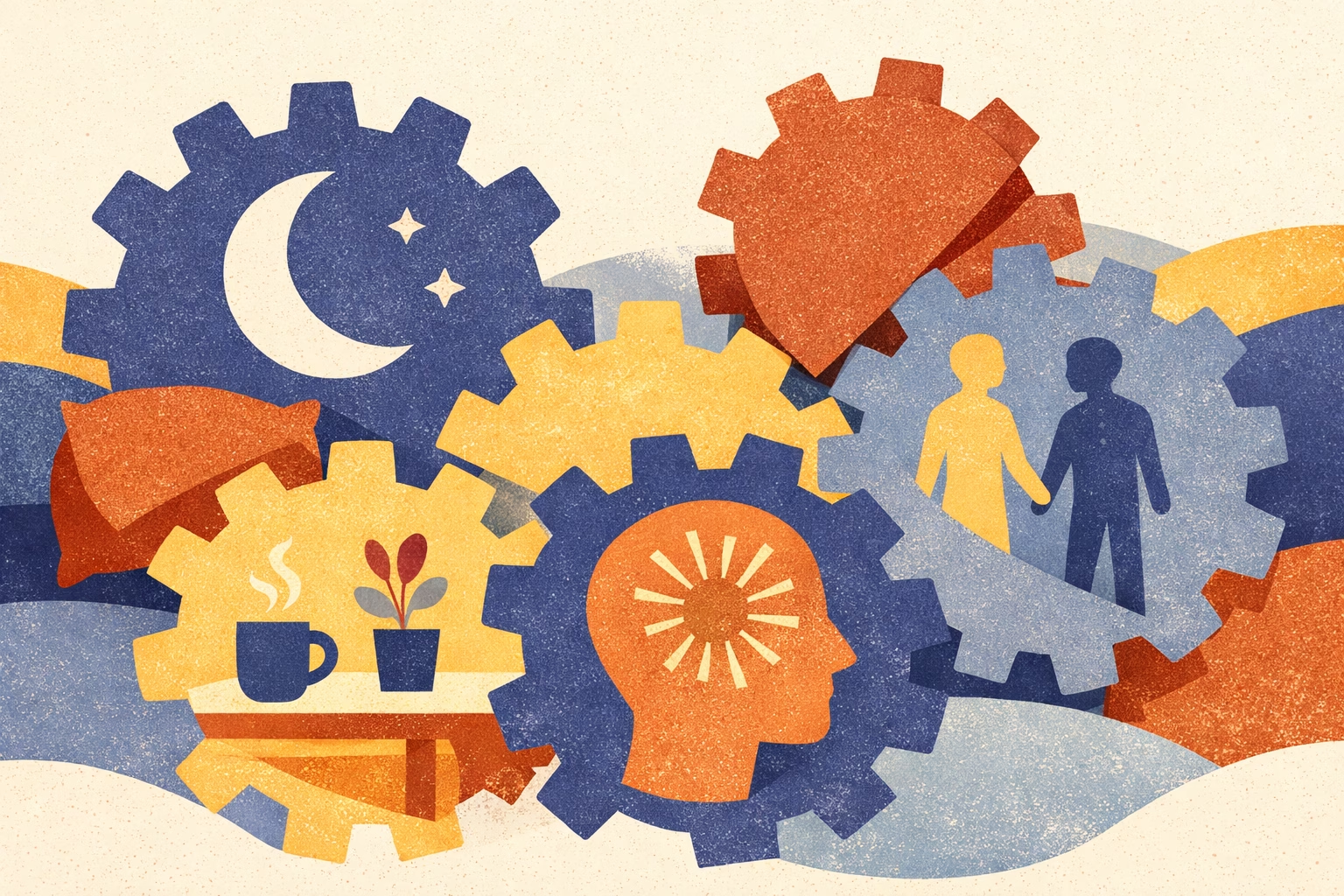
This guide takes a domain-by-domain approach: sleep, work, relationships, social life, and mental health. Each section explains what is actually happening in that area of your life, why, and what the evidence says you can do about it. The goal is not to minimise what you are experiencing. It is to give you a clear map of the territory and the tools that have genuine evidence behind them.
How tinnitus actually disrupts your life: the big picture
About 21.4 million adults in the United States experienced tinnitus in the past 12 months, roughly 9.6% of the adult population (Bhatt et al., 2016). Most people have a mild form that they can live around. Around 7.2% describe it as a ‘big’ or ‘very big’ problem in their lives (Bhatt et al., 2016). That smaller group includes people who are not sleeping, not concentrating at work, withdrawing from friends and family, and quietly struggling in ways their GP may not even know about.
A 2024 patient survey by Tinnitus UK (n=478; note that this self-selected sample likely over-represents severely affected individuals) illustrates the breadth of that disruption: 85.7% of respondents reported sleep disturbances, 68.4% reported low self-esteem, more than eight in ten reported low mood or anxiety, and two-thirds had avoided contact with friends, minimised social activities, or faced difficulties at work (Tinnitus UK, 2024). Over one in five had experienced thoughts of suicide or self-harm in the previous year. These are not edge-case statistics. They reflect what serious tinnitus actually looks like from the inside.
One of the most counterintuitive findings in tinnitus research is this: the loudness of the tinnitus signal is a poor predictor of how much it affects someone’s life. Two people can have audiologically identical tinnitus and have completely different quality-of-life outcomes. What separates them is not decibels. It is the level of distress the sound generates. This is actually good news for treatment, because distress is something that responds to psychological and behavioural intervention even when the sound itself does not change.
The impact of tinnitus on daily life extends well beyond the ear. This is why a domain-by-domain approach matters. Tinnitus is not one problem. It is several problems occurring simultaneously, each with its own mechanism and its own evidence-based response. Understanding that distinction is where effective management begins.
Tinnitus loudness does not predict how much the condition disrupts your life. Distress does. And distress responds to treatment even when the tinnitus signal stays the same.
Tinnitus and sleep: why the night feels impossible
If tinnitus feels worst at night, you are not imagining it, and you are not being weak. A sleep laboratory study using polysomnography (a technique that records brain waves, breathing, and movement during sleep) comparing 25 chronic tinnitus patients with 25 matched controls found that people with tinnitus spent more time in the lighter sleep stages (N1 and N2, the earliest and most easily disrupted phases of the sleep cycle) and had statistically significantly reduced REM sleep (P=0.031), along with directionally less time in deep slow-wave sleep (N3, the most restorative phase) (Teixeira et al., 2018). In other words, the sleep disruption is objectively measurable. It shows up on a machine, not just in a symptom diary.
One proposed mechanism is that neural hyperactivity associated with tinnitus may keep the auditory cortex in a state of heightened arousal, making it harder for the brain to transition into deep sleep stages, though this mechanism has not been confirmed in the studies cited here. Silence, paradoxically, increases tinnitus perception, which is why lying in a quiet bedroom at midnight can feel like turning up the volume.
Then the doom loop begins. Poor sleep amplifies emotional reactivity and reduces the brain’s capacity to habituate to aversive stimuli. This means a night of broken sleep does not just leave you tired: it makes the tinnitus itself feel more distressing the following day. Increased distress raises arousal at bedtime, which worsens sleep. Over weeks and months, the pattern becomes self-reinforcing.
What actually helps: the evidence on sleep interventions
Sound enrichment is the most practical starting point. Introducing a low-level background sound at night (a fan, a white noise machine, or a sound pillow) reduces the perceptual contrast between silence and the tinnitus signal. The brain responds less strongly to the tinnitus when it is not the only thing in an otherwise quiet room. This is not a cure; it is a tool for reducing the salience of the signal during a vulnerable time of day.
The more powerful intervention is CBT for insomnia (CBT-I), adapted for tinnitus patients. A meta-analysis of five randomised controlled trials (Curtis et al., 2021) found that CBT-I produced a statistically significant mean reduction of 3.28 points on the Insomnia Severity Index (ISI) (95% CI: -4.51 to -2.05, P<0.001). The components typically include:
- Sleep restriction therapy: temporarily limiting time in bed to consolidate sleep, then gradually expanding it. This rebuilds sleep pressure and reduces fragmentation.
- Stimulus control: re-establishing the association between bed and sleep (rather than bed and lying awake, anxious, listening to the ringing).
- Cognitive restructuring: addressing beliefs like ‘I cannot sleep at all with tinnitus’, which are often inaccurate and maintain hyperarousal.
It is worth distinguishing between difficulty falling asleep and wake-after-sleep-onset (WASO): waking in the early hours and being unable to return to sleep. These are related but different problems. Difficulty falling asleep is often driven primarily by arousal and is most responsive to stimulus control and pre-sleep winding down. WASO is more closely tied to sleep architecture disruption and often responds better to sleep restriction and addressing the underlying emotional processing load that tinnitus creates at night.
Many people with tinnitus discover that the bedroom itself becomes a source of dread. Dreading sleep makes falling asleep harder, which confirms the dread. CBT-I breaks this cycle by changing the behavioural and cognitive patterns that maintain it, not by silencing the tinnitus.
The NICE guideline (NG155, 2020) recommends validated insomnia screening (such as the ISI) as part of tinnitus assessment, reflecting the strength of the evidence that sleep management should be an integrated component of tinnitus care, not an afterthought.
Tinnitus at work: concentration, cognitive load, and career impact
The cognitive difficulties that tinnitus creates at work are real, measurable, and often dismissed, including by the people experiencing them, who may assume they are just anxious or tired. Understanding both pathways through which tinnitus impairs occupational functioning is important for addressing them effectively.
The two pathways
The direct pathway operates through competing auditory signals and increased listening effort. In open-plan offices, meetings, or any environment requiring sustained auditory attention, people with tinnitus must simultaneously process the sound they are trying to attend to and the tinnitus signal they cannot turn off. This raises cognitive load substantially. The result is faster mental fatigue, more errors on detail-oriented tasks, and difficulty sustaining concentration across a full working day.
The indirect pathway compounds this. Anxiety about tinnitus, depression that frequently accompanies it, and the chronic sleep deprivation described in the previous section all independently degrade cognitive performance. Some evidence suggests tinnitus distress may affect cognitive performance beyond the effects of anxiety and depression, though the studies supporting this specific claim were not available in the evidence reviewed for this guide.
The occupational impact
Qualitative evidence consistently identifies attention difficulties, fatigue, and communication challenges as the central themes of tinnitus at work. Specific population statistics on occupational impact were not available in the evidence reviewed for this guide; the occupational impact of tinnitus is nonetheless a significant and largely invisible public health concern supported by clinical experience and patient-reported outcomes.
The broader evidence on reducing tinnitus distress is consistent: reducing distress, not reducing loudness, is what restores occupational capacity. Psychological interventions have shown improvements in work productivity in tinnitus populations, though studies without control groups should be interpreted with caution.
Practical workplace adjustments
The most effective approach to managing tinnitus at work combines sound environment management, cognitive workload strategies, and a considered approach to disclosure.
Sound environment: background sound at a moderate level (a desk fan, quiet music, or a sound app) reduces the salience of tinnitus and may reduce listening effort in quiet environments. Very loud environments, such as concerts, machinery, or sustained high-volume settings, may trigger temporary worsening of tinnitus and should be mitigated with appropriate hearing protection.
Task management: front-loading cognitively demanding tasks earlier in the day, when cognitive reserves are higher, reduces the impact of afternoon fatigue. Short, structured breaks between demanding tasks help manage accumulating cognitive load. These tinnitus coping strategies for the workplace have a straightforward rationale: they reduce the total burden on an already-stretched cognitive system.
Disclosure: employees with tinnitus are not legally required to disclose the condition. Depending on your jurisdiction, reasonable workplace adjustments (noise-cancelling headphones, a quieter workspace, or reduced open-plan seating) may be available under disability or occupational health provisions without a formal diagnosis disclosure. Occupational health services can often help identify adjustments without requiring full disclosure to a line manager.
If tinnitus is significantly affecting your ability to work and you have not yet had an audiological assessment, this is the right starting point. A referral through your GP to audiology or ENT will establish a baseline and open the pathway to evidence-based support.
Tinnitus and relationships: the hidden ripple effect
Tinnitus is not a solo condition, even though it often feels like the most solitary experience imaginable. Research on partners of tinnitus patients points to a significant negative impact on relationships, particularly around communication. Mancini et al. (2019) found that tinnitus sufferers and partners do not generally talk about the condition openly with each other, a communication gap that leaves partners without the information to understand what is happening and the person with tinnitus feeling isolated and unseen. The person with tinnitus is not the only one affected.
The mechanisms are understandable once named. Sleep disruption reduces emotional availability. It is hard to be patient, present, or engaged when you are chronically sleep-deprived. Sound environment conflicts arise when one partner needs white noise to sleep and the other finds it disruptive. Social plans are modified or cancelled because a restaurant or concert venue is too loud. Gradually, the relationship begins to be organised around tinnitus in ways that neither partner fully acknowledges.
For families with children, the challenge has additional layers. High-intensity unpredictable sounds from children are a common spike trigger. Fatigue from poor sleep reduces parenting capacity. The combination of physical depletion and emotional hyperreactivity that serious tinnitus creates can make ordinarily manageable situations feel overwhelming.
What helps
The ATA (American Tinnitus Association) guidance emphasises proactive communication: explaining tinnitus to a partner before frustration has built up, rather than during it. This includes explaining that the difficulty is not the sound in isolation but the cumulative effect of disrupted sleep, increased cognitive load, and heightened emotional sensitivity.
Clinical guidance suggests that partner-inclusive counselling may produce better outcomes than treating tinnitus patients in isolation, though controlled trial evidence on this specific comparison was not available in the sources reviewed for this guide. When partners understand the neurological basis of the condition and the reasons behind specific triggers and reactions, the dynamic tends to shift from one person suffering while the other feels helpless, toward a shared problem with shared strategies.
If you are a partner of someone with tinnitus reading this: the helplessness you feel is real, and acknowledging it directly with the person you love is itself therapeutic. You do not need to fix the tinnitus to be helpful.
Tinnitus in social situations: noise, isolation, and communication
One of the less-discussed paradoxes of tinnitus is its relationship with background noise. Many people with tinnitus begin avoiding noisy environments, reasoning that quiet is better. In moderate amounts, this is understandable. The avoidance can extend to restaurants, social gatherings, family events, and public spaces until a significant portion of normal social life has been quietly removed.
The paradox is that conversational background noise levels may actually reduce tinnitus salience by providing partial masking of the signal. It is very loud environments, such as nightclubs or concerts without hearing protection, that risk triggering temporary worsening. These are meaningfully different situations that warrant different responses.
Systematic social avoidance, where someone progressively withdraws from social participation to avoid potential tinnitus triggers, is a clinical red flag. It reduces quality of life directly, reduces opportunities for the positive engagement that supports psychological wellbeing, and can accelerate the development of the depression and anxiety that themselves worsen tinnitus distress. The Tinnitus UK 2024 survey found that two-thirds of respondents had avoided contact with friends, minimised social activities, or faced difficulties at work (Tinnitus UK, 2024). This is a significant population-level concern.
The invisible nature of tinnitus creates its own social burden. Friends and colleagues cannot see or hear what you are experiencing. The absence of visible disability makes it easy for others to minimise the condition, or for the person with tinnitus to feel dismissed when they try to explain it. This sense of not being believed or understood is consistently reported as one of the most distressing aspects of the condition.
A practical social toolkit
Before a noisy event: carry hearing protection for unpredictably loud environments (small, discreet foam or filtered earplugs are widely available). Identify a quieter space in the venue you can retreat to if needed. Plan for a shorter stay if that reduces anxiety about potential worsening.
Explaining tinnitus to others: a simple framing that tends to land well is: ‘I hear a constant sound that only I can hear, and it affects my sleep and concentration. In loud environments it can get worse temporarily.’ Most people respond well to a concrete, brief explanation. You do not need to justify your adjustments.
Peer support groups: connecting with others who understand the condition from the inside has clear value. While a specific quantified RCT on support groups was not available in the evidence reviewed here, patient organisations including the British Tinnitus Association and the American Tinnitus Association offer facilitated group support, and many people report reduced isolation and improved coping from peer contact.
If you are avoiding social situations more and more to manage tinnitus, this pattern is worth raising with a healthcare professional. Social withdrawal tends to worsen the condition’s overall impact, not improve it.
Tinnitus and mental health: anxiety, depression, and the distress spiral
The mental health burden of chronic tinnitus is substantial, and it is a physiologically grounded response to a real and persistent stressor (not weakness, not catastrophising). A 2025 meta-analysis of 22 studies (Jiang et al., 2025) quantified the associations: people with tinnitus have nearly twice the odds of depression (odds ratio 1.92, 95% CI 1.56-2.36), 63% higher odds of anxiety (OR 1.63, 95% CI 1.34-1.98), three times the odds of insomnia (OR 3.07, 95% CI 2.36-3.98), and more than five times the odds of suicidal ideation (OR 5.31, 95% CI 4.34-6.51) compared to people without tinnitus.
If you are struggling with any of these, you are not alone. And you are not overreacting.
If you are experiencing thoughts of suicide or self-harm, please contact a crisis line immediately. In the UK: Samaritans, 116 123 (free, 24/7). In the US: 988 Suicide and Crisis Lifeline (call or text 988). These thoughts are a known complication of severe tinnitus distress and deserve urgent professional support.
The depression finding that changes everything
A prospective population study following Swedish working adults over two years (Hébert et al., 2012) found something that changes how tinnitus severity should be understood: hearing loss was a stronger predictor of tinnitus prevalence (whether you have it), but depression was a stronger predictor of tinnitus severity (how much it affects you). A decrease in depressive mood was associated with a decrease in tinnitus severity.
This has a direct clinical implication. If depression is amplifying how distressing the tinnitus feels, then treating the depression effectively should reduce tinnitus severity, even if the underlying sound remains exactly the same. The target for intervention is not just the ear; it is the state of the nervous system processing the signal.
The limbic amplification mechanism
Depressive states lower the threshold for perceiving tinnitus as threatening. They increase rumination, the brain’s tendency to return repeatedly to aversive stimuli. They also reduce the brain’s capacity for habituation, the process by which a chronic stimulus gradually loses its emotional significance. This means that depression does not just make someone feel worse in general; it specifically blocks the neurological process by which tinnitus becomes less distressing over time.
Anxiety operates through a similar mechanism. Hypervigilance towards the tinnitus signal, catastrophic interpretation of what the sound means, and anticipatory anxiety about situations where tinnitus might worsen all increase the emotional weight the brain assigns to the signal, making it harder to de-prioritise.
Prevalence and what to do
The prevalence of clinically relevant anxiety and depression in chronic tinnitus patients varies substantially across studies due to methodological differences in diagnostic criteria and populations studied. A 2025 meta-analysis (Jiang et al.) found that tinnitus was associated with nearly twice the odds of depression (OR 1.92) and 63% higher odds of anxiety (OR 1.63) compared to those without tinnitus. Regardless of where you fall, the pathway forward is similar: an integrated approach that addresses the mental health dimension alongside the audiological one.
The Cochrane review of 28 RCTs (Fuller et al., 2020, n=2,733) found that CBT not only reduces tinnitus distress significantly (standardised mean difference, SMD, of -0.56 vs. waitlist, low certainty; 5.65 points lower on the Tinnitus Handicap Inventory vs. audiological care alone, moderate certainty) but also modestly reduces depression scores (SMD -0.34, 95% CI -0.60 to -0.08). Access to CBT for tinnitus and mental health support through the NHS is inconsistent: only 5% of respondents in the Tinnitus UK survey had been offered it despite NICE guidelines recommending it (Tinnitus UK, 2024), and Bhatt et al. (2016) found CBT was discussed in only 0.2% of US tinnitus healthcare encounters. Internet-delivered CBT (iCBT) programmes are increasingly available and offer an access route when in-person CBT is not available.
Speaking to your GP about mental health support is not a separate track from tinnitus management. It is part of tinnitus management. Integrated care approaches that treat anxiety or depression alongside tinnitus consistently produce better outcomes than audiological care alone.
Building your tinnitus management plan: what the evidence supports
The evidence base for tinnitus management has grown substantially over the past decade. No treatment currently available eliminates tinnitus in most people. What the evidence does support, clearly and with measurable effect sizes, is reducing the distress the tinnitus causes and improving quality of life across all the domains this guide has covered. Habituation, the neurological process by which the brain gradually de-prioritises the tinnitus signal, is the realistic north star: not silence, but a life in which the sound no longer dominates.
Here is what the evidence says about each major approach.
Cognitive behavioural therapy (CBT)
CBT has the strongest evidence base of any psychological intervention for tinnitus. The Cochrane systematic review (Fuller et al., 2020, 28 RCTs, n=2,733) found CBT reduced tinnitus distress significantly compared to both waitlist control (SMD -0.56, low certainty) and audiological care alone (5.65 points lower on the Tinnitus Handicap Inventory, moderate certainty). The clinical significance threshold for the Tinnitus Handicap Inventory is a 7-point change; CBT approaches but does not clearly exceed that threshold in comparison with audiological care alone (MD -5.65 points), though it substantially exceeds it in comparison with waitlist. Adverse effects were rare. CBT works on distress, not loudness.
NICE NG155 (2020) recommends structured psychological intervention including CBT-based approaches for people with significant tinnitus distress. Access in the NHS is limited but improving; your GP can make a referral. Online CBT programmes are also available and were included in the Cochrane review, so digital delivery does not reduce the evidence base.
CBT for insomnia (CBT-I)
For sleep disruption specifically, CBT-I produces significant improvements in insomnia severity in tinnitus patients. The meta-analysis by Curtis et al. (2021) across five RCTs found a mean ISI reduction of 3.28 points (P<0.001). This is a moderate effect and clinically meaningful. If sleep is the most acute problem you are dealing with, CBT-I delivered by a sleep-trained clinician or through a structured programme is the most evidence-supported route.
Tinnitus retraining therapy (TRT)
TRT combines low-level sound therapy with directive counselling, aiming to facilitate habituation by training the brain to reclassify the tinnitus signal as neutral background noise. A prospective study by Suh et al. (2023, n=84) found significant Tinnitus Handicap Inventory reductions with both smart-device and conventional TRT at two to three months. NICE NG155 (2020) does not recommend TRT as a standalone intervention, noting insufficient evidence relative to simpler sound therapy options. TRT may still be offered in specialist tinnitus clinics and some people find it helpful, but it should not be presented as having the same evidence strength as CBT.
Note: TRT is sometimes described in the literature as a 12 to 24-month process, based on Jastreboff’s original protocol descriptions. The studies reviewed here measured outcomes at two to three months. Discuss realistic timelines with any clinician offering TRT.
Sound enrichment
Sound enrichment, sometimes called sound therapy, refers to the use of low-level background sound to reduce the perceptual contrast between silence and the tinnitus signal. It has a strong theoretical basis and is widely recommended in clinical guidelines, including NICE NG155. Practical options include sound generators, white noise apps, pillow speakers, and hearing aids (which double as sound enrichment devices for people with co-occurring hearing loss). It is a tool for management, not a standalone treatment.
Hearing aids
For people with tinnitus and co-occurring hearing loss, hearing amplification devices are recommended by both NICE NG155 (2020) and the broader clinical literature. Amplifying external sound reduces the relative prominence of tinnitus and reduces listening effort, addressing the direct pathway described in the work section above. If you have not had a full audiological assessment, this is one of the reasons it matters.
Supplements and unproven treatments
Numerous supplements are marketed for tinnitus, including ginkgo biloba, zinc, and melatonin. The clinical evidence for most of these is weak or inconsistent, and current guidelines including NICE NG155 do not recommend supplements as a tinnitus treatment. Before considering any of these, there are specific safety points to know: ginkgo biloba carries an interaction risk with blood thinners, so do not take it without consulting your doctor if you are on anticoagulant medication. Zinc at high doses over extended periods carries toxicity risk. Melatonin may interact with sedatives and should be used with caution during pregnancy. Discuss any supplement with your GP or pharmacist before starting, particularly if you take other medications. For a full, evidence-grounded review of what the clinical literature shows, the dedicated supplements articles on this site cover each in detail.
Exercise and lifestyle
General physical activity supports the psychological wellbeing that is relevant to tinnitus management. Direct evidence from RCTs specifically examining exercise as a tinnitus intervention was not identified in the sources available for this guide. This is an area where the evidence base is thin, and claims of specific benefit should be treated cautiously. The general evidence for exercise improving sleep, reducing anxiety, and supporting mood is well-established, and all three of those outcomes are relevant to tinnitus management.
Support and peer connection
Connecting with others who understand tinnitus from the inside reduces isolation and validates the experience in ways that clinical care alone cannot fully provide. Patient organisations including the British Tinnitus Association and the American Tinnitus Association offer support groups, helplines, and online communities. While a quantified RCT on tinnitus support groups was not available in the evidence reviewed for this guide, the reduction in isolation and the practical exchange of lived experience strategies are clinically recognised benefits.
The goal of tinnitus management is not silence. It is habituation: the brain learning to de-prioritise the signal so that it no longer dominates attention and emotion. CBT has the strongest evidence base. CBT-I addresses sleep specifically. Sound enrichment supports both. Treating comorbid depression or anxiety often produces the most meaningful gains in overall tinnitus distress. These tinnitus coping strategies share a common principle: they target distress, not loudness.
Living well with tinnitus is a process, not a destination
You came to this guide looking for answers to something that is affecting your sleep, your work, your relationships, and probably your sense of who you are when the noise will not stop. Those disruptions are real. They are measurable. And they are not permanent fixtures.
The central insight of this guide is that tinnitus distress, not tinnitus loudness, is the driver of how much the condition affects your life. That means the lever for change is not a quieter sound but a different response to the sound. CBT has 28 RCTs behind it showing it works. CBT-I has five RCTs showing it improves sleep in tinnitus patients specifically. Treating depression and anxiety that co-occur with tinnitus does not just improve mental health: it directly reduces tinnitus severity.
Habituation is achievable for most people. The brain is capable of learning to de-prioritise a chronic signal it cannot remove. That process takes time and is supported by the right interventions, particularly in the sleep, mental health, and sound environment domains.
The most concrete step you can take today is to speak to your GP and ask specifically about a referral to audiology or a tinnitus specialist, and to ask whether CBT is available through your local care pathway. A specific request produces better results than a general one. You deserve access to the full range of what the evidence supports.