Treatment Modalities: Self-Help Strategies

Things you can do on your own right now: better sleep routines, background sounds, shifting your attention, and small lifestyle changes.

  • Tinnitus and Family Life: Parenting, Kids, and Managing at Home

    Tinnitus and Family Life: Parenting, Kids, and Managing at Home

    When Home Feels Like the Hardest Place to Manage Tinnitus

    You are in the middle of bath time when your toddler lets out a shriek — and suddenly the ringing spikes, your heart rate jumps, and you are counting the minutes until quiet. Most tinnitus advice assumes you have access to quiet: a calm commute, a peaceful evening, a bedroom you can control. It does not account for a house full of children.

    This article is written for parents who have tinnitus and are raising children. It covers three connected challenges: managing the unpredictable noise that comes with children, protecting sleep in a household that rarely sleeps enough, and communicating with a partner who shares your home but not your ears. There is also a section for parents wondering whether their child might have tinnitus too.

    You are not failing. You are managing something genuinely difficult — and it is manageable.

    How Does Tinnitus Affect Family Life?

    Parenting with tinnitus creates a compounding stress cycle: children generate unpredictable, high-intensity sounds that trigger tinnitus spikes; spikes increase anxiety; anxiety worsens tinnitus perception; exhaustion from parenting reduces the psychological resources needed to cope. Sleep deprivation sits at the centre of this loop. Research shows that over half of people with tinnitus — 53.5% in a pooled analysis of more than 3,000 patients — experience significant sleep impairment (European Archives of Oto-Rhino-Laryngology (2022)). When parenting adds forced sleep disruption on top, the loop tightens further. The same mechanism runs across three dimensions: your own distress cycle, your shared home sound environment, and the possibility that a child in your household may also have tinnitus. Breaking any one link in this cycle, through ear protection at the right moments, better sleep, or a partner who understands, meaningfully reduces the overall burden.

    The Noise Challenge: Children, Spikes, and Protecting Your Ears at Home

    Children are, by nature, unpredictable noise sources. A sudden shriek at close range, a dinner table that sounds like a building site, a birthday party where the sound levels exceed those of a busy road — these moments do not give you time to prepare. For someone with tinnitus, sudden high-intensity sounds can trigger a spike in perceived loudness that outlasts the sound itself and feeds back into the anxiety cycle.

    The practical strategies below are based on clinical expert guidance rather than controlled trials — there is currently no RCT evidence specific to tinnitus management in parenting contexts, so treat these as informed recommendations rather than proven protocols.

    Strategies for managing noise at home:

    • Musician’s earplugs for high-noise moments. Unlike foam earplugs, musician’s earplugs reduce volume relatively evenly across frequencies, so speech stays intelligible while peak noise is attenuated. They are appropriate for bath time, children’s parties, playgrounds, and any situation involving sustained high-decibel exposure.
    • Sound enrichment to maintain a gentle ambient baseline. A low-level background sound — fan noise, a sound machine, quiet music — keeps the acoustic environment of your home from swinging between chaos and silence. Both extremes are harder to manage than a gentle middle ground.
    • Designate a recovery zone. One room or corner of your home where sound levels are consistently lower gives you somewhere to reset after a noise spike. Even ten minutes of lower stimulation can reduce the anxiety-arousal cycle.
    • Reserve earplugs for high-exposure moments. Wearing ear protection continuously throughout the day in everyday domestic situations can impede the auditory habituation process that is central to long-term tinnitus management. The goal is protection during genuine noise peaks, not insulation from normal household life.

    None of these strategies requires expensive equipment or significant household change. They are adjustments in how and when you manage your acoustic environment, not a retreat from family life.

    Sleep, Night Feeds, and the Tinnitus Exhaustion Loop

    If you are a parent with tinnitus who is also sleep-deprived, you are dealing with two problems that make each other worse. Sleep deprivation increases the brain’s auditory gain — essentially turning up the volume on sounds the nervous system processes — which can heighten tinnitus perception. Worsened tinnitus then increases autonomic arousal, making it harder to return to sleep after a night waking. Add an infant who needs feeding at 2 a.m. or a child ill at 3 a.m., and the loop tightens.

    This is not a character flaw or a sign you cannot cope. It is a physiologically predictable cycle, and the evidence supports treating it seriously. A meta-analysis of five RCTs found that CBT-based interventions significantly reduced insomnia in people with tinnitus, with a mean reduction in insomnia severity of 3.28 points on the Insomnia Severity Index (Sleep Medicine Reviews (2021)). CBT-I — cognitive behavioural therapy for insomnia — is available as a standalone programme and increasingly as a digital intervention.

    Accepting help with night feeds when tinnitus is severe is a legitimate tinnitus management strategy, not a parenting failure. Sleep is the most accessible variable at the intersection of tinnitus management and family demands, and reducing the frequency of forced night wakings is a clinical priority, not an indulgence.

    For shared sleep environments: Partners who do not have tinnitus are sometimes resistant to sound enrichment at night — understandably, since a running fan or nature sounds track may disturb their sleep. Some practical options:

    • A pillow speaker or bone conduction headband allows you to use sound enrichment without it filling the room.
    • Start with low-level nature sounds or pink noise at a volume that does not register as intrusive to your partner, and adjust together.
    • Frame the conversation around shared sleep quality — explaining that better-managed tinnitus means fewer disruptions for both of you tends to land better than presenting it as a personal need.

    Talking to Your Partner: Communication, Role-Sharing, and Avoiding Resentment

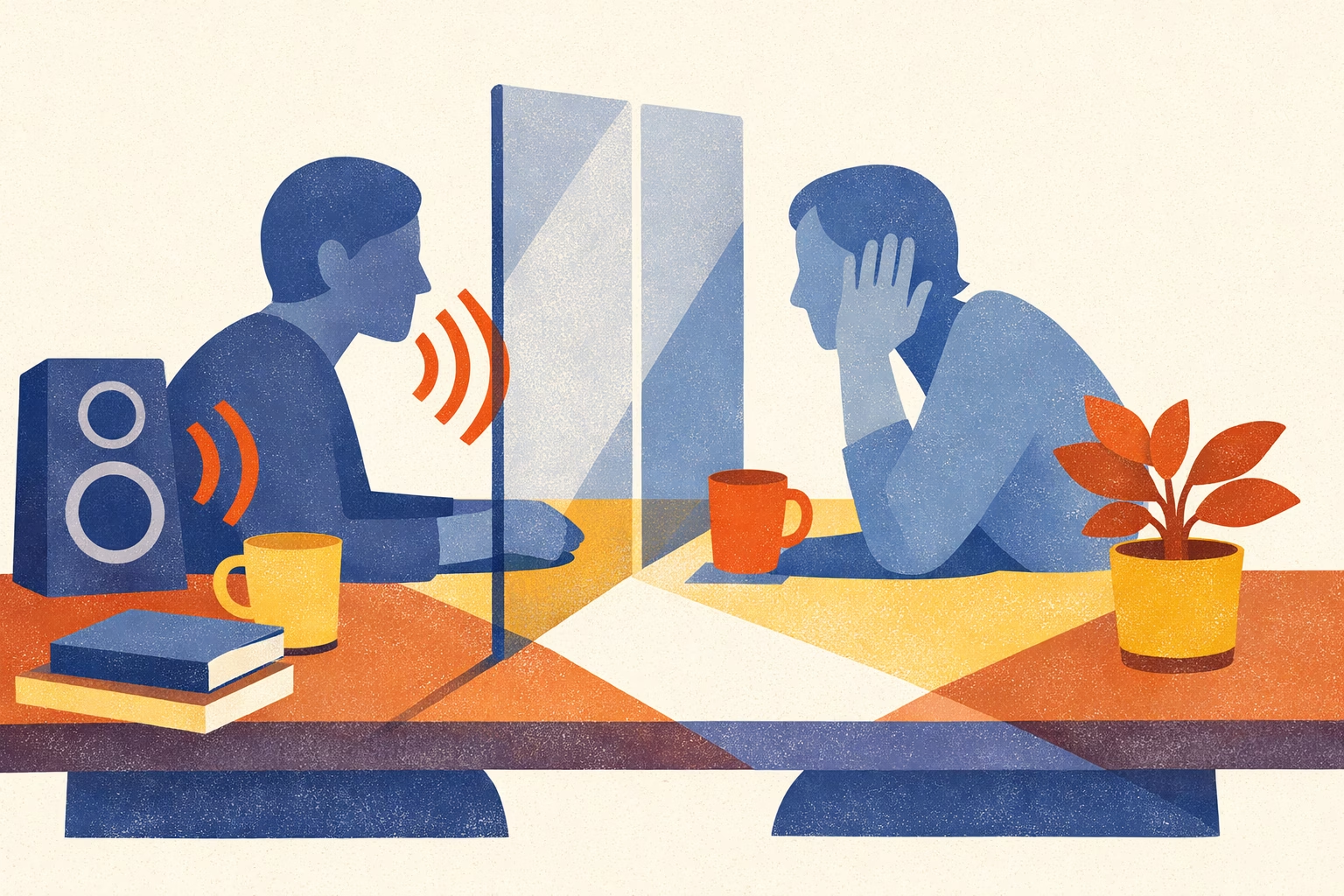
    Tinnitus is invisible. Your partner cannot hear what you hear, and the effects — difficulty concentrating during a noisy dinner, withdrawal from loud family activities, shorter temper at the end of a tiring day — can look like emotional distance or disengagement rather than a sensory condition being mismanaged under pressure.

    Survey data shows that 58% of significant others report tinnitus negatively affects their relationship, and roughly 60% of partners are rated as not very helpful by people with tinnitus — not because they do not care, but because they do not understand what is happening (V2). That gap between impact and understanding is bridgeable, and closing it makes a measurable difference.

    A few specific approaches:

    Explain tinnitus concretely, not abstractly. “I have ringing in my ears” is easy to minimise. “Right now, I have a high-pitched tone playing at around the volume of a running shower, constantly, and I cannot turn it down” is much harder to dismiss. Concrete descriptions anchor understanding.

    Make sound environment needs part of shared household decisions. If you need a sound machine at night, or a quieter space after school pickup, or to skip a particularly loud event, framing these as practical management strategies — comparable to someone with a chronic migraine avoiding certain light conditions — normalises them rather than making each request a negotiation.

    Consider including your partner in clinical appointments. Research on tinnitus rehabilitation shows that significant others who are involved in the assessment and treatment process show reduced third-party disability, even without receiving direct treatment themselves (Audiology Research (2024)). An audiologist or tinnitus counsellor can explain the condition in a clinical context that sometimes lands differently than a personal conversation at home.

    The goal is not for your partner to experience tinnitus empathetically — it is for them to understand it practically, so that role-sharing around noise, sleep, and social commitments becomes a joint decision rather than a source of friction.

    Could My Child Have Tinnitus Too? What Parents Need to Know

    It is a question many parents with tinnitus eventually ask. The answer: it is possible, and children are significantly under-recognised as tinnitus sufferers because they rarely self-report it spontaneously.

    A large population-based cohort of children and adolescents found that 3.3% of children aged 4–12 and 12.8% of adolescents aged 13–17 experience tinnitus suffering (Ear and Hearing (2024)). A broader systematic review of 25 studies found prevalence ranging from 4.7% to 46% across general paediatric populations, with variability reflecting differences in how studies defined and measured tinnitus (BMJ Open (2016)). The pattern across both sources is consistent: tinnitus in children is more common than most parents or clinicians assume.

    The same research links paediatric tinnitus to internalising behavioural problems — anxiety-type symptoms, withdrawal, difficulty sleeping — and elevated anxiety and depression scores compared to children without tinnitus (Clinical Pediatrics (2024)). Children rarely say “I hear ringing”; they say they cannot sleep, that school is hard to concentrate in, or they stop wanting to attend noisy activities.

    Signs to watch for:

    • Complaints of ringing, hissing, or buzzing
    • Sleep difficulties not explained by routine or illness
    • Concentration problems or school performance decline
    • Withdrawal from previously enjoyed noisy activities
    • Mood changes, particularly anxiety or irritability

    If you notice several of these, ask your GP for a referral to a paediatric audiologist. A hearing assessment is the starting point — hearing loss is a known risk factor for tinnitus in children, and identifying it early matters.

    A parent with personal experience of tinnitus is actually better placed to notice these signs than most. You know what the condition involves, and you are less likely to dismiss a child’s complaint as imagination.

    Managing Tinnitus at Home Is a Whole-Family Challenge — But It’s Manageable

    Tinnitus does not stay in one room. It ripples through sleep environments, household sound decisions, parental capacity, and relationships. The compounding loop — noise spikes, exhaustion, anxiety, worsened perception — is real, and it is harder to break when you are also responsible for the people who are inadvertently generating the noise.

    The evidence points clearly to where interventions help: sleep is the most important lever, and CBT-I has solid trial support. Partner involvement in tinnitus management reduces burden on both sides. Selective ear protection during genuine noise peaks protects without impeding habituation. And recognising the signs of tinnitus in children early can prevent years of under-identification.

    You do not have to manage all of this alone — and knowing that asking for help is itself part of the management plan is a useful place to start. For a broader look at daily life strategies, the guide to living well with tinnitus covers sleep, concentration, and emotional wellbeing in more depth. If the relationship dimension feels like the most pressing challenge right now, the article on tinnitus and relationships explores communication and partner support in more detail.

  • What to Expect Living With Tinnitus Long-Term: The First Year and Beyond

    What to Expect Living With Tinnitus Long-Term: The First Year and Beyond

    The First Year With Tinnitus: Why It Feels So Hard Right Now

    If you are reading this at 2 a.m. because the ringing won’t let you sleep, or because you’ve spent weeks searching for answers and not finding any that feel real — this article is for you. For most people living with tinnitus long-term, the first three months are the hardest: distress typically peaks at onset and declines substantially by six months as the brain stops treating the sound as a threat, a process called habituation that occurs independently of any change in the tinnitus signal itself (Umashankar et al., 2025). The distress you are experiencing in the early months is not a sign that you are handling it badly. It is a predictable, measurable response to a new signal your brain has not yet learned to dismiss.

    What follows is a phase-by-phase account of what living with tinnitus long-term actually looks like, grounded in clinical evidence. Not cheerleading. Not generic tips. A genuine roadmap with timelines, mechanisms, and honest answers to the question you most want answered: will this get better?

    What Most People Experience Living With Tinnitus Long-Term

    For most people living with tinnitus long-term, the first three months are the hardest. Distress — not the loudness of the sound — is what drives impairment, and distress typically peaks at onset then declines substantially by six months as the brain progressively stops treating the sound as a threat, a process called habituation. A community-based longitudinal study found that scores on the Tinnitus Handicap Inventory and Tinnitus Functional Index were maximal at onset and declined significantly over the first six months, even without any change in auditory sensitivity (Umashankar et al., 2025) — though the followed-up sample was relatively small (n=26). Most people who follow a structured care programme show clinically meaningful improvement within 18 months (Scherer & Formby, 2019), and clinical estimates suggest that up to one-third of chronic tinnitus patients eventually experience remission over five to ten years — though this figure is based on expert consensus rather than a single large longitudinal study.

    Phase 1: The Acute Crisis (Weeks 1–12)

    The first weeks with tinnitus can feel catastrophic. The sound is new, constant, and impossible to ignore. Your brain is doing exactly what it is designed to do when it detects an unfamiliar, uncontrollable threat: it locks onto it.

    Researchers propose that this acute distress is driven by limbic system activation. The amygdala — the brain’s threat-detection centre — tags the new sound as potentially dangerous. The result is a feedback loop: you hear the sound, you feel anxious, the anxiety increases your attention to the sound, and that heightened attention amplifies the perceived severity. Heightened alertness where you scan constantly for threat (sometimes called hypervigilance), difficulty sleeping, trouble concentrating, and a background sense of dread are not overreactions. They are the predictable signature of this conditioned threat response.

    This is also why the acute phase is almost universally described as the worst period, both in clinical settings and in patient communities. Long-term sufferers consistently look back on the first three months as far more distressing than any subsequent period — not because the sound was louder, but because the emotional response was at its most intense.

    One important piece of context: roughly 70% of acute tinnitus cases resolve on their own within the first weeks to months. For the cases that persist, the acute distress is not a permanent ceiling. It is the starting point of an adaptation process with a well-documented trajectory.

    Phase 2: Early Adaptation (Months 3–6)

    Somewhere between three and six months, most people notice something shift — not that the tinnitus has gone quiet, but that it is starting to lose its grip. You might have an hour where you forgot it was there. A night where you fell asleep without the usual battle. A morning where the first thought wasn’t about the ringing.

    This transition has a clinical basis. Umashankar et al. (2025) found that THI and TFI distress scores declined significantly between the acute phase and the six-month follow-up, with no corresponding change in auditory sensitivity. The tinnitus signal itself had not changed — the brain’s response to it had. Researchers interpret this as central habituation: the auditory cortex and limbic system progressively down-regulating the threat response as the signal becomes familiar and associated with no real harm.

    What early adaptation feels like from the inside is a gradual reduction in the emotional charge attached to the sound. The catastrophic thoughts — “this will ruin my life,” “I’ll never sleep properly again” — begin to lose their hold. Sleep improves on more nights. Stretches of normal concentration become longer.

    Progress at this stage is rarely smooth. Spikes — periods when tinnitus seems louder or more intrusive — are normal and expected, particularly during illness, stress, or after loud noise exposure. A bad week at month four does not mean the progress of the previous weeks is gone. The trajectory is real even when individual days contradict it.

    Phase 3: Consolidation and the 12-Month Milestone

    At the 12-month mark, many people find themselves in a meaningfully different place than they were at onset. The clinical evidence supports this. A well-designed randomised controlled trial of structured tinnitus care programmes found that approximately 77.5% of participants showed clinically meaningful improvement at 18 months (Scherer & Formby, 2019). That figure spans all structured care approaches — the consistent message across TRT, partial TRT, and standard audiological care was that structured attention to the condition drives improvement, regardless of the specific method.

    A systematic review of TRT across 15 RCTs also confirmed improvement across multiple time points, though it found TRT was not superior to other structured approaches (Alashram, 2025). The practical implication is that the format of support matters less than having support at all.

    The word “habituation” can sound like a small consolation — you are just getting used to it. In practice, it describes something more significant. The sound may still be audible, but it has lost its emotional charge. It fades into the background the way the hum of a refrigerator or the hiss of air conditioning does: present, but not registering as relevant. For many people, this is experienced as something very close to freedom.

    If you are past 12 months and feel you are still struggling, that does not mean you are stuck permanently. Tinnitus long-term prognosis is better than most people in the acute phase believe. The brain continues adapting beyond the first year. Dawes et al. (2020), drawing on a UK Biobank cohort of over 168,000 adults, found that at four years, 18.3% of people with tinnitus reported resolution — and clinical estimates suggest the proportion who experience remission over five to ten years is closer to one-third, though this longer-term figure rests on expert consensus rather than a single large cohort study. Progress beyond 12 months is real, even if it is less visible.

    What Long-Term Life With Tinnitus Actually Looks Like

    For people who have reached a stable long-term baseline, tinnitus is typically present but not dominating. This is consistently how long-term sufferers in patient communities describe it: the sound is there, but it is no longer the loudest thing in the room.

    Spikes still happen — during illness, periods of high stress, or after significant noise exposure. The difference from the acute phase is that these spikes are shorter and less destabilising. People who have been through the habituation process once find subsequent recovery periods faster, consistent with the conditioning model: the brain has already learned that the sound is not a threat.

    Sleep, work, and relationships tend to return to near-normal. Tinnitus loudness at this stage remains a poor predictor of distress — what matters is the emotional response to the sound, not its measured intensity. Two people with objectively similar tinnitus can have very different long-term outcomes depending on how their nervous system has adapted.

    A stable baseline can be disrupted. Extended periods of sleep deprivation, significant hearing deterioration, or a return to prolonged silence can all temporarily intensify tinnitus perception. The practical response to any of these is the same: use the tools that helped during initial habituation — sound enrichment, activity, professional support if needed.

    Some people continue to struggle beyond the typical habituation window. This is not a failure of willpower. It is a signal that further support would help — which is available and effective.

    What Helps and What Gets in the Way

    Habituation can happen without formal treatment, but it can also be accelerated. The evidence is clearest for the following.

    CBT and internet-delivered CBT (iCBT) are the most consistently supported approaches. A Cochrane meta-analysis of 28 RCTs found CBT reduced tinnitus-specific quality-of-life distress with a standardised mean difference of -0.56, equivalent to a roughly 11-point THI reduction (Fuller et al., 2020). Internet-delivered programmes also show meaningful results: Sia et al. (2024) found large effect sizes for iCBT on tinnitus distress measures (Cohen’s d approximately 0.85 on THI and 0.80 on TFI across 14 studies), though a separate meta-analysis of 9 RCTs (Xian et al., 2025) found significant improvement on TFI and TQ but not on THI specifically. CBT does not change the sound; it changes the emotional response to it. The UK’s NICE guidelines recommend digital CBT as a first-line option before individual or group therapy.

    Sound enrichment — keeping some background noise present, especially in environments that would otherwise be completely silent — is consistently recommended to prevent the central gain escalation that silence can trigger. This does not require specialist equipment: a fan, low-level music, or a nature sound app works.

    Physical activity and social engagement are supported by general evidence on anxiety and stress regulation. For tinnitus specifically, anything that reduces the limbic system’s baseline alert level supports habituation.

    What impedes habituation is worth knowing. Compulsive monitoring — repeatedly testing whether the tinnitus is still there, or at what volume — reinforces the threat-detection loop rather than dampening it. Total silence, for the reasons above, makes the signal more prominent. Social withdrawal and self-medicating with alcohol both worsen tinnitus distress over time.

    The strategies above are covered in more depth in the complete guide to living with tinnitus — this section is intended to orient, not to be comprehensive.

    The Long Road Is Shorter Than It Feels Right Now

    If you are in the early months of tinnitus, the distance between where you are now and a functional, settled life can feel impossible to cross. It is not. The distress you are experiencing is real and measurable, and so is the process by which it eases.

    The first year is the hardest. Understanding the tinnitus habituation timeline helps explain why the months ahead look different from where you stand now: habituation is not a vague hope — it is a brain process that happens in most people, with or without treatment, and significantly faster with the right support. The goal is not silence. It is a life in which tinnitus is no longer the thing that organises your day.

    A concrete next step: if you have not yet spoken to an audiologist or GP about a structured programme, that conversation is the most useful thing you can do right now. Digital CBT programmes are available on referral and self-referral in many regions, and the evidence for them is solid. If you want to understand the full range of management options, the complete tinnitus management guide covers each one in detail.

  • How to Explain Tinnitus to Someone Who Doesn’t Have It

    How to Explain Tinnitus to Someone Who Doesn’t Have It

    Why Explaining Tinnitus Is So Hard

    You know that moment: you mention your tinnitus, and someone nods sympathetically and says, "Oh, I had ringing in my ears after a concert once — it went away after a day or two." And just like that, years of relentless noise, disrupted sleep, and exhausting concentration feel dismissed in a single sentence.

    Living with an invisible condition means you carry a private reality that others cannot see, test, or hear. There is no cast on your arm, no visible symptom to point to. And because most people have experienced brief, harmless ear ringing at some point, they assume they already understand. They do not. This article is written for you — the person with tinnitus — with a practical toolkit for closing that gap, so that the people who matter most in your life can offer real support instead of well-meaning but unhelpful advice.

    The short answer: what actually works

    The most effective way to explain tinnitus is to combine a concrete analogy with a specific example of how it affects your daily life. Saying "imagine hearing a car alarm that never, ever stops — not even when you sleep" lands far harder than any clinical definition. Personal impact builds empathy; medical descriptions rarely do (American).

    Why Tinnitus Is So Hard for Others to Grasp

    Tinnitus is subjective — only you can hear it. There is no scan, no blood test, no external sign. This places it in the category of invisible illnesses, alongside migraine and chronic pain, where the absence of visible evidence makes it easy for others to underestimate the burden.

    The biggest obstacle is the transient ringing trap. Most people have experienced temporary ear ringing after a loud event, and it resolved within hours. This leads them to frame your experience on that scale — a minor inconvenience that should disappear on its own, or that you should be able to push past. What they are missing is the fundamental difference: chronic tinnitus does not stop.

    A synthesis of 86 studies covering over 16,000 tinnitus patients found that the condition’s impact spans sleep disruption, concentration difficulties, social life impairment, and relationship strain — it is not merely an auditory experience (Hall et al., 2018). The sound competes with every conversation you try to follow, every quiet moment you try to find, every night’s sleep you try to get. Research has found that 60% of tinnitus patients meet the clinical diagnostic criteria for insomnia — not just occasional poor sleep, but a formal sleep disorder caused by tinnitus (Asnis et al., 2021). That is the gap between what others imagine and what you are living.

    Analogies That Actually Land

    Clinical definitions do not build empathy. Specific, visceral analogies do. The American Tinnitus Association explicitly endorses concrete, personalised descriptions of how tinnitus affects daily life over clinical explanations, because shared understanding begins with shared imagination (American).

    Here are four analogies you can use, along with when to reach for each one:

    "Imagine a car alarm going off right outside your window — and it never stops. Not during dinner, not while you’re trying to read, not when you finally get into bed at night." This is the analogy to reach for when you need someone to grasp the inescapability. The car alarm is universally irritating and impossible to mentally block. A patient writing about their experience put it plainly: "You never really escape from the car alarm. You never have a quiet moment. The quieter the room, the louder the tinnitus" (Steven, 2012). Use this with anyone who responds with "can’t you just tune it out?"

    "It’s like trying to have a conversation while a radio is stuck between stations in the background — constant static that only I can hear." This one works well for conveying the constant background intrusion without requiring the other person to imagine extreme distress. It is less dramatic and more useful in professional contexts or with acquaintances. The British Academy of Audiology uses a similar framing — constant static — as an endorsed lay analogy for this reason.

    "Think about how wrecked you feel after a terrible night’s sleep. Now imagine that the thing waking you up is a sound only you can hear, and there is no way to switch it off." Sleep disruption is one of the most universally relatable forms of suffering. Almost everyone has experienced how badly a few poor nights affect their mood, memory, and patience. This analogy works particularly well with partners and close friends, where you want someone to understand the cumulative emotional weight, not just the sound itself.

    "Imagine a volume dial that someone has turned up to seven — and you cannot reach it to turn it down." This is the analogy for conveying loss of control. It communicates that the problem is not one of effort or attitude — there is no mental technique that lets you simply "turn it down." Use this when someone suggests you "think positively" or "just ignore it."

    Tailoring the Conversation by Relationship

    Partners and spouses

    Your partner likely lives closest to the effects of your tinnitus — disrupted nights, changed social plans, moments where you seem distant or irritable. They deserve the full picture: how the sound affects your sleep, your concentration, and your emotional availability. Research involving 156 partners of tinnitus patients found that 58% felt tinnitus negatively affected their relationship, and 38% reported strained communication specifically (Beukes et al., 2022). Bringing a partner into your understanding — including explaining what helps and what does not — reduces that strain. If persistent misunderstanding remains despite honest conversation, ask your audiologist or tinnitus clinician about partner-inclusive counselling sessions, where a clinician helps bridge the gap.

    Close friends

    Close friends benefit most from the analogy approach followed by a short list of what actually helps. You do not need to share every detail; you need them to understand enough to avoid the unhelpful responses and offer genuine support. A line like "it genuinely affects my sleep and concentration, so bear with me on noisy days" is enough to open a door without making tinnitus the whole conversation.

    Colleagues

    At work, you generally need functional understanding rather than emotional understanding. Focus on practical impact: "I find it harder to follow conversations in noisy environments, so I work best in quieter spaces" or "I may need to ask you to repeat things when there is a lot of background noise." You do not owe colleagues your emotional experience — just enough context to reduce friction and get the adjustments you need.

    Acquaintances

    Keep it brief and confident. "I have a chronic hearing condition that causes constant sound in my ears — it’s manageable, but it affects me in noisy situations." Said without apology, this closes the topic gracefully without inviting a barrage of supplement recommendations or unsolicited advice.

    Handling Dismissal and Unhelpful Responses

    Dismissal is one of the most common experiences tinnitus patients report, and one of the most damaging. Tinnitus UK notes that poor understanding from others can actually worsen distress — misunderstanding in the early phase "may actually make your tinnitus worse" (Tinnitus). You cannot control other people’s reactions, but you can prepare for the most common ones.

    "Just ignore it." Try: "I understand why that sounds logical, but it genuinely isn’t possible — imagine trying to ignore a car alarm that’s playing inside your head. The volume dial isn’t accessible from my end."

    "I had ringing in my ears once and it went away." Try: "Temporary ringing after loud noise is really common. What I have is different — it has never stopped, for months [or years]. It’s a different category of experience."

    "Have you tried [supplement / acupuncture / essential oils]?" Try: "I appreciate you trying to help. I’m working with an audiologist on evidence-based approaches, so I’ll stick with that for now." You do not have to justify this further.

    One patient described the aftermath of receiving the "just ignore it" dismissal from her own doctor: "I left the office feeling that no one will ever understand what I am going through" (Marisa, 2018). That kind of invalidation — especially from someone in a trusted position — compounds the loneliness of the condition. When a close relationship (a partner, a parent) remains persistently dismissive despite your best efforts, it is worth raising this with your tinnitus clinician. Involving them in a consultation can shift the dynamic more effectively than any conversation on your own.

    What You Don’t Have to Explain

    You are not obliged to educate every person you meet about tinnitus. The emotional work of explaining an invisible condition, defending its reality, and managing other people’s reactions takes real energy — energy that could go toward your own wellbeing.

    It is entirely valid to say "it’s a chronic hearing condition" and leave it there. You can decide, based on the relationship and the moment, how much to share. Accepting partial understanding — rather than holding out for full comprehension — is itself a healthy strategy. As one patient put it, any support, even incomplete understanding, has value (Marisa, 2018).

    Setting a quiet limit on explanation is not giving up. It is protecting yourself.

    The Goal Isn’t Perfect Understanding — It’s Enough Understanding

    The aim of explaining tinnitus is not to make another person feel exactly what you feel. That is not possible. The aim is to get enough understanding to reduce friction, improve support, and feel a little less alone in it.

    The tools that work: a concrete analogy that makes the experience imaginable, a specific example of how it affects your daily life, and a sense of how much detail the relationship actually calls for. Those three things together do more than any clinical definition.

    For a broader picture of managing life with tinnitus — including sleep strategies, concentration tools, and emotional coping approaches — the Complete Guide to Living With Tinnitus brings all of that together in one place.

    And on days when you are too tired to explain anything at all, tinnitus support communities — such as those run through the American Tinnitus Association or forums like TinnitusTalk — offer something genuinely different: a space where no explanation is needed, because everyone there already knows.

  • Signs Tinnitus Is Going Away: How to Tell If It’s Healing

    Signs Tinnitus Is Going Away: How to Tell If It’s Healing

    Is Your Tinnitus Actually Getting Better?

    Watching for signs of improvement in tinnitus is an emotionally loaded exercise. You find yourself listening more carefully, cataloguing how loud the sound feels today compared to yesterday, noticing whether you got through a whole morning without thinking about it. That kind of monitoring is entirely natural — and understanding what the signs actually mean can help you interpret what your body is telling you.

    The honest answer is that what "getting better" looks like depends significantly on whether your tinnitus is recent or long-standing. A sound that fades within days after a loud concert is following a different biological path than one that has persisted for months or years. Both can genuinely improve, but through different mechanisms, and expecting the wrong kind of improvement can leave you discouraged when real progress is actually happening.

    This article covers both pathways clearly, grounded in what the research actually shows about tinnitus recovery.

    The Short Answer: Signs That Tinnitus Is Going Away

    Signs that tinnitus is going away include reduced perceived loudness, shorter or less frequent episodes, improved sleep, and feeling less bothered by the sound — but for chronic tinnitus, reduced emotional impact (habituation) is the more common recovery pathway than the sound disappearing entirely.

    Here are seven signs that your tinnitus may be improving:

    • Reduced perceived intensity. The sound seems quieter or less intrusive than it was at its worst.
    • Shorter episodes. Periods when you notice the sound are briefer, or it takes longer to return once it fades.
    • Fewer spikes. Sharp increases in volume happen less often or feel less severe.
    • Improved sleep. You fall asleep more easily and are less likely to be woken or kept awake by the sound.
    • Improved mood. Anxiety or irritability linked to the tinnitus has eased.
    • Reduced ear pressure or fullness. Any sense of blockage or pressure associated with the tinnitus is decreasing.
    • Decreased attentional capture. This is the most practically meaningful sign: the sound is still present, but it no longer pulls your attention away from conversations, work, or rest. You finish a task and realise you were not thinking about the tinnitus at all.

    Attentional capture — the way an unwanted sound can hijack your focus — is what makes tinnitus disabling for many people. When that grip loosens, quality of life improves substantially, whether or not the sound itself has disappeared.

    Two Ways Tinnitus Gets Better: Resolution vs. Habituation

    Most articles about tinnitus improvement list the same checklist of signs without explaining why they occur. There are actually two distinct processes involved, and understanding them changes how you interpret your own experience.

    True resolution is when the tinnitus signal itself diminishes because the underlying physiological cause reverses. This is most common with recent-onset, acute tinnitus — a case that follows noise exposure, a mild hearing loss, or an ear infection that then heals. As the peripheral auditory system recovers, the brain receives more complete input, and the phantom sound fades. In these cases, what you hear genuinely quietens at the source.

    Habituation is a different process. The brain learns to classify the tinnitus signal as non-threatening and non-important, and progressively deprioritises it. The auditory cortex still registers the sound, but the limbic system — which governs emotional response — and the attention networks stop amplifying it. Think of how you stop hearing an air-conditioning unit humming once you have been in a room for a while. The sound has not changed; your brain has simply routed it into the background. This is the primary recovery pathway for chronic tinnitus.

    Here is the counterintuitive part, and the one no competitor in this space currently explains: perceived tinnitus loudness can decrease even when audiological measurements show no change. A community-based longitudinal study found that both tinnitus distress scores and psychoacoustically matched loudness measurements fell significantly over the first six months — while objective measures of auditory sensitivity remained stable throughout (Umashankar et al., 2025). The peripheral auditory system had not changed. What changed was central: the brain’s processing of the signal. This means that when you notice the tinnitus seems quieter, that perception can be entirely real even if an audiologist’s measurement would show the same reading as before.

    FMRI research confirms that tinnitus perception involves not just the auditory cortex but the limbic system, the default mode network, and the attention network (Hu et al., 2021). Recovery, in many cases, is a rewiring of how the brain responds to a signal that may remain present at the periphery.

    Recovery Timelines: What to Realistically Expect

    Timelines differ substantially depending on whether tinnitus is acute (under approximately three months) or chronic (beyond three to six months).

    Acute tinnitus often resolves quickly. Post-concert or noise-induced ringing frequently fades within 16 to 48 hours as the temporarily stressed hair cells in the cochlea recover. For tinnitus following sudden sensorineural hearing loss (ISSNHL) — one of the more common acute triggers — two-thirds of patients with mild-to-moderate hearing loss achieved complete tinnitus remission within three months of follow-up (Mühlmeier et al., 2016). Hearing recovery typically preceded tinnitus resolution in most of those cases, which supports the idea that peripheral recovery drives true resolution. The widely cited figure from the Deutsche Tinnitus-Liga is that approximately 70% of acute tinnitus cases resolve spontaneously.

    Chronic tinnitus follows a slower, more varied trajectory. The first weeks and months are typically the hardest — distress scores are highest at onset and decline substantially over the initial six months as the brain begins central adaptation (Umashankar et al., 2025). This is genuinely good news for anyone currently in that acute distress phase: the statistics suggest the most difficult period is already behind you or nearly so.

    Complete spontaneous remission in chronic tinnitus does occur. A systematic collection of 80 people with chronic tinnitus who achieved total remission found that remission happened after an average of around four years, was gradual in roughly 79% of cases, and proved highly durable — 92.1% remained completely symptom-free at 18-month follow-up (Sanchez et al., 2021). This study collected cases specifically because remission had occurred, which means it likely represents a more positive subset of all chronic tinnitus patients rather than a typical population figure.

    Early intervention within the first year appears to improve prognosis, and duration alone does not reliably predict outcome. Some people see improvement after years; others plateau earlier.

    For most people, the hardest part of tinnitus is the beginning. Both acute and chronic tinnitus show measurable improvement over time for the majority of those affected — but the mechanism and timeline differ.

    When "Getting Better" Means Something Different for Chronic Tinnitus

    If you have had tinnitus for months or years and are starting to notice positive changes, you may be frustrated that the sound is still there. The hope for silence is completely understandable. And it is worth reframing what genuine progress looks like for long-standing tinnitus.

    The clinical term for the goal state is "compensated tinnitus" — tinnitus that is present but no longer distressing or functionally impairing. Reaching that state is not a consolation prize. Distress, sleep disruption, concentration difficulties, and emotional strain are what make tinnitus a condition worth treating. When those consequences fade, life quality improves significantly, whether or not the sound itself has gone.

    The path typically moves through recognisable stages. At first, tinnitus demands constant attention — it dominates sleep, intrudes on conversations, and colours every quiet moment. Over time, with the brain’s natural adaptation and sometimes with support, the emotional reaction reduces first. The sound becomes less alarming. Then the automatic attentional capture begins to ease. Eventually, for many people, hours pass without awareness of the sound at all — even though an audiologist could still detect it.

    This process can be supported. Cognitive behavioural therapy (CBT) has evidence behind it for reducing tinnitus distress in chronic cases (Hoare et al., 2022), and sound enrichment strategies help by reducing the contrast between the tinnitus signal and background acoustic activity. If you are noticing early signs of habituation, these approaches can accelerate what the brain is already beginning to do on its own.

    Many people with chronic tinnitus describe the turning point not as the sound getting quieter, but as a day when they realised they had not thought about it for several hours. That shift — from tinnitus managing you to you barely noticing it — is what habituation looks like in practice.

    Warning Signs: When to See a Doctor Instead

    Watchful waiting makes sense for mild tinnitus that seems to be improving. But some presentations require professional assessment rather than patience.

    Seek urgent care if you experience:

    • Sudden hearing loss alongside tinnitus — within 30 days of onset, this warrants ENT assessment within 24 hours (National, 2020)
    • Pulsatile tinnitus (a rhythmic sound that beats in time with your pulse), especially with sudden onset — this may indicate a vascular cause and requires immediate evaluation
    • Tinnitus in one ear only — warrants assessment to rule out conditions including acoustic neuroma
    • Tinnitus accompanied by vertigo or dizziness — may indicate a vestibular disorder
    • Any ear discharge, pain, or neurological symptoms alongside tinnitus

    If tinnitus has persisted for more than one week after noise exposure without any sign of improvement, that is a reasonable point to contact your GP rather than continuing to wait. And if tinnitus — at any stage — is causing significant mental health distress, that alone is grounds for a referral (National, 2020).

    For most cases of mild, improving tinnitus, none of these will apply. But being able to identify the flags that warrant action is part of managing the condition well.

    What Progress Really Looks Like

    Meaningful improvement in tinnitus takes two forms. For recent-onset tinnitus, the sound itself often fades as the underlying cause resolves — and the majority of acute cases do resolve, typically within weeks to three months. For chronic tinnitus, the more common path is habituation: the brain progressively deprioritises the signal until it no longer disrupts sleep, attention, or daily life. Both are genuine, clinically meaningful progress.

    The most difficult period is typically the earliest. If you are currently in acute distress, research consistently shows that the trajectory tends toward improvement over the first six months (Umashankar et al., 2025). If you are further along and noticing that you are less bothered — sleeping better, concentrating more easily, finishing tasks without constant interruption — that is not a small thing. That is habituation working.

    CBT and sound enrichment can support the process if it feels slow. Reducing stress, maintaining good sleep hygiene, and avoiding silence help too. Progress with tinnitus rarely announces itself dramatically. More often it shows up in the ordinary moments you got through without noticing the sound at all.

  • Medications That Cause Tinnitus: The Complete Ototoxicity Guide

    Medications That Cause Tinnitus: The Complete Ototoxicity Guide

    Could Your Medication Be Causing That Ringing?

    Realising that a medication you depend on might be responsible for a new ringing or buzzing in your ears can feel unsettling. You’re not imagining it, and you’re not alone in making that connection. Drug-induced tinnitus is one of the few forms of tinnitus with a clearly identifiable cause, and that is genuinely useful information. Knowing which drug class is involved tells you a great deal about whether the tinnitus is likely to resolve, and what your next step should be. This article walks through the major drug classes, what reversibility actually means for each, and a clear action plan.

    Which Medications Can Cause Tinnitus?

    Over 200 medications are classified as ototoxic, but the most important distinction for patients is reversibility: tinnitus from high-dose aspirin or NSAIDs typically resolves when the drug is stopped, while damage from aminoglycoside antibiotics and cisplatin chemotherapy is often permanent, making new tinnitus during these treatments an urgent reason to contact your prescriber (Seligmann et al. (1996)).

    The major drug classes linked to tinnitus include:

    • High-dose aspirin and salicylates — the most commonly encountered reversible cause
    • NSAIDs (ibuprofen, naproxen, diclofenac) — reversible at high or prolonged doses
    • Aminoglycoside antibiotics (gentamicin, tobramycin, amikacin, neomycin) — risk of permanent damage
    • Platinum-based chemotherapy (cisplatin, carboplatin) — high risk of permanent damage
    • Loop diuretics (furosemide, ethacrynic acid) — variable; route and dose matter significantly
    • Antimalarials (quinine, chloroquine) — typically reversible
    • Macrolide antibiotics (azithromycin, erythromycin, clarithromycin) — elevated risk confirmed by recent large-scale evidence
    • Certain cardiac and psychotropic drugs — less common; class-dependent reversibility

    The word “ototoxic” simply means toxic to the inner ear. Tinnitus is often the earliest sign — it can appear before any measurable change in your hearing shows up on a standard test (Seligmann et al. (1996)).

    The Reversibility Divide: Temporary vs. Permanent Risk

    Understanding reversibility comes down to one biological fact: human cochlear hair cells do not regenerate. When a drug kills them, that damage is permanent. When a drug temporarily disrupts their function without killing them, the effect can reverse once the drug is cleared.

    Typically reversible

    High-dose aspirin and salicylates work by inhibiting prostaglandin synthesis in the cochlea, which disrupts the function of prestin — a motor protein in outer hair cells. The cells are not destroyed; they are temporarily altered. Aspirin-induced tinnitus generally requires doses of around 2,000 mg per day or more before cochlear effects appear (Federspil (1990)). Reduce the dose or stop the drug, and the tinnitus typically clears. Standard low-dose aspirin (75–100 mg) used for cardiovascular prevention does not carry this risk: a large cohort study of 69,455 women found that low-dose aspirin use was not associated with increased tinnitus risk (Curhan et al., as cited in the research evidence base).

    NSAIDs at high or sustained doses carry a similar, dose-dependent mechanism. The risk is most relevant for people taking NSAIDs regularly at high doses for chronic pain, not those taking occasional standard doses for a headache.

    Quinine and antimalarials cause tinnitus through a mechanism that also disrupts outer hair cell function without permanent destruction in most cases. Tinnitus from these drugs is typically reversible, though no modern controlled trial has confirmed precise reversal rates — hedge your expectations accordingly.

    Risk of permanent damage

    Aminoglycoside antibiotics are selectively taken up by cochlear outer hair cells, where they generate reactive oxygen species that cause irreversible cell death (Federspil (1990)). Tinnitus rates across studies range from 0–53% depending on dose, duration, and co-exposures (Diepstraten et al. (2021)). The damage does not reverse when the antibiotic is stopped, because the cells are gone.

    Cisplatin and carboplatin destroy cochlear hair cells through a combination of direct DNA damage and oxidative stress, beginning at frequencies above 6,000 Hz and progressing toward speech frequencies over time. Published literature reports hearing impairment in up to 80% of treated patients in some series, with the effect continuing or worsening after treatment ends (Janowiak-Majeranowska et al. (2024)). Delayed onset — where hearing worsens months after the last dose — has been documented, with monitoring recommended for up to 10 years post-treatment.

    Ethacrynic acid (a loop diuretic) combined with aminoglycosides is a particularly high-risk combination: the two drugs act synergistically, causing more damage together than either would alone.

    Tinnitus as an Early Warning Sign: Why You Should Act Fast

    Here is something that most articles on this topic leave out, and it matters practically.

    Ototoxic damage follows a predictable sequence. It begins at the highest frequencies, typically 8,000 Hz and above, well outside the range of normal conversation. Standard hearing tests — the kind done in most clinics — only measure 250 to 8,000 Hz. This means that by the time a routine audiogram catches a problem, meaningful cochlear damage may already have occurred (Campbell & Le (2018)).

    Tinnitus often appears before that threshold is crossed. It is the cochlea signalling distress before the damage has extended into the range a standard test will detect. For patients on aminoglycosides, cisplatin, or high-dose IV loop diuretics, new tinnitus is not a side effect to quietly endure — it is a reason to contact your prescriber the same day.

    The American Speech-Language-Hearing Association’s guidelines state clearly: if any symptoms of cochlear toxicity arise during treatment with these drugs, the physician must be notified immediately (ASHA (1994)). Extended high-frequency audiometry, which tests above the standard 8,000 Hz ceiling, can detect early damage in time for a clinical response.

    This is not meant to cause alarm. The point is the opposite: catching a signal early gives you and your clinical team options. Waiting to see whether things improve on their own is the approach most likely to result in avoidable, permanent damage.

    If you develop new tinnitus while taking cisplatin, aminoglycoside antibiotics, or high-dose intravenous diuretics, contact your prescriber promptly — do not wait for a routine appointment.

    What Increases Your Risk? Factors That Amplify Ototoxicity

    Not everyone exposed to an ototoxic medication develops tinnitus or hearing loss. Several factors increase the probability of cochlear damage:

    • Kidney impairment. Many ototoxic drugs are cleared by the kidneys. When kidney function is reduced, drug levels in the blood accumulate higher and remain elevated longer, increasing cochlear exposure. This applies particularly to aminoglycosides and loop diuretics (Seligmann et al. (1996)).
    • Combining ototoxic drugs. Taking an aminoglycoside antibiotic alongside a loop diuretic is the classic high-risk combination — the two drugs interact synergistically, and the resulting cochlear damage is greater than either drug alone would produce (Federspil (1990)).
    • Dose and duration. Higher doses and longer courses of treatment consistently increase ototoxic risk across all classes. This is one reason regular audiological monitoring is recommended for patients on extended courses of cisplatin or aminoglycosides.
    • Intravenous bolus delivery. With loop diuretics, how the drug is delivered matters. A rapid intravenous bolus carries meaningfully higher ototoxic risk than slow IV infusion or oral dosing, because peak drug concentrations in cochlear fluid are much higher (Federspil (1990)).
    • Genetic susceptibility. Some people carry a variant in the MT-RNR1 mitochondrial gene that dramatically increases sensitivity to aminoglycoside antibiotics. If you or a family member has had severe hearing loss after a short course of antibiotics, this is worth raising with your doctor before any future aminoglycoside treatment (May et al. (2023)).

    The combination of kidney impairment, an aminoglycoside antibiotic, and a loop diuretic carries the highest known ototoxic risk. If you are in this situation, ask your prescriber whether all three are necessary simultaneously.

    What Should You Do If You Think Your Medication Is Causing Tinnitus?

    The most important rule first: do not stop a prescribed medication without speaking to your prescriber. The American Tinnitus Association puts it directly — the risk of stopping a medication may far exceed any potential benefit from reducing the tinnitus. This is especially true for antibiotics treating active infection, chemotherapy, or medications managing a serious cardiovascular or neurological condition.

    Here is a practical sequence:

    Step 1: Note the timeline. Write down when the tinnitus started, whether it appeared shortly after beginning the medication or after a dose increase, and whether it is constant, intermittent, or changing. This information will help your prescriber assess the likelihood of a drug link.

    Step 2: Contact your prescriber promptly. Do not wait for a routine follow-up if the tinnitus started during a course of aminoglycosides, cisplatin, or high-dose IV diuretics. For OTC medications (ibuprofen, aspirin), a call to your GP is appropriate rather than emergency contact.

    Step 3: Ask about audiological monitoring. If you are on a cisplatin or aminoglycoside course, ask your prescriber whether baseline extended high-frequency audiometry was arranged. ASHA guidelines recommend this be done before or within 72 hours of the first aminoglycoside dose, and no later than 24 hours after the first cisplatin dose (ASHA (1994)). If monitoring was not arranged, ask now.

    Step 4: Ask about alternatives. If the ototoxic drug is being used for a non-urgent or non-critical indication, ask your prescriber whether a lower-risk alternative exists. This is a reasonable question and a good prescriber will not be offended by it.

    A note on OTC medications: ibuprofen and aspirin taken at standard doses for occasional pain rarely cause tinnitus. The risk emerges with long-term moderate-to-high dose use. If you take NSAIDs or aspirin regularly, this is worth mentioning to your GP at your next appointment.

    If you develop tinnitus while taking a prescribed medication, your instinct may be to stop the drug immediately. Resist that impulse. Contact your prescriber first — they can assess whether the drug is the cause and whether a safer alternative exists.

    Key Takeaways: What Matters Most

    Three things worth remembering from everything above:

    First, many medications linked to tinnitus — particularly OTC painkillers like ibuprofen and aspirin at non-prescription doses — cause tinnitus that is reversible when the dose is reduced or stopped. The risk at standard doses is low.

    Second, tinnitus during a course of aminoglycoside antibiotics, cisplatin, or high-dose intravenous diuretics is an early warning that warrants same-day contact with your prescriber. These drugs can cause permanent cochlear damage, and tinnitus often appears before that damage becomes detectable on a standard hearing test.

    Third, never stop a prescribed medication on your own. Always involve your prescribing doctor or specialist.

    Drug-induced tinnitus is one of the most actionable forms of tinnitus — because it has an identifiable cause. Knowing which drugs carry risk, understanding what reversibility means in practice, and knowing when to act puts you in a much stronger position than most people who experience tinnitus onset. That knowledge is the point of this article.

  • Why Are My Ears Ringing? Common Causes Explained

    Why Are My Ears Ringing? Common Causes Explained

    That Ringing in Your Ears Has a Name — and Usually an Explanation

    Suddenly noticing a ringing, buzzing, or hissing sound in your ears — especially when it won’t stop — can be unsettling. You are not alone: tinnitus affects roughly 14.4% of adults globally, making it one of the most common auditory complaints people bring to their doctor (Jarach et al., 2022). For most people, there is a clear, identifiable cause. This article explains the most common causes, helps you understand what your specific experience might indicate, and makes clear when a GP visit is the right next step.

    So Why Are Your Ears Ringing?

    In most cases, ringing ears trace back to some disruption of the tiny sensory hair cells inside your inner ear. These cells convert sound vibrations into electrical signals that travel to your brain. When they are damaged or reduced in number, the brain no longer receives the input it expects — and it compensates by increasing its own internal activity. That internally generated noise is what you hear as ringing, buzzing, or hissing.

    The most common trigger is noise exposure: a loud concert, power tools, or earphones turned up too high. Age-related hearing loss runs a close second. Both gradually deplete hair cell function over time. Less commonly, earwax blockage, certain medications, or underlying health conditions are responsible.

    Tinnitus is most often caused by inner ear hair cell disruption from noise or age-related hearing loss. It is extremely common and, in many cases, either self-resolving or manageable with the right support.

    The Most Common Causes of Ear Ringing

    Rather than listing causes in isolation, it helps to group them by what they typically mean for you — and what to do next.

    Group 1: Temporary and likely self-resolving

    These causes usually produce short-lived tinnitus that fades once the trigger is removed.

    Noise exposure (temporary threshold shift): Leaving a concert or noisy venue with ringing ears is extremely common. The hair cells have been overstimulated but not permanently damaged — the ringing typically fades within hours. If it persists beyond 48 hours, the situation changes (more on this below).

    Earwax blockage: A build-up of earwax pressing against the eardrum can produce ringing or muffled hearing. Once the wax is removed professionally, the tinnitus usually resolves.

    Ear infection or fluid: Middle ear infections and fluid behind the eardrum alter how sound pressure reaches the inner ear, sometimes causing temporary ringing. Treating the infection typically resolves the symptom.

    Stress and fatigue: Heightened stress can increase awareness of bodily sounds, including low-level tinnitus that might otherwise go unnoticed. Sleep deprivation makes this worse. Addressing the underlying stress tends to reduce the perception.

    Group 2: Ongoing but manageable

    These causes tend to produce tinnitus that persists, but many respond well to management strategies.

    Age-related hearing loss (presbycusis): Gradual hair cell loss over decades is the most common cause of chronic tinnitus in older adults (Jarach et al., 2022). Hearing aids often reduce tinnitus perception alongside improving hearing.

    Noise-induced hearing loss: Repeated or sustained loud noise exposure causes permanent hair cell damage. Tinnitus in this context may be long-term, but sound therapy and other approaches can reduce its impact on daily life.

    Medication side effects: A range of medicines can cause or worsen tinnitus — including high-dose aspirin, some NSAIDs, certain antibiotics (particularly aminoglycosides), and some diuretics and chemotherapy drugs. If you suspect a medication is responsible, speak to your prescribing doctor before stopping anything.

    Menière’s disease: This inner ear condition causes episodes of vertigo, fluctuating hearing loss, and tinnitus. It is less common than noise-induced tinnitus but well-recognised, and there are treatments to reduce episode frequency.

    TMJ dysfunction: The jaw joint sits close to the ear canal. Problems with the temporomandibular joint can refer symptoms to the ear, including ringing. Dental or physiotherapy treatment aimed at the jaw can improve tinnitus in these cases.

    Group 3: Needs prompt attention

    These presentations should not wait for a routine appointment.

    Pulsatile tinnitus: If the sound you hear pulses in time with your heartbeat, this is different from the typical constant ringing. It can indicate abnormal blood flow near the ear — including vascular abnormalities that need imaging to evaluate. Serhal et al. (2022) classify sudden-onset pulsatile tinnitus as requiring immediate emergency assessment.

    Sudden onset in one ear, with hearing loss: Sudden sensorineural hearing loss is an otological emergency. The window for corticosteroid treatment is short — ideally within 72 hours of onset (Serhal et al., 2022). If you wake up with one ear significantly worse than the other, seek same-day medical attention.

    Tinnitus after a head injury: Research confirms that traumatic brain injury can cause tinnitus independently of any peripheral hearing damage (Le et al., 2024). New tinnitus following a head injury requires medical evaluation.

    What’s Actually Happening in Your Ear (and Brain)

    Understanding why tinnitus happens helps make sense of an experience that can otherwise feel mysterious and frightening.

    Your inner ear contains thousands of hair cells arranged along a structure called the cochlea. Each cluster of hair cells is tuned to a specific frequency. When those cells are damaged — by loud noise, ageing, or other causes — they send fewer or distorted signals up the auditory nerve to your brain.

    The brain’s auditory cortex, which expects a steady stream of input, responds to this reduction by turning up its own sensitivity. Think of it like a stereo amplifier that automatically increases its gain when the input signal drops. The result is that neurons in your central auditory system become more spontaneously active, generating signals that weren’t produced by any external sound. That internally generated activity is what you perceive as ringing.

    This mechanism — described in detail by Roberts (2018) — is known as central gain increase, or homeostatic plasticity. It explains something that surprises many people: tinnitus is fundamentally a brain phenomenon, not purely an ear problem. This is why the ringing often continues even after the original trigger (a noise event, an infection) has long passed. The peripheral damage has been done; the brain’s compensatory response persists.

    It also explains why tinnitus frequently accompanies hearing loss. According to the ATA, around 90% of people with tinnitus have some degree of hearing change, even if they haven’t been formally diagnosed with it.

    Temporary Ringing vs. Persistent Tinnitus: How to Tell the Difference

    Brief episodes of ear ringing — lasting a few seconds or minutes — are common and almost always benign. Most people experience them occasionally with no underlying significance.

    The situation is different when tinnitus follows a specific trigger, like a loud noise event. According to the American Tinnitus Association, when noise-induced tinnitus hasn’t resolved within 48 hours, the auditory system may have sustained more significant injury, and a GP or ENT assessment is worthwhile (American Tinnitus Association). This 48-hour figure is a practical guide based on clinical experience rather than the result of a controlled trial, but it maps closely to how primary care guidelines approach the question of when to act.

    Persistent tinnitus is defined clinically as lasting three months or more. At that point, the focus shifts from identifying a reversible cause to understanding the tinnitus and managing its impact. The earlier that process begins, the better — early assessment gives the best chance of identifying any treatable contributing factor before it becomes entrenched.

    If your tinnitus started more than a week ago and shows no sign of fading, a visit to your GP is a reasonable next step even if none of the red flag signs below apply to you.

    Red Flags: When to Seek Help Urgently

    Most tinnitus is not dangerous, and this section should not cause alarm. The following patterns are worth knowing precisely because they are different from typical tinnitus — and because early assessment genuinely changes outcomes.

    Pulsatile tinnitus (ringing or whooshing that beats in sync with your heartbeat): This can indicate abnormal blood flow near the ear, including arteriovenous malformations or other vascular findings. Sudden-onset pulsatile tinnitus warrants emergency evaluation (Serhal et al., 2022). The American Academy of Otolaryngology recommends imaging for pulsatile tinnitus as standard practice (American Academy of Otolaryngology-Head and Neck Surgery).

    Sudden hearing loss in one ear: If you notice significant hearing loss in one ear — particularly if it came on overnight or over a few hours — this is a medical emergency. Sudden sensorineural hearing loss (SSNHL) is treatable with corticosteroids, but the treatment window is short. Serhal et al. (2022) recommend ENT referral within 24 hours for tinnitus with sudden-onset hearing loss occurring within the last 30 days.

    Tinnitus with neurological symptoms: If tinnitus is accompanied by facial weakness, sudden vertigo, difficulty swallowing, or any sign of stroke, seek emergency care immediately (National Institute for Health and Care Excellence, 2020).

    Tinnitus following head injury: New tinnitus after any head trauma warrants evaluation, even if the injury seemed minor (Le et al., 2024).

    For all other presentations — constant ringing in both ears, tinnitus that has built up gradually, tinnitus that fluctuates with stress or tiredness — a standard GP appointment is appropriate rather than urgent.

    If your tinnitus pulses with your heartbeat, came on suddenly in one ear with hearing loss, or followed a head injury, contact a doctor the same day or go to an emergency department.

    Key Takeaways

    Ringing ears is one of the most common auditory complaints there is — affecting around 1 in 7 adults (Jarach et al., 2022). In the large majority of cases, it traces back to inner ear disruption from noise exposure or age-related changes, and it is not a sign of anything dangerous.

    Knowing which category your experience falls into — temporary, ongoing but manageable, or one of the specific red-flag patterns — is the most useful first step you can take. If the ringing has lasted more than 48 hours, a GP visit is worthwhile: early assessment identifies any treatable cause and opens the most options. For the vast majority of people, tinnitus is not a signal of serious disease — but you don’t have to leave it unexamined.

  • Why Does My Ear Ring for a Few Seconds Then Stop?

    Why Does My Ear Ring for a Few Seconds Then Stop?

    That Sudden Ring Out of Nowhere

    You’re sitting quietly, and out of nowhere a high-pitched tone appears in one ear, holds for a second or two, then vanishes. It happens fast enough that you almost doubt you heard it at all. Then you start wondering: is that tinnitus? Is something wrong with my hearing?

    You are not alone in this. Most people experience sudden brief ear ringing at some point, and in the vast majority of cases it has a completely benign explanation. This article covers what is actually happening in your ear when this occurs, the distinct biological mechanisms behind different types of brief ringing, and the specific signs that are genuinely worth acting on.

    Why Your Ear Randomly Rings for a Few Seconds

    Brief episodes of ear ringing lasting seconds are extremely common and are usually the result of transient spontaneous activity in the cochlea or auditory nerve — not a sign of damage. Two main biological mechanisms explain most episodes. The first is spontaneous oscillation of the outer hair cells in your cochlea: these tiny sensory cells can briefly generate a real internal tone on their own, a phenomenon known as a spontaneous otoacoustic emission (SOAE). The second is a random burst of activity along the auditory nerve, which the brain briefly interprets as sound. The clinical term for the classic version — a high-pitched tone in one ear that tapers off over a few seconds — is SBUTT: Sudden Brief Unilateral Tapering Tinnitus. These episodes are categorically different from persistent tinnitus, which is continuous or recurring over weeks.

    The Main Causes — and What Each One Means

    Spontaneous cochlear activity and SOAEs

    Your cochlea does not wait passively for sound to arrive. The outer hair cells inside it are mechanically active, and they occasionally generate tiny sounds entirely on their own. These are called spontaneous otoacoustic emissions. Detectable SOAEs are present in roughly half of people with normal hearing, according to established cochlear physiology research. A smaller proportion — estimated at 1 to 9% — can actually perceive their own SOAEs as a brief tone (NCBI StatPearls). The sound is real in a physical sense: it originates in your own ear. It is also benign. Research comparing people with normal hearing, with and without tinnitus, has found no significant difference in outer hair cell function between the two groups, suggesting that brief episodic cochlear sounds are not a marker of damage (Tai et al., 2023).

    SBUTT: the one-ear tapering tone

    Some episodes fit a recognisable pattern: a sudden, high-pitched tone in one ear that tapers off over a few seconds. Clinicians have given this a name — Sudden Brief Unilateral Tapering Tinnitus, or SBUTT. A case series by Levine & Lerner (2021), published in Otology & Neurotology, found that some SBUTT episodes are closely linked to trigger points in the lateral pterygoid muscle, a jaw muscle that sits close to the ear. In the five patients studied, jaw manoeuvres halted episodes in two cases, and dry needling of the lateral pterygoid abolished them in one patient. Notably, some SBUTTs in this series were audible to others — confirming that a real mechanical sound was being generated, not just a neural misfire. The case series is small, so the lateral pterygoid mechanism should be understood as limited case series evidence rather than established fact. Still, if you notice your brief ringing episodes coincide with jaw tension, clenching, or dental work, this connection is worth mentioning to a doctor.

    Noise exposure

    A brief ring after a loud sound — a car horn, a power tool, a concert — reflects temporary stress on the hair cells in your cochlea. Researchers call this a temporary threshold shift: the hair cells are fatigued and their sensitivity is briefly altered, producing the ringing you hear. In most cases the effect resolves within hours. If it keeps happening, it is a warning that repeated noise exposure is accumulating, and protecting your hearing going forward becomes important.

    Eustachian tube and pressure changes

    Yawning, swallowing, ascending in an aeroplane, or even a change in outdoor altitude can momentarily alter the pressure balance between the middle ear and the back of the throat. The Eustachian tube briefly opens or closes in a way that creates an audible sensation — sometimes heard as a brief ring, pop, or muffled tone. This is transient and tied directly to the pressure event.

    Stress and fatigue

    Elevated stress and poor sleep are consistently reported by people who notice more frequent brief ringing episodes. The mechanism is not fully confirmed by dedicated studies on episodic tinnitus specifically, but the general explanation — that heightened physiological arousal lowers the threshold at which the auditory system registers spontaneous neural activity — is biologically plausible and widely cited in clinical education materials. Middle ear muscles can also spasm under stress, producing a sharp ringing sound lasting seconds that is, as audiologist Dr. John Coverstone notes, “often confused with true tinnitus” (Coverstone, 2024). Most people experience this kind of episode every now and then.

    Is This the Same as Tinnitus?

    The question most readers want answered: is brief random ringing the beginning of chronic tinnitus?

    The short answer is no — in the overwhelming majority of cases. Persistent tinnitus is defined by sound that is continuous or nearly-continuous, recurring over weeks or longer. A brief tone that resolves in seconds and occurs occasionally is a different category of auditory experience entirely. According to BMJ/British Journal of General Practice guidance, the threshold for clinical concern is persistent tinnitus, not brief transient episodes (BMJ / British Journal of General Practice, 2022). Most people will experience transient ear ringing at some point in their lives, and for the majority it never becomes chronic.

    A reasonable caveat: early-onset chronic tinnitus sometimes begins with what feels like brief, dismissible episodes before establishing itself as continuous. This is why paying attention to the pattern matters — how often it happens, whether it is always in the same ear, whether it is getting more frequent, and whether anything else accompanies it. None of those factors on their own mean something is wrong, but taken together they give you useful information to share with a doctor if needed. Brief and occasional, in otherwise healthy ears, is almost always benign.

    When Should You See a Doctor?

    Brief random ringing that resolves in seconds and happens occasionally does not require urgent attention. There are specific patterns, though, that shift the calculus.

    Seek prompt evaluation from an ENT or audiologist if any of the following apply:

    • Ringing that persists beyond 48 hours. This is the threshold used by the American Tinnitus Association: once ear noise continues past 48 hours without a clear trigger, it is worth getting checked. Earlier assessment gives better outcomes (Coverstone, 2024).
    • Ringing consistently in one ear, occurring repeatedly without explanation. NICE guidelines (2020) include persistent unilateral tinnitus as a criterion for specialist referral.
    • Sudden hearing loss alongside the ringing. This combination warrants urgent ENT referral, ideally within 24 hours of onset if the hearing loss is recent. Early treatment significantly improves outcomes (NICE, 2020).
    • Dizziness, vertigo, or ear fullness accompanying the ringing. These may indicate an inner ear problem requiring prompt assessment.
    • Pulsatile tinnitus — a rhythmic beat that seems to pulse in time with your heartbeat. This pattern suggests a possible vascular cause and needs prompt evaluation (ASHA).
    • Ringing after head or neck trauma. Both NICE and ASHA guidelines identify this as a red flag requiring medical review.

    If in doubt, a conversation with your GP or primary care physician is always a reasonable starting point.

    Key Takeaways

    • Brief random ear ringing lasting seconds is very common and typically benign — it reflects normal fluctuations in cochlear hair cell activity and auditory nerve function, not hearing damage.
    • The clinical term for the classic one-ear tapering tone is SBUTT (Sudden Brief Unilateral Tapering Tinnitus); limited evidence suggests some cases involve the lateral pterygoid jaw muscle, and most need no treatment.
    • A brief ring after loud noise is a signal worth taking seriously as a prompt to protect your hearing in future.
    • If ringing persists beyond 48 hours, consistently affects one ear, or comes with hearing loss, dizziness, or a pulsing rhythm — see an ENT promptly.

    Most of the time, your ears are simply doing what healthy ears do, and the sound is gone before you can even wonder what it was.

  • Noise-Induced Tinnitus: Causes, Timeline, and What You Can Do

    Noise-Induced Tinnitus: Causes, Timeline, and What You Can Do

    When the Ringing Won’t Stop After Loud Noise

    The buzzing in your ears after a concert, a gunshot, or a loud power tool is one of the most unsettling sounds a person can experience, especially when it refuses to fade. Your first question is almost certainly the same one most people ask: will this go away? The honest answer is that it depends on what happened inside your ear during that noise exposure, and the biology behind that distinction is actually something you can act on. This article explains what noise-induced tinnitus is, what drives the outcome, and what you can do right now.

    The Short Answer: Why Noise-Induced Tinnitus Happens

    Noise-induced tinnitus occurs when loud sound overloads the sensory hair cells inside your cochlea. Unable to receive normal input from those cells, the auditory brain compensates by increasing its own internal sensitivity — a process called central gain upregulation — and this heightened activity is what you perceive as ringing, buzzing, or hissing.

    Two outcomes are possible. In a temporary threshold shift (TTS), the hair cells are metabolically fatigued but structurally intact. Tinnitus and muffled hearing may resolve within hours to days as the cells recover. In a permanent threshold shift (PTS), the hair cells are physically destroyed and cannot regenerate. When that happens, the auditory brain’s compensatory activity is more likely to persist — and so is the tinnitus (Ryan et al. (2016)).

    The critical question in those first hours after a loud exposure is which of these two things has happened.

    What Happens Inside Your Ear During Loud Noise Exposure

    Your cochlea contains thousands of tiny sensory hair cells arranged along a spiral structure. Each group responds to a specific frequency: the cells at the base handle high-pitched sounds, those deeper in the spiral handle low frequencies. These cells do one job — convert the mechanical motion of sound waves into electrical signals the brain can read.

    When sound is too loud or lasts too long, those cells are overwhelmed. Audiological consensus identifies approximately 85 dB as the threshold above which prolonged exposure begins to cause cumulative damage — roughly the level of a lawnmower or heavy traffic. At levels around 115–120 dB, which concerts routinely reach, damage can begin almost immediately.

    Above those thresholds, several things happen at the cellular level. Intense vibration generates reactive oxygen species — essentially free radicals — that trigger stress pathways inside the hair cells, and in severe cases, cell death (Ryan et al. (2016)). The high-frequency region of the cochlea, roughly 4–6 kHz, is the most vulnerable, which is why noise-induced hearing damage typically shows up first as a characteristic notch in hearing tests at those frequencies.

    When the brain receives less input from damaged hair cells, it does what any signal-processing system does when the incoming signal weakens: it turns up the gain. Think of an amplifier cranked higher to compensate for a fading radio signal. The result is that auditory neurons fire more spontaneously and vigorously than before, and that excess neural activity is what you hear as tinnitus (NHANES 1999–2020 study (vault note) (2025)).

    One additional mechanism worth knowing about: even when hearing thresholds appear to recover fully, large numbers of cochlear synapses — the connections between hair cells and auditory nerve fibres — can be silently lost. This cochlear synaptopathy may explain why some people have persistent tinnitus even after a hearing test comes back normal (Ryan et al. (2016)).

    The Timeline: What the First Hours, Days, and Weeks Tell You

    There is no precise formula that predicts whether your specific tinnitus will resolve, but the timeline does carry meaningful information.

    First 16–48 hours: Most tinnitus that follows a single noise exposure falls into TTS territory. The hair cells have been stressed, not necessarily destroyed. During this window, the priority is acoustic rest — keeping your auditory system as quiet as possible so those cells can recover. Avoid loud environments, do not use headphones, and try not to fixate on the sound by testing it in complete silence, which tends to increase anxiety.

    One to two weeks: If the tinnitus is clearly reducing day by day, recovery is likely continuing. If it has stabilised or seems worse, this is the window to see an ear, nose, and throat (ENT) specialist. Some clinicians recommend corticosteroids for acute acoustic trauma, ideally within 24–72 hours of the exposure, to reduce cochlear inflammation and support recovery — though it should be noted this recommendation is based on expert consensus and analogy from sudden hearing loss guidelines, not from clinical trials specific to acoustic trauma (StatPearls / NCBI Bookshelf (2024)). Waiting to see whether it resolves on its own is understandable, but it carries the risk of missing that window.

    One month: Tinnitus that has persisted for a month without meaningful improvement is more likely to become chronic. It is worth being precise about what chronic means here: persistent, but not necessarily unchanging. Chronic tinnitus can still reduce in perceived intensity over time, become less intrusive as your nervous system habituates to it, and be managed with sound therapy and other approaches.

    Three to twelve months: At this stage, management rather than resolution becomes the realistic goal. The evidence base for tinnitus management — cognitive behavioural therapy, sound enrichment, hearing aids where there is co-existing hearing loss — is solid, and many people with chronic tinnitus report significant improvement in quality of life even when the sound itself does not disappear.

    One practical distinction worth knowing: the VA/DoD clinical guidelines differentiate between transient ear noise lasting less than five minutes, which is common and typically needs no intervention, and tinnitus that persists beyond that window. Persistent post-exposure tinnitus is the signal to take the steps in the next section.

    What You Can Do: Immediate Steps and Longer-Term Options

    Right now (first 24–72 hours)

    Give your ears complete acoustic rest. No headphones, no loud environments, no concerts or bars. This is not precautionary caution — it has direct biological rationale. The hair cells that were stressed during the exposure need time and a quieter environment to recover. Re-exposure to loud sound during this window significantly raises the risk of converting a TTS into a PTS.

    Avoid known ototoxic substances. High doses of aspirin and alcohol have been associated with temporary worsening of tinnitus, though solid data on their effect during the acute recovery window specifically is limited. Avoiding both in the short term is reasonable.

    Do not repeatedly test your hearing in silence. Many people sit in quiet rooms and listen intently for the tinnitus. This increases hypervigilance and anxiety, which can amplify how loud the sound seems. Gentle background sound — a fan, soft music at a comfortable volume — is often better than silence.

    Hydration and warm compresses are sometimes suggested online. There is no direct clinical evidence they accelerate tinnitus recovery after acoustic trauma, so they should not substitute for the steps above.

    If tinnitus persists beyond one to two weeks

    See an ENT or audiologist. Get a formal audiogram to quantify any hearing loss — this tells you and your doctor whether a PTS has occurred and at which frequencies. It also establishes a baseline for monitoring.

    Ask about the treatment window. If you are within roughly 4 weeks of the exposure, your ENT may consider corticosteroids. As noted, this is based on clinical consensus rather than trial evidence specific to acoustic trauma, and your doctor can weigh whether it is appropriate for your situation (StatPearls / NCBI Bookshelf (2024)).

    Explore sound enrichment. One of the most practical early strategies is reducing the perceptual contrast between the tinnitus and ambient sound. Low-level background sound — nature sounds, white noise, or a hearing aid if hearing loss is present — makes the tinnitus less prominent without any medical intervention required.

    Hearing protection going forward. According to the American Tinnitus Association, standard earplugs attenuate sound by up to 33 dB, earmuffs by up to 31 dB, and using both together provides around 36 dB of combined protection (American). Custom musician’s earplugs offer flat-curve attenuation, reducing volume without distorting pitch or clarity — useful if you play music or attend live events regularly.

    Who Is Most at Risk?

    Noise-induced tinnitus is not evenly distributed. Occupational exposure is a major driver: factory workers, construction workers, military personnel, and professional musicians all face sustained exposure above the 85 dB damage threshold. People with consistent exposure to loud noise at work are more than three times as likely to have tinnitus compared to those without such exposure, and those with recreational noise exposure are about 2.6 times more likely (Bhatt et al. (2016)).

    Recreational exposure is an underappreciated risk. Concerts, nightclubs, shooting ranges, and even personal audio devices at high volume contribute to the burden, and tinnitus due to recreational noise is now described as a major public health concern (Loughran et al. (2020)).

    Adolescents are a risk group that often goes unnoticed. Hearing protection use tends to be low among young people, and noise risk behaviour — high-volume headphone use and frequent concert attendance — peaks during teenage and early adult years, often before any hearing consequences are apparent.

    Individual susceptibility also matters. Pre-existing hearing loss, advancing age, and genetic factors can make some people’s auditory systems more vulnerable to a given noise dose. According to the American Tinnitus Association, approximately 90% of people with tinnitus have some degree of noise-induced hearing loss (American).

    Cumulative exposure and acute exposure carry different profiles. A single extremely loud event — a gunshot or explosion at close range — can produce immediate PTS. Repeated moderate exposures over years, each appearing to resolve, progressively deplete the cochlear hair cell population and the reserve of cochlear synapses, until a threshold is crossed and tinnitus becomes chronic.

    Key Takeaways

    • Noise-induced tinnitus is the most common form of tinnitus. It is caused by cochlear hair cells being stressed or destroyed by loud sound, with the brain generating phantom sound to compensate for lost input.
    • TTS vs. PTS is the central question. If hair cells are only metabolically fatigued (TTS), recovery is possible. If they are physically destroyed (PTS), the change is permanent. Cochlear synaptopathy can cause persistent tinnitus even when a standard hearing test appears normal.
    • Give your ears acoustic rest immediately after a loud noise exposure and avoid any further loud sound in the following days.
    • If ringing continues beyond one to two weeks without clear improvement, see an ENT. A treatment window may exist, and a formal hearing test will tell you whether hearing loss has occurred.
    • Hearing protection is the single most effective preventive action. Earplugs, earmuffs, or custom musician’s earplugs all reduce the noise dose reaching your cochlea before any damage can occur.

    Noise-induced tinnitus is a signal your auditory system sends when it has been pushed too hard — taking that signal seriously, especially early, is the most useful thing you can do.

  • Clogged Ear vs. Tinnitus: How to Tell the Difference and What Helps

    Clogged Ear vs. Tinnitus: How to Tell the Difference and What Helps

    That Stuffy, Ringing Ear: Why It’s Hard to Know What’s Going On

    You know the feeling: an ear that won’t pop after a flight, a low hum that appeared during a cold and hasn’t left, or a pressure that makes sounds feel muffled and distant. When both symptoms hit at once — a blocked sensation and a ringing or buzzing that won’t quit — it’s natural to wonder whether something is seriously wrong. The good news is that most of the time, both symptoms share one straightforward cause, and fixing that cause fixes both. But knowing when that’s true, and when it isn’t, is exactly what this article is for.

    Clogged Ear vs. Tinnitus: What’s the Difference?

    A clogged ear and tinnitus often occur together, but they are not the same thing: a clogged ear is a physical blockage or pressure imbalance in the outer or middle ear, while tinnitus is the brain’s perception of sound — ringing, buzzing, hissing — without an external source. When a blockage is the cause of the ringing, treating the blockage usually makes the tinnitus resolve too. The key distinction is whether the ringing comes from the blockage or exists independently of it.

    Why a Clogged Ear Can Cause Ringing

    The ear works as a mechanical system. Sound waves travel down the ear canal, vibrate the eardrum, pass through the three tiny bones of the middle ear, and reach the cochlea — the snail-shaped organ in the inner ear that converts those vibrations into electrical signals your brain interprets as sound.

    When something interrupts that pathway, the cochlea receives a different acoustic signal than it expects. A build-up of earwax, a pool of fluid behind the eardrum, or a blocked Eustachian tube all reduce or distort the sound that arrives at the cochlea. In response, the cochlea or the auditory pathways further up the chain can generate phantom signals — sounds that aren’t there. This is called conductive tinnitus, and the key thing to know about it is that it is typically temporary.

    The three most common causes are:

    • Cerumen (earwax) impaction: Wax that has built up and hardened in the ear canal physically blocks sound transmission. Tinnitus is a recognised symptom of cerumen impaction, alongside hearing loss and a sensation of pressure (Michaudet & Malaty, 2018).
    • Eustachian tube dysfunction: The tube that connects your middle ear to the back of your throat — and keeps air pressure equalised — can become blocked after a cold, hay fever, or a change in altitude. The resulting pressure imbalance creates that familiar underwater or muffled feeling, and often a low-frequency hum.
    • Middle ear fluid (otitis media): Fluid trapped behind the eardrum after an ear infection acts as a dampener on sound conduction, and can produce both muffled hearing and tinnitus until it drains.

    All three causes are among the most reversible. Once the obstruction is gone, the phantom sound typically goes with it.

    When the Ringing Isn’t Caused by the Blockage

    Tinnitus can also arise from a completely separate process: damage to the hair cells inside the cochlea itself, from noise exposure, ageing, or other causes. This type of tinnitus — sensorineural tinnitus — originates inside the inner ear or the central auditory pathways, not in any blockage that can be removed.

    Here is the part that confuses many people: sensorineural tinnitus can produce a genuine sensation of ear fullness or pressure, even when the ear canal is completely clear. The ear feels blocked, but there is nothing physically blocking it. Removing wax or treating a cold will not touch this type of tinnitus because it was never caused by those things.

    A few questions can help you orient yourself before seeing a doctor:

    • Did the blocked feeling and the ringing start at the same time, after an obvious trigger (a cold, flying, loud noise)? If yes, a shared conductive cause is likely.
    • Did the blocked feeling come first, followed later by ringing — or is the ringing the dominant experience, with fullness more of a secondary sensation? The second pattern points more toward sensorineural tinnitus.
    • Does your hearing feel genuinely muffled — like someone put cotton wool in your ear — or is external sound roughly normal while the internal sound is the problem? Muffled external hearing is more consistent with a physical blockage (Onmeda, vault curated).

    These distinctions are real, but they are not always obvious. An audiogram — a standard hearing test — is the only reliable way to distinguish conductive from sensorineural hearing changes. If you are unsure, that test is your best first step.

    Persistent tinnitus after earwax removal should not be dismissed as a slow recovery. If the wax is gone and the ringing continues, an alternative diagnosis — including sensorineural tinnitus — needs to be considered (Michaudet & Malaty, 2018).

    A Simple Symptom-Pattern Guide: What Your Symptoms Might Mean

    This framework is a practical starting point — not a diagnosis. Use it to decide on your next step.

    Symptom patternMost likely causeWhat to do
    Ear fullness only, no ringingMechanical blockage (wax, fluid, Eustachian tube dysfunction)Try home remedies first; see a GP if no improvement within a week or two
    Ringing only, no fullnessLikely sensorineural tinnitusNot an emergency, but see a GP if it persists beyond two weeks
    Fullness + ringing + muffled hearingBlockage-related or early hearing lossHome remedies reasonable for a few days; see a GP if no improvement
    Fullness + ringing + dizziness or vertigoInner ear pathology (Ménière’s disease, labyrinthitis, perilymph fistula)See a doctor promptly — do not wait

    The fourth pattern deserves particular attention. Ménière’s disease — a condition involving fluid pressure dysregulation in the inner ear — is defined by a specific triad: episodes of vertigo lasting 20 minutes to 12 hours, low-frequency sensorineural hearing loss, and fluctuating aural symptoms including tinnitus and fullness (Lopez-Escamez et al., 2017). This is categorically different from the pressure imbalance of Eustachian tube dysfunction: there is no mechanical obstruction to clear, and delaying assessment risks permanent hearing damage.

    Perilymph fistula — a small tear in the membrane separating the middle and inner ear — can produce a very similar combination of tinnitus, fullness, fluctuating hearing loss, and dizziness, typically triggered by a pressure event such as flying, diving, heavy lifting, or intense nose-blowing. If your symptoms began shortly after any of those activities, mention it explicitly to your doctor.

    Vertigo alongside tinnitus and ear fullness is the single most important combination to act on promptly. It shifts the picture from mechanical blockage to inner ear pathology.

    What Helps: Treatments Matched to Causes

    The right treatment depends on what’s causing the symptoms. Here is a practical breakdown.

    Earwax build-up

    Over-the-counter cerumenolytic drops — solutions designed to soften wax — are a reasonable first step. Olive oil-based drops or hydrogen peroxide solutions can help loosen impacted wax over several days. If home treatment doesn’t clear things up, a GP can arrange professional irrigation or refer you for microsuction. One firm rule: avoid cotton buds. Pushing a bud into the ear canal compacts wax further and risks damaging the eardrum. Ear candles are also ineffective and carry a risk of injury (Michaudet & Malaty, 2018).

    Eustachian tube dysfunction after a cold or allergy

    The Valsalva manoeuvre — gently trying to blow air through a pinched nose with the mouth closed — can equalise pressure in many cases. Decongestant nasal sprays, steam inhalation, and antihistamines for allergy-related congestion are all commonly recommended. Most cases resolve within days to a few weeks as congestion clears.

    Middle ear fluid or infection

    If there is an active bacterial infection, a GP may prescribe antibiotics. Decongestants can help fluid drain via the Eustachian tube. Fluid that persists for six to eight weeks after an infection should be reassessed professionally — persistent middle ear effusion occasionally requires treatment such as a grommet.

    Sensorineural tinnitus with ear fullness

    There is no blockage to remove here, so drops and decongestants will not help. Management focuses on reducing the distress the tinnitus causes: sound therapy (using background sound to reduce the contrast between the tinnitus and silence), relaxation techniques, and addressing any underlying hearing loss with hearing aids where appropriate. If you have reached this point and home remedies have made no difference, an audiology referral is the right next step.

    A note on persistence: if either symptom — fullness or ringing — lasts beyond one to two weeks after a cold or pressure event, professional assessment is appropriate regardless of which pattern your symptoms fit. Most causes are benign, but that timeline is a reasonable threshold for moving from home remedies to a GP visit.

    Red Flags: When to See a Doctor Without Delay

    For most people, a clogged ear with ringing is a temporary nuisance. These specific patterns are different — they warrant prompt medical assessment because time-sensitive treatments exist.

    Seek immediate care (same day or emergency department):

    • Pulsatile tinnitus with sudden onset — a rhythmic, heartbeat-like sound in the ear — as this can indicate a vascular or intracranial pressure cause requiring urgent imaging (National, 2020)
    • Tinnitus or ear symptoms after a head injury
    • Acute, severe vertigo with tinnitus or hearing change

    See a GP or ENT within 24 hours:

    • Sudden onset of hearing loss, especially if it appeared within the last 30 days. Sudden sensorineural hearing loss is an otological emergency — high-dose corticosteroids given promptly can improve outcomes (Colquhoun & Penney, 2022)

    See a GP within two weeks:

    • Tinnitus in one ear only, without an obvious cause like a recent cold
    • Rapidly worsening hearing over days to weeks
    • Tinnitus or fullness that has not improved at all after two to three weeks of home treatment

    These criteria are based on NICE guideline NG155 (National, 2020), the current UK standard for tinnitus assessment and referral.

    Key Takeaways

    • A clogged ear and tinnitus are different things that often share a common cause — resolving the blockage (wax, fluid, Eustachian tube dysfunction) usually resolves the ringing alongside it.
    • When both symptoms appear together after a cold, a flight, or an allergy flare, the cause is typically benign and reversible.
    • Use the four-pattern table above to assess your situation and decide whether home remedies are the right starting point or whether a GP visit is needed.
    • Seek prompt care for dizziness or vertigo alongside tinnitus, sudden hearing loss, one-sided symptoms without a clear cause, or a rhythmic pulsing sound in your ear.
    • If tinnitus feels like ear fullness but the ear is clear, an audiogram rather than ear drops is the right investigation.

    In the vast majority of cases, the combination of a blocked ear and ringing is temporary, treatable, and no cause for lasting alarm — but recognising the patterns that need attention makes all the difference.

  • Tinnitus Symptoms: When Ear Ringing Requires Urgent Medical Attention

    Tinnitus Symptoms: When Ear Ringing Requires Urgent Medical Attention

    That Ringing in Your Ears: When to Worry and When to Wait

    A sudden change in the sounds you hear — or a new ringing, buzzing, or whooshing that wasn’t there before — can be genuinely frightening. The question “is this serious?” is a completely reasonable one to ask. The honest answer is that most tinnitus is not dangerous. But a small number of presentations are time-sensitive, and acting quickly in those cases can make a real difference to your hearing and your health.

    This article walks you through a three-tier decision guide: symptoms that require emergency care right now, symptoms that need specialist review within 24 to 48 hours, and symptoms where a routine GP appointment within two weeks is the right step. Knowing which category fits your situation means you can act calmly and decisively.

    Which Tinnitus Symptoms Are Red Flags?

    Most tinnitus is not dangerous, but certain tinnitus symptoms signal conditions where how quickly you act changes outcomes. Go to A&E or call 999 immediately if you have tinnitus with sudden facial weakness, drooping, or confusion (possible stroke), tinnitus after a head injury, or a new heartbeat-synced whooshing sound (pulsatile tinnitus). See an ENT doctor within 24 hours if you notice sudden hearing loss alongside tinnitus in one ear — steroid treatment works best when started as soon as possible, and the window for effective treatment closes after about two weeks. Book a GP appointment within two weeks for one-sided tinnitus with no obvious cause, tinnitus causing significant sleep disruption or distress, or new persistent tinnitus that has lasted more than a few days.

    Emergency: Go to A&E or Call 999 Now

    The following presentations require immediate emergency department assessment. They are uncommon, but acting the same day matters.

    Sudden facial weakness, drooping, numbness, or confusion alongside tinnitus. These are warning signs of stroke. Use the FAST check: Face drooping, Arm weakness, Speech difficulty, Time to call 999. Tinnitus appearing alongside any of these symptoms is a neurological emergency.

    Tinnitus following a head or neck injury. Even if the injury seemed minor, tinnitus after trauma can indicate a base-of-skull fracture or damage to the structures of the inner ear. An emergency CT scan is needed to assess this (Hoare & et (2022)).

    New-onset pulsatile tinnitus — a heartbeat-synced whooshing or thumping sound that has appeared suddenly. This type of tinnitus can indicate a vascular emergency, including an arteriovenous malformation or arterial dissection. Sudden-onset pulsatile tinnitus warrants emergency MR angiography and should not be waited on (Hoare & et (2022)).

    Acute severe vertigo with neurological symptoms alongside tinnitus. Severe spinning, loss of balance, and difficulty coordinating movement combined with tinnitus can indicate a cerebellar event or stroke. Go to A&E without delay.

    These four presentations are uncommon, but they are the situations where acting immediately, rather than waiting to see a GP in the morning, can be the difference between a good recovery and serious lasting harm.

    Urgent: See an ENT or GP Within 24–48 Hours

    Sudden hearing loss alongside tinnitus in one ear. Sudden sensorineural hearing loss (SSHL) is hearing that drops noticeably over a period of up to 72 hours. It often arrives alongside tinnitus, and sometimes a feeling of ear fullness. Hoare & et (2022) describe SSHL as an “otological emergency” and state that “high-dose oral corticosteroids should be commenced prior to specialist assessment.” Research shows that corticosteroid treatment is most effective when started as soon as possible — the evidence indicates no significant difference in outcomes within the first 14 days, but effectiveness drops dramatically after that point (Frontiers in Neurology (2023)). A meta-analysis of 20 randomised controlled trials confirmed that steroid treatment significantly improves hearing recovery, with combined intratympanic and systemic steroids producing the best results (Li & Ding (2020)). Do not wait to see whether the hearing returns on its own — around one-third to two-thirds of people do recover some hearing without treatment, but those who do not will have a much smaller chance of recovery if treatment is delayed past two weeks.

    Pulsatile tinnitus of any kind. Any rhythmic thumping or whooshing that pulses in time with your heartbeat needs investigation for a vascular cause, even if it didn’t appear suddenly. Around 30–50% of people with pulsatile tinnitus have an identifiable underlying cause, and CT angiography has approximately 86% diagnostic yield in identifying it (Yew (2021)). This is a different diagnostic pathway from a standard hearing test — your doctor needs to know the sound is pulsatile so the right imaging is ordered.

    New one-sided tinnitus with hearing change. Tinnitus in one ear only, particularly when accompanied by any change in hearing, warrants audiometry and a possible MRI of the internal auditory canal. The absolute risk of an acoustic neuroma (vestibular schwannoma) is low — a meta-analysis of 1,394 patients found a detection rate of just 0.08% on MRI for unilateral tinnitus without hearing asymmetry (Javed et al. (2023)) — but detecting even a small tumour early allows conservative monitoring rather than surgery. NICE guidelines recommend considering MRI for unilateral or asymmetric tinnitus even in the absence of other symptoms (NICE Guidelines (2020)).

    Within Two Weeks: Book a GP Appointment

    Not every concerning presentation is an emergency. These situations are clinically important and deserve proper attention, but a routine GP appointment within a fortnight is appropriate.

    Tinnitus causing severe distress, sleep disruption, anxiety, or low mood. Tinnitus and mental health are closely linked — research shows that around 20% of people with tinnitus report suicidal thoughts, compared to approximately 13% in the general population, and depression significantly amplifies that risk (Brüggemann & et (2019)). If you are experiencing thoughts of suicide or self-harm, please contact a crisis line now — call the Samaritans on 116 123 or dial NHS 111. You do not need to wait for a GP appointment to get support.

    Progressive hearing loss developing over days to weeks. Hearing loss that is getting worse gradually, rather than appearing suddenly, still requires ENT assessment and audiometry. It does not carry the same immediate urgency as SSHL, but a two-week window is appropriate — do not leave it for months.

    New tinnitus lasting more than a few days with no obvious cause. If your tinnitus appeared without a clear trigger (no recent loud noise, no ear infection, no new medication), and it has persisted for more than a few days, a GP visit is worth arranging. Many reversible causes exist — earwax build-up, blood pressure changes, and medication side effects among them. Catching these early usually means simpler management.

    The 48-Hour and 72-Hour Rules: Why Timing Matters

    You may have seen references to a “72-hour window” for tinnitus and hearing loss. The reality is a little more precise, and understanding it helps explain why the urgency tiers above are structured as they are.

    With sudden sensorineural hearing loss, the cochlea’s hair cells and auditory nerve can be injured by reduced blood supply or inflammation. Corticosteroids reduce that inflammation — but they work best when given early. The research shows that there is no significant difference in treatment outcomes when steroids are started any time within the first 14 days. After 14 days, however, the effectiveness of steroid treatment drops sharply (Frontiers in Neurology (2023)). This is why SSHL is treated like a cardiac event: not because every hour counts in the same way a heart attack does, but because the treatment window is real and finite, and waiting to see whether the hearing comes back on its own risks closing that window permanently.

    With pulsatile tinnitus, the urgency is different in character. Some causes — like a benign venous hum — are not dangerous. Others, including arteriovenous fistulas or arterial dissection, carry a risk of stroke or haemorrhage that can worsen rapidly (Yew (2021)). This is why pulsatile tinnitus goes straight to vascular imaging rather than a standard audiogram. The goal is not to alarm you, but to identify the small proportion of cases where the underlying cause is serious before it progresses.

    Summary: A Quick-Reference Guide to Tinnitus Red Flags

    Here is a plain-language summary you can return to quickly.

    EMERGENCY — call 999 or go to A&E now:

    • Tinnitus after a head or neck injury
    • Sudden facial weakness, drooping, or confusion (stroke symptoms)
    • A new heartbeat-synced whooshing sound (sudden pulsatile tinnitus)
    • Acute severe vertigo with neurological signs
    • Tinnitus with thoughts of suicide or self-harm (call Samaritans: 116 123 or NHS 111)

    URGENT — see an ENT or GP within 24–48 hours:

    ROUTINE GP — within two weeks:

    • Tinnitus causing significant distress, anxiety, or sleep disruption
    • Gradually worsening hearing over days to weeks
    • New persistent tinnitus with no obvious cause

    For most people, tinnitus is not a sign of anything dangerous. But knowing when to act quickly means you are equipped to protect your hearing and your health when it counts.

  • Is Tinnitus a Disability? Legal Status, Benefits, and What Qualifies

    Is Tinnitus a Disability? Legal Status, Benefits, and What Qualifies

    Does Tinnitus Count as a Disability?

    If your tinnitus has become severe enough to affect your sleep, your concentration, or your ability to work, you are probably asking a very reasonable question: does what I have actually count as a disability? The answer matters — not just emotionally, but practically, in terms of workplace protections and financial support you may be entitled to.

    The honest answer is: it depends on which legal framework you are asking about. Tinnitus can qualify as a disability under U.S. law, but each framework has its own threshold, its own process, and its own type of benefit. This article walks through the three main ones: workplace rights under the Americans with Disabilities Act (ADA), federal financial benefits through Social Security Disability (SSDI/SSI), and veterans’ benefits through the VA. This is an informational guide, not legal advice — for your specific situation, a qualified attorney, accredited claims agent, or Veterans Service Organization (VSO) can give you guidance tailored to your circumstances.

    The Short Answer: It Depends on the Framework

    Tinnitus is not automatically classified as a disability under U.S. law, but it can qualify under three separate legal frameworks, each with a different threshold. Under the ADA, tinnitus qualifies as a disability if it substantially limits a major life activity such as hearing, concentrating, or sleeping. Under SSA/SSDI, there is no standalone tinnitus listing in the Blue Book; tinnitus claims are evaluated under related hearing or vestibular listings (Sections 2.07 and 2.10), or through a Residual Functional Capacity (RFC) assessment for those who don’t meet a named listing. Under VA benefits, veterans with service-connected tinnitus receive a flat 10% rating under Diagnostic Code 6260, regardless of severity — worth approximately $180 per month in 2026.

    Is Tinnitus a Disability Under the ADA: Workplace Rights

    For most working adults with tinnitus, the ADA is the framework that applies most directly to their daily life. The 2008 ADA Amendments Act significantly broadened the definition of disability, and on January 24, 2023, the Equal Employment Opportunity Commission issued technical guidance that explicitly confirmed tinnitus as a covered hearing condition. The EEOC guidance states that people with hearing conditions — including tinnitus and sensitivity to noise — “may have ADA disabilities,” using the term to refer to anyone whose condition is “a physical or mental impairment that substantially limits one or more major life activities” (U.S., 2023).

    The phrase “substantially limits” does real legal work here. It is interpreted broadly under the 2008 amendments — you do not need to be unable to perform an activity, only significantly restricted in how you perform it. Mild tinnitus that is a background annoyance on some days is unlikely to meet this threshold. Moderate-to-severe tinnitus that disrupts your concentration during meetings, interrupts your sleep consistently, or makes communication in noisy environments difficult is more likely to qualify — though whether any individual’s tinnitus meets the standard is ultimately a fact-specific legal determination (U.S., 2023).

    If your tinnitus does qualify, you have the right to request reasonable accommodations from your employer. The EEOC guidance lists examples that apply specifically to hearing conditions: a quieter workspace with fewer background sounds, noise-cancelling headphones, assistive listening technology, flexible scheduling, and remote work options (U.S., 2023). A legal commentary on the guidance adds that employers may also adjust non-essential job functions or provide non-auditory safety alerts (Levy, 2023). Employers with 15 or more employees are covered by the ADA and must provide reasonable accommodations unless doing so creates an undue hardship.

    One practical point worth knowing: you do not need a formal tinnitus diagnosis in hand before requesting accommodations. Your employer can ask for medical documentation confirming that a condition exists and that specific accommodations are needed — but they cannot demand a diagnosis label upfront (U.S., 2023).

    Tinnitus and Social Security Disability (SSDI/SSI)

    The first thing to understand about Social Security disability claims is something most competitors get wrong: tinnitus has no standalone listing in the SSA Blue Book. The Blue Book is the SSA’s official list of impairments that automatically qualify for benefits if medical criteria are met — and tinnitus does not appear in it by name. This does not mean a claim is impossible; it means the pathway is less direct.

    There are two routes available to tinnitus claimants.

    The first is meeting a related Blue Book listing. Listing 2.07 covers labyrinthine-vestibular disturbance — conditions affecting balance and inner-ear function, such as Ménière’s disease. If your tinnitus is accompanied by a diagnosed vestibular disorder with documented episodes of balance disturbance and hearing loss, your claim may fall under this listing. Listing 2.10 covers hearing loss that meets specific audiometric thresholds, measured by speech discrimination tests and pure-tone averages. If your tinnitus coexists with significant measurable hearing loss, this listing may be relevant.

    The second route is the Residual Functional Capacity (RFC) assessment. Even if you do not meet a named listing, the SSA can still award benefits if your tinnitus causes functional limitations that prevent you from performing any job you would otherwise be capable of doing. This is a more complex and case-specific route — the SSA weighs your age, education, work history, and remaining capacity together. It is not a straightforward path, and the complexity is worth acknowledging honestly: professional legal guidance is strongly recommended for anyone pursuing this route.

    For either pathway, strong documentation matters. Audiometric test results, ENT or audiologist records, and detailed notes about how tinnitus limits specific work tasks — concentration, communication in noisy environments, sustained attention — all strengthen a claim. If anxiety or depression has developed as a result of your tinnitus, listing these as comorbid conditions with supporting mental health records can add important supporting evidence.

    Tinnitus and VA Disability Benefits

    For veterans, the pathway to disability compensation is the most clearly defined of the three frameworks. Tinnitus is the single most claimed VA disability, with over 3.6 million veterans currently receiving compensation for tinnitus and related hearing conditions (CCK).

    Under 38 C.F.R. § 4.87, Diagnostic Code 6260, the VA rates tinnitus at a flat 10% — regardless of whether it affects one ear, both ears, or is perceived as an internal head sound, and regardless of severity. In 2026, that rating is worth approximately $180.42 per month (CCK). Unlike SSA or ADA eligibility, VA rating for tinnitus does not require the condition to meet a functional impairment threshold. You need three things: a current tinnitus diagnosis, documented evidence of in-service noise exposure (weapons fire, aircraft engines, explosions, heavy machinery, or traumatic brain injury), and a medical nexus linking the in-service event to your current tinnitus (CCK).

    A significant proposed change is pending. The VA has proposed eliminating the standalone 10% tinnitus rating under DC 6260 for veterans who already receive compensation for hearing loss rated at 10% or higher. Under the proposed rule, tinnitus would be rated only as a symptom of another condition, meaning veterans with compensable hearing loss would not receive a separate tinnitus rating. Veterans who already hold a 10% tinnitus rating would be grandfathered; their existing benefits would be protected (VA, 2025). Veterans with non-compensable hearing loss (rated at 0%) could still receive the standalone 10% tinnitus rating under the proposed framework.

    As of early 2026, this rule has not been finalised. Diagnostic Code 6260 remains active at the flat 10% rate, and tinnitus can still be rated as a standalone condition even without an abnormal audiogram (Portier, 2026). Given the uncertainty, veterans with pending claims or questions about how a rule change might affect them should consult a VSO or accredited VA claims agent and verify the current status of the rulemaking.

    What Actually Qualifies: Severity Thresholds Explained

    The question most readers arrive with is the most personal one: how bad does my tinnitus have to be?

    For the ADA and SSA frameworks, the honest answer is that mild tinnitus — a background sound you notice occasionally — is unlikely to qualify without compelling supporting evidence. The key in both systems is documented functional impairment: specific, consistent evidence of how tinnitus limits what you can do. Can you concentrate through a workday? Can you sleep more than a few hours without interruption? Can you communicate clearly in a meeting?

    Research gives some context for who this affects most severely. A 2026 Brain Sciences study of 449 people with tinnitus found that approximately 18% had reduced their working hours or left employment because of the condition, and 72% reported that working life had become more difficult (the study’s authors describe these as exploratory findings from a self-selected sample, so they should be read as contextual rather than definitive). These are the people most likely to meet disability thresholds under the ADA or SSA — and the ones for whom detailed medical documentation is most important.

    Consistent records over time carry more weight than a single clinical appointment. If your tinnitus is affecting your sleep and concentration, documenting that pattern with your GP, ENT, or audiologist builds the paper trail that any claim depends on. If anxiety or depression has developed alongside your tinnitus, mental health records can be added to a disability claim to reflect the full picture of functional impact.

    The VA is the outlier: it does not require documented functional impairment, only service connection. But for every other framework, the strength of your claim rests on evidence of what tinnitus prevents you from doing — not the diagnosis itself.

    Key Takeaways

    Before consulting a professional about your options, here is what this article has covered:

    • Tinnitus can qualify as a disability under three distinct U.S. legal frameworks, each with different thresholds and processes.
    • ADA: Tinnitus qualifies when it substantially limits a major life activity — the January 2023 EEOC guidance explicitly confirms tinnitus as a covered hearing condition (U.S., 2023).
    • SSA/SSDI: There is no standalone Blue Book listing for tinnitus; claims go through related hearing or vestibular listings (2.07, 2.10) or via an RFC assessment.
    • VA: Service-connected tinnitus receives a flat 10% rating under DC 6260; a proposed 2026 rule change may affect new claimants who also have compensable hearing loss, but it has not been finalised.
    • The strength of any claim — under any framework — depends on documented functional impact, not the diagnosis alone.

    Understanding which framework applies to your situation is the first step toward getting the support you may be entitled to. This article is informational only and does not constitute legal advice. For your specific circumstances, please consult a qualified attorney, a VSO (for VA claims), or a Social Security disability advocate.

Subscribe to Our Tinnitus Newsletter

  • Learn everything about tinnitus causes, myths, and treatments
  • Get the latest tinnitus research delivered to your inbox every week

You can unsubscribe anytime.